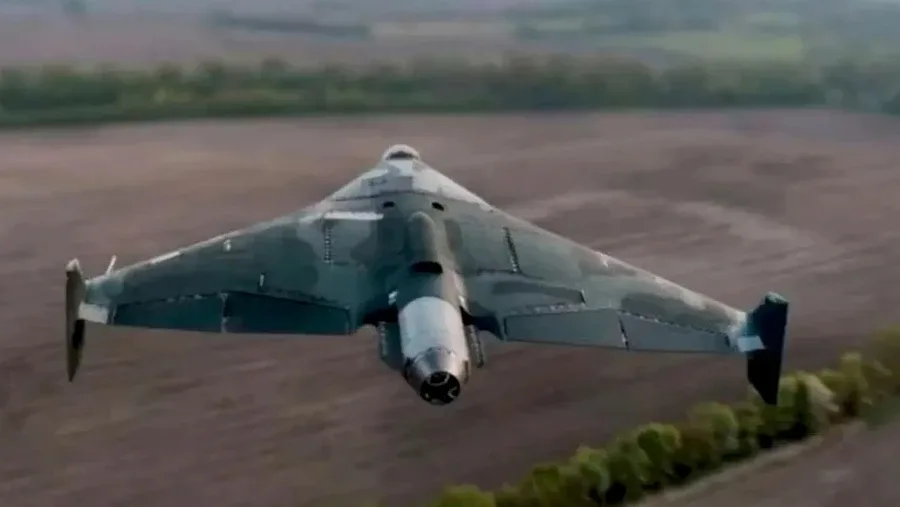
A Ukrainian combat laser has shot down a Russian jet-powered Geran drone for the first time anywhere, presidential defense-tech adviser Serhii "Flash" Beskrestnov announced on November 25, 2026. The laser, called Blysk, is built by the Ukrainian company Carmine Sky and was protecting a piece of critical infrastructure when it made the kill, according to Ukrainska Pravda.
The system tracked what was likely a Geran-4 at an altitude of around 400 meters and a distance of nearly 800 meters, then held its beam on the target for several seconds until the drone fell. That matters because jet-powered Gerans fly faster and lower than the propeller-driven Geran-2 variants Russia has used for years, making them considerably harder for conventional air defense to intercept. Beskrestnov, who advises Ukraine's leadership on defense technology, called laser systems "very complex and expensive," adding that mass production of Blysk is not imminent even after this success.
Why a Laser Kill Changes the Math
Interceptor missiles and gun-based systems have a cost problem: a single shot can run into the tens of thousands of dollars against a drone that costs Russia a fraction of that to build. A laser, once powered up, fires essentially for the cost of electricity, which is why countries including the US, UK, and Israel have poured money into directed-energy weapons for years without fielding many combat-proven systems. Ukraine's Blysk now has a documented kill against a fast-moving, jet-powered target, which is a meaningfully harder engagement than the slow, propeller-driven drones most laser demonstrations have targeted so far.
Part of a Crowded Field, But a Real First
Carmine Sky is one of several Ukrainian companies developing laser air defense, many of them supported through the government-backed Brave1 defense-tech cluster that has funneled funding into drone and counter-drone startups throughout the war. Western militaries have also been testing directed-energy systems; the US and Israel ran a joint counter-drone exercise called Black Sands in Israel just a day before the Blysk announcement, evaluating roughly 20 different systems without disclosing results. What sets the Blysk incident apart is that it happened in live combat conditions against a real Russian weapon, not a controlled range test.
Beskrestnov has not said how many Blysk units are currently deployed or when a wider rollout might happen. Russia has been shifting more of its long-range strike fleet toward jet-powered Geran-4 and Geran-5 variants precisely because they are harder to stop, so Ukraine's next test will be whether Blysk can repeat the kill reliably rather than once.