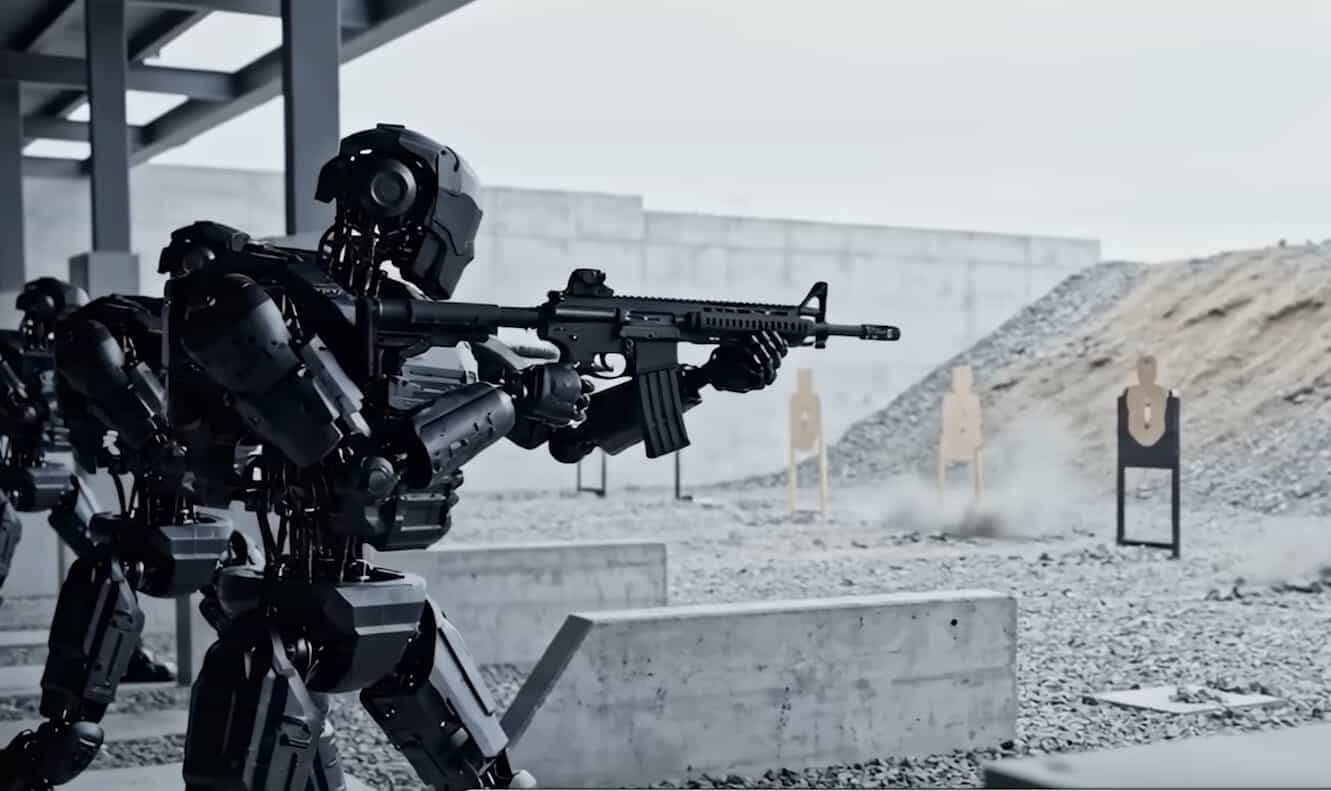
Ukraine Launches First Humanoid Combat Robot Grant Program via Brave1
Brave1 CEO Andriy Hrytsenyuk unveiled a dedicated grant competition to build humanoid robots for the Ukrainian Armed Forces, making Kyiv the first state to formally fund combat humanoids.
Key Takeaways
Ukraine's Brave1 defense innovation cluster launched the world's first state grant competition to fund humanoid combat robots, announced by CEO Andriy Hrytsenyuk on July 2, 2026 at the Brave1 Advantage event in Kyiv.
The program aims to maximize front-line automation and reduce risks to military personnel, with teams starting on simpler bipedal and quadruped platforms before adding complex functionality.
Unlike the U.S. and Chinese civilian humanoid boom, Ukraine's program is focused exclusively on defense needs; the country earlier received Foundation's Phantom MK-1 humanoid soldier robot for evaluation.
Current humanoids remain heavy, expensive and balance-prone, relying on roughly 20 motors per unit, and analysts in Euromaidan Press argue wheeled or quadruped platforms may deliver faster military value than bipedal robots.
The competition joins Brave1's earlier programs for interceptor drones, unmanned ground vehicles and airbikes, part of an accelerating autonomy arms race that includes Russia's Rostec counter-drone push.
Kaan Tınmaz
Ukraine's defense innovation cluster Brave1 has opened a grant competition to develop humanoid robots for the Armed Forces, making Kyiv the first government to formally fund combat humanoids as a distinct procurement category. Brave1 CEO Andriy Hrytsenyuk announced the program on July 2, 2026 at the Brave1 Advantage event in Kyiv.
Automating the front line
The stated goal is "to maximize the automation of the front lines and reduce risks to military personnel," Hrytsenyuk said. Ukrainian teams will initially focus on simpler bipedal and quadruped platforms that will gain more complex functionality over time. Unlike the U.S. and Chinese civilian humanoid boom, Ukraine's program is geared exclusively toward defense needs and battlefield scenarios.
Why humanoids, and why now
Ukraine has become the world's primary testing ground for defense-tech startups, particularly Western ones. Earlier this year the country received Foundation's Phantom MK-1 humanoid soldier robot for evaluation. Today's humanoids remain heavy, expensive and prone to balance failures, and each unit relies on roughly 20 motors that must operate flawlessly. Deploying humanoids alongside regular troops also poses new safety and coordination challenges.
Fits Ukraine's autonomy playbook
The humanoid competition sits alongside Brave1's earlier programs for interceptor drones, unmanned ground vehicles and even airbikes for troop transport. It also echoes deals like Russia's Rostec counter-drone push that have accelerated an autonomy arms race across the war.
Global signal, local execution
Analysts published in July 2026 by Euromaidan Press argue that wheels still beat legs on Ukraine's battlefield, and that a purpose-built quadruped or hybrid platform may deliver faster military value than a walking bipedal robot. Still, by explicitly funding humanoids, Brave1 mirrors the direction taken by allied defense industrial policies and gives Ukrainian robotics teams a pathway from prototype to battlefield.
Reporting based on coverage from Militarnyi, Euromaidan Press and Defense Post.
What is Ukraine's humanoid combat robot grant program?
It is a grant competition opened by Ukraine's defense innovation cluster Brave1 to develop humanoid robots for the Armed Forces, announced by CEO Andriy Hrytsenyuk on July 2, 2026 in Kyiv. It makes Ukraine the first government to formally fund combat humanoids as a distinct procurement category.
What is the goal of the program and how will it start?
The stated goal is to maximize automation of the front lines and reduce risks to military personnel. Ukrainian teams will initially focus on simpler bipedal and quadruped platforms that will gain more complex functionality over time.
What challenges do combat humanoid robots face?
Today's humanoids are heavy, expensive and prone to balance failures, with each unit relying on roughly 20 motors that must work flawlessly. Deploying them alongside regular troops also creates new safety and coordination challenges, and analysts argue wheeled or quadruped platforms may deliver faster battlefield value.
How does this fit into Ukraine's broader defense-tech strategy?
The humanoid competition sits alongside Brave1's earlier programs for interceptor drones, unmanned ground vehicles and airbikes for troop transport. Ukraine has become the world's primary testing ground for defense-tech startups, and the program gives Ukrainian robotics teams a pathway from prototype to battlefield.