The clock in the Geneva negotiating room read past 4 a.m. when delegates from 128 countries finally settled on language they could all accept — not a ban, not even a firm promise of one, but a commitment to keep talking about autonomous weapons for two more years. The seventh Review Conference of the UN Convention on Certain Conventional Weapons closed on Nov. 21 with that outcome, after a week of talks meant to decide whether so-called "killer robots" need binding international rules.
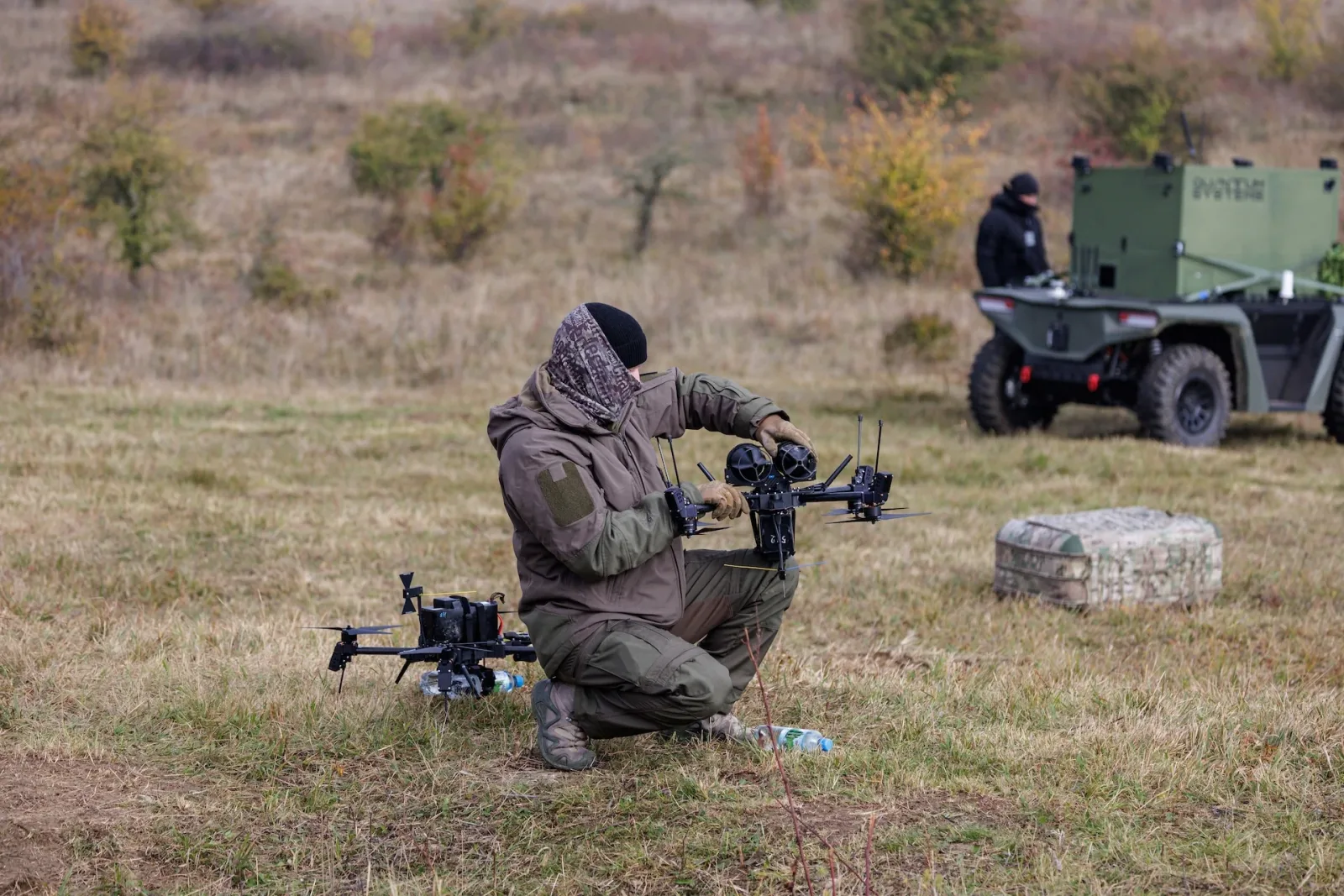
What delegates actually agreed to was far narrower than what many of them wanted. The final text commits states only to "elaborate" an instrument addressing lethal autonomous weapons systems by 2028, leaving open whether that instrument will carry any legal force at all, according to Gizmodo. Lethal autonomous weapons systems are munitions, drones or ground robots capable of selecting and engaging targets with little or no real-time human oversight, a category the CCW has debated without resolution since the issue first came onto its agenda more than a decade ago.
Why the Deal Came Out So Weak
The CCW operates by consensus, meaning any single one of its 128 member states can block a provision. That rule gave the United States, Russia and Israel — all major developers of autonomous weapons technology — the leverage to strip binding language from the final text. France had floated a hybrid approach mixing binding and voluntary measures. The International Committee of the Red Cross and a coalition of NGOs pushed for talks to wrap within a single year. Washington countered with a five-year timeline instead; the eventual compromise split the difference at 2028.
Russia added its own friction, objecting to observer participation in parts of the conference and demanding editorial changes to draft reports. Negotiators worked through the night to produce a text every delegation could live with, arriving at an agreement that critics say settles almost nothing about how, or whether, autonomous weapons will ultimately be restricted.
A Fight That Isn't Waiting for 2028
Advocacy groups were blunt about what the delay means. Nicole van Rooijen, executive director of Stop Killer Robots, said "delaying the creation of a legally binding instrument puts civilians and humanity at risk." Beatrice Fihn called the outcome "watered down" and "a failure to act quickly and decisively." Lex International's Magnus Lovold warned that autonomous weapons are approaching an "Oppenheimer moment" — a point where the technology outruns the world's ability to govern it.
Not everyone saw the result as a failure. The conference's Swiss chair called the agreement a meaningful achievement after more than a decade of stalled talks on the subject, framing incremental progress as better than another year of total deadlock. UN Secretary-General António Guterres struck a similar note, saying the world "must never stop shielding civilians from the carnage and devastation of armed conflict," even as he stopped short of endorsing the specific text produced in Geneva.
The stakes are not theoretical. Autonomous targeting systems are already in use in active conflicts, and militaries from Ukraine to the Middle East have spent the past two years fielding drones and ground robots with steadily expanding degrees of independent decision-making. Whatever instrument the CCW produces by 2028 will arrive well after many of the capabilities it is meant to govern are already deployed at scale — a timeline mismatch that even the agreement's defenders acknowledge as its biggest weakness.