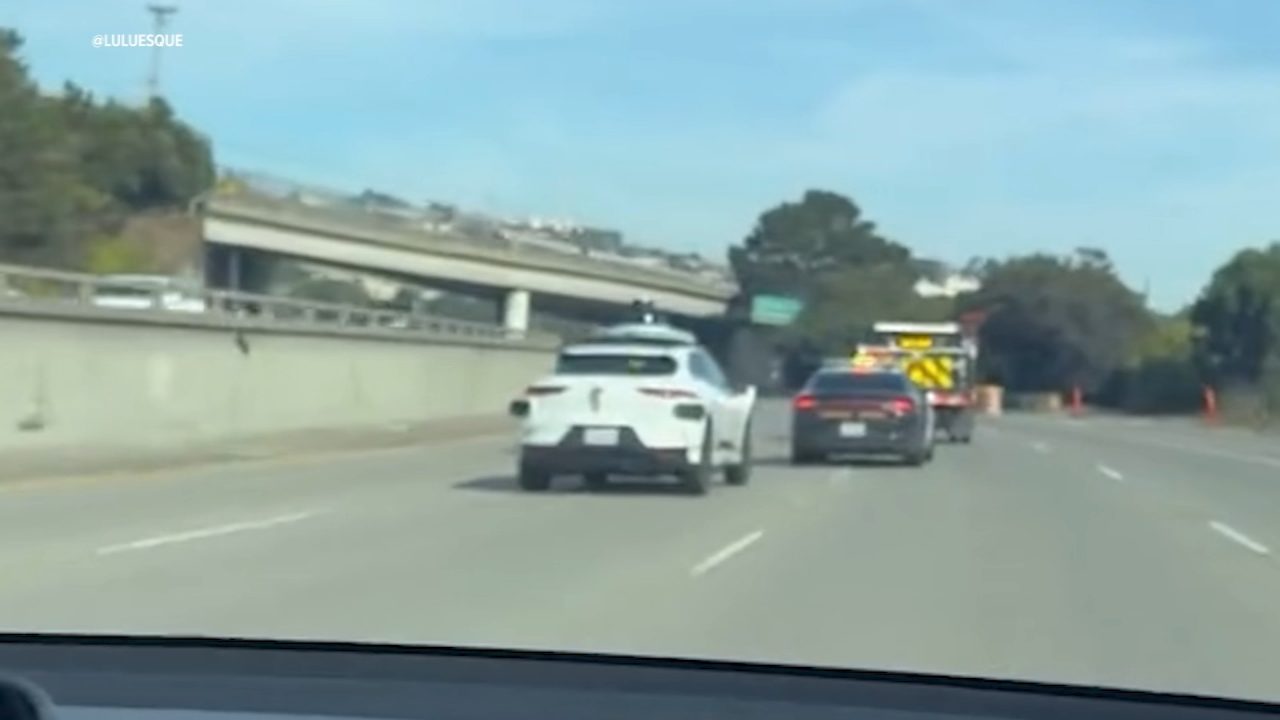
The California Department of Motor Vehicles ordered Waymo to stop operating its robotaxis on state freeways, effective November 11, 2026, citing an "imminent hazard to public safety." The agency went public with the restriction on November 17. Waymo has since paused freeway rides across all 15 U.S. cities where it runs commercial service, though surface-street trips continue.
The DMV's order followed two specific incidents. Three Waymo vehicles drove into an active construction closure on U.S. Highway 101 near Burlingame, and a separate Waymo vehicle attempted to pass California Highway Patrol units that were holding a traffic break on Interstate 280 in San Francisco. The agency described the pattern as "recurring incursions" and referenced a similar episode from May 18, 2026.
Key takeaways
- The California DMV banned Waymo from all state freeways on November 11, 2026, citing recurring incursions into active construction zones.
- Waymo extended the freeway suspension to all 15 U.S. cities where it operates commercially, including Los Angeles, Phoenix and Miami.
- Surface-street service is unaffected, with Waymo reporting more than 500,000 trips per week.
- Waymo must show "effective corrective actions" before the DMV will allow freeway operations to resume.
A Waymo spokesperson, Dana Gallagher, said "safety is at the foundation of everything we do" and confirmed the company proactively extended the restriction beyond California while it evaluates performance. The DMV did not set a timeline for resuming freeway service, only stating that restrictions remain until Waymo provides sufficient evidence its vehicles can detect and respond to construction zones, emergency vehicles and other complex roadway conditions.
Why this matters for robotaxi scaling
Freeways are a comparatively easy environment for autonomous driving systems — lanes are structured, speeds are stable and there are no pedestrians or cross traffic. A regulator pulling that privilege, rather than restricting city-street operations, signals the DMV sees a specific failure mode around dynamic, temporary roadway changes like construction zones and emergency responders, not general driving competence.
Billy Riggs, a professor who studies autonomous vehicle policy, noted that AV systems tend to understand static roadway geometry well but struggle with context — the kind of improvised signaling a construction crew or CHP officer gives that isn't captured in mapped lane data. That distinction matters for every AV operator racing to add freeway routes, since it's a problem of judgment rather than sensing range.
What happens next
Waymo now has to document corrective measures to the DMV before any freeway service returns, in California or elsewhere, since the company applied the restriction voluntarily outside the state. Competitors expanding robotaxi footprints, including Zoox and Tesla's Cybercab rollout, will likely face closer scrutiny of how their systems handle construction zones and first responders as a result. The episode also gives ammunition to city councils and regulators elsewhere weighing robotaxi expansion, reinforcing that freeway access can be revoked as quickly as it was granted.