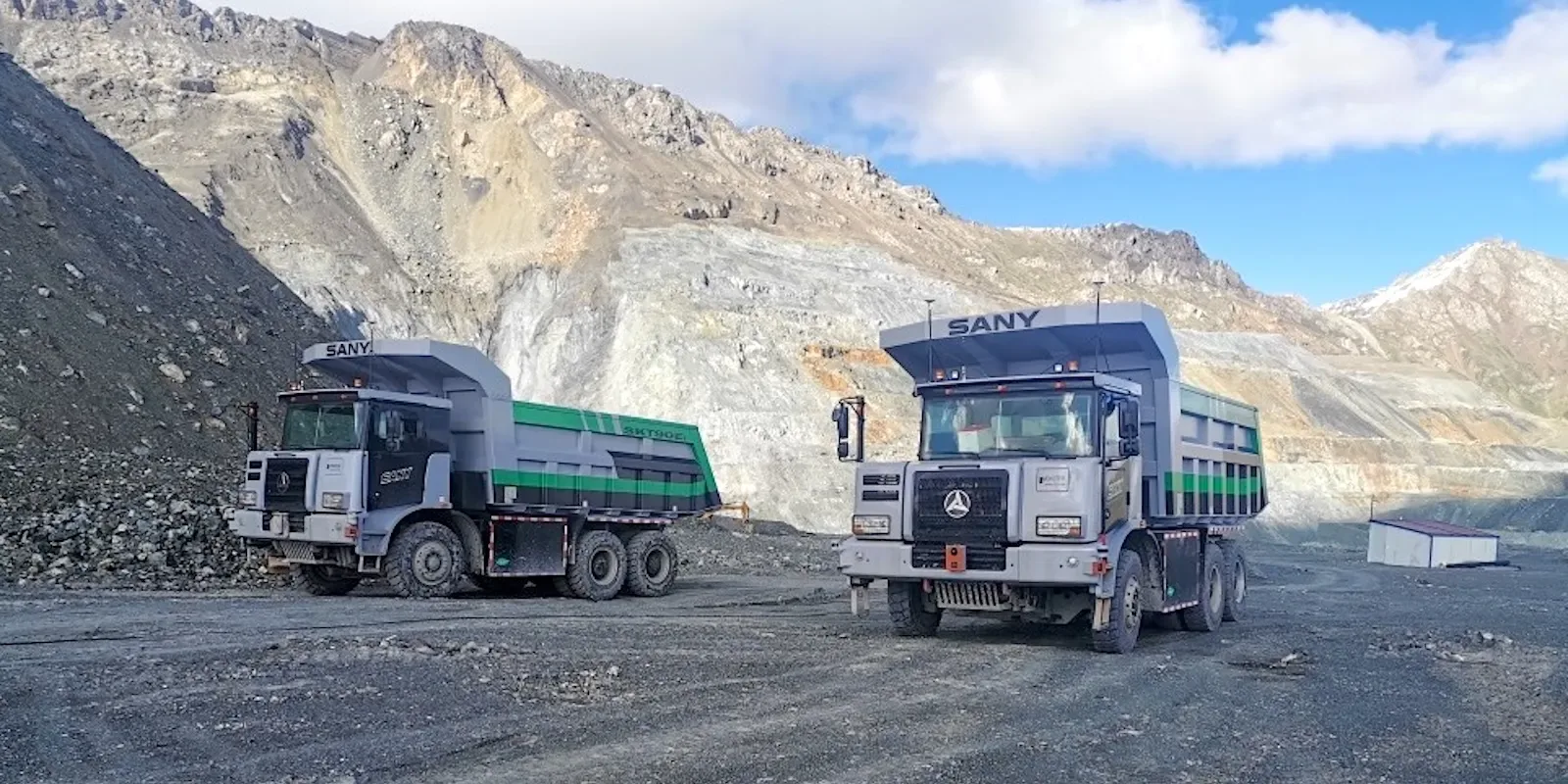
SANY and Eacon Mining Technology have deployed 60 autonomous electric haul trucks at the Zhibula Copper Mine high in Tibet's Gangdese Mountains, running driverless operations at an elevation of roughly 17,700 feet. The trucks, SANY's SKT105ED model, carry a 70-tonne payload and operate for mine owners Zijin Mining and Tibet Julong Copper, according to a report published November 15, 2026.
Each SKT105ED runs on dual permanent-magnet synchronous motors producing 570 kW of continuous power and up to 820 kW at peak, paired with a lithium iron phosphate battery pack ranging from 423 to 642 kWh. The trucks can charge from 20% to 90% in under an hour, letting them keep working through multiple shifts in a region where supply logistics are notoriously difficult.
Why Altitude Is the Real Story
Autonomous haul trucks have already proven themselves at scale in Australia's Pilbara and at mines across Chile and Mongolia, but altitude above roughly 2,500 meters introduces problems that go beyond navigation software. High-altitude illness affects even experienced human operators, which is precisely the hazard removing the driver is meant to eliminate. Battery performance, sensor reliability and communications links all behave differently in thin, cold air, making Zhibula one of the toughest environments yet attempted for driverless hauling.
Eacon, based in Perth, Australia, says it now runs more than 3,100 autonomous trucks across more than 40 large-scale mines globally, a scale that puts it in direct competition with Caterpillar's Cat Command and Komatsu's autonomous haulage system — both of which have dominated driverless mining for over a decade. SANY's involvement as the vehicle manufacturer signals that Chinese heavy-equipment makers are increasingly pairing with autonomy specialists like Eacon rather than building self-driving systems in-house, a pattern also seen in China's broader push to export mining technology to resource-rich but logistically difficult terrain.
The Zhibula deployment also matters for the copper supply chain. Tibet Julong Copper's mine sits in one of the more remote, difficult-to-staff mining regions in China, and the ability to run trucks without drivers at that altitude could make previously marginal high-altitude deposits more economically viable to operate year-round.
What Happens Next
Neither SANY nor Eacon has said whether the Zhibula fleet will grow beyond 60 trucks. Given Eacon's rapid global expansion pace, a wider rollout to other high-altitude Chinese mines looks likely if the trucks hold up through a full winter at nearly 18,000 feet.