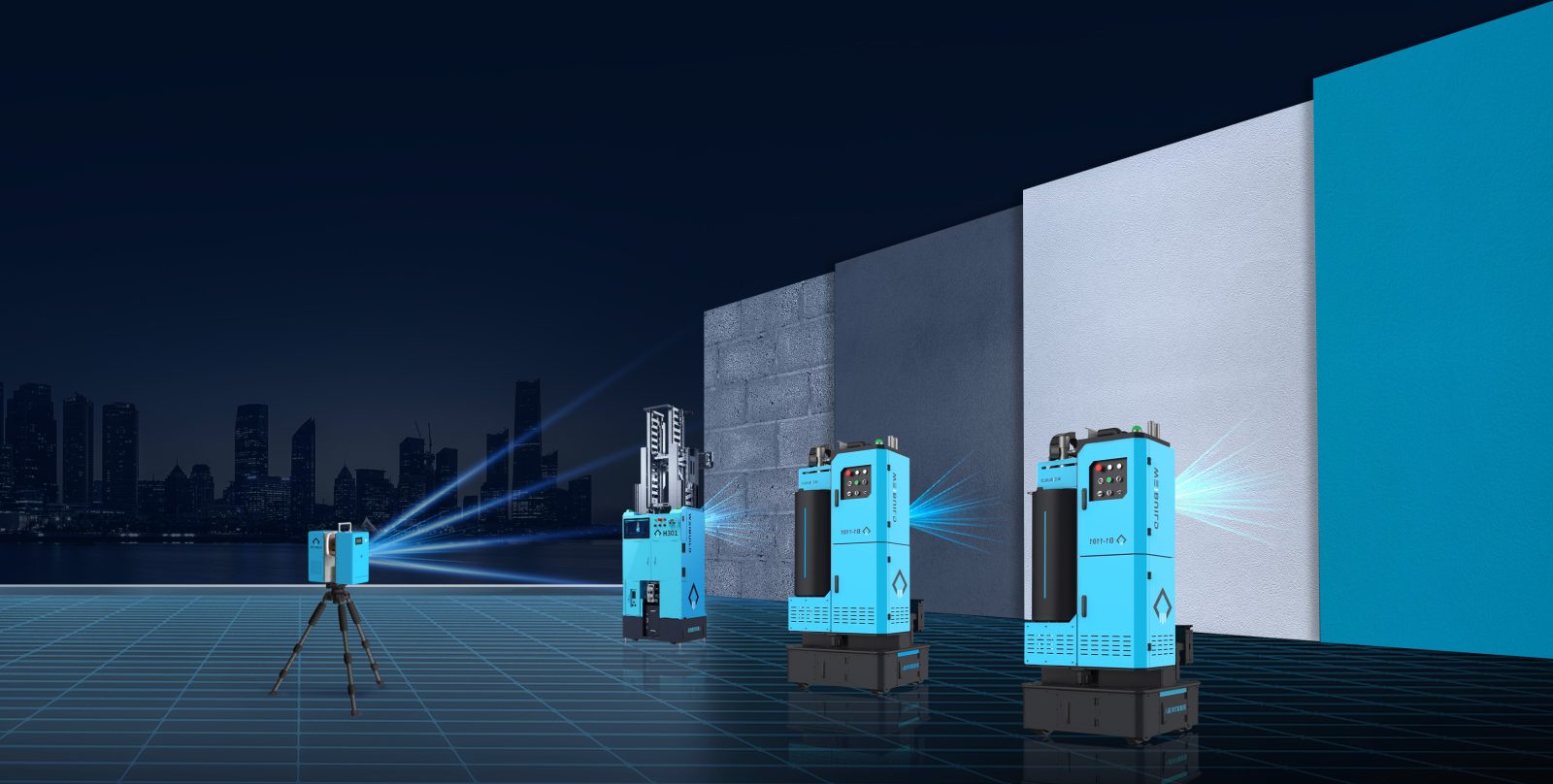
Weibuild Technology, a Shanghai robotics maker that builds machines for plastering, wall spraying and rebar processing, has raised more than RMB 100 million (roughly $15 million) in its fifth funding round. Caitong Capital led the round, which the company disclosed on November 15, 2026, with proceeds earmarked for manufacturing capacity, overseas sales offices and continued embodied-AI research, according to KrAsia.
What do Weibuild's robots actually do on a job site?
The lineup covers four tasks: a plastering robot that applies interior coatings at a daily average of 300 to 350 square meters with a recorded peak above 700 square meters; a wall-spraying unit that covers putty at 100 square meters an hour and latex paint at 200 square meters an hour on surfaces up to six meters tall; a modeling robot for finishing work; and a rebar-processing center rated for 20,000 tonnes of output a year. The spraying and plastering lines received EU CE certification in August 2026, clearing a path into European tenders.
Who is buying these machines?
Domestically, Weibuild counts divisions of China Construction, Shanghai Construction Group and Zhejiang Construction Group as customers. Overseas, its robots are working on projects for Japan's Takenaka, Middle East contractors ALEC, ACC and Sobha, and Singapore's Housing & Development Board. The company forecasts 2026 product orders will top RMB 100 million, more than double what it booked in 2025.
Why does a construction-robot maker need embodied-AI money?
More than 800 Chinese firms have entered construction robotics, but Weibuild says it is the only one to commercialize a plastering robot at scale. Founder and CEO Liang Yanxue has framed the company's edge as practical, not theoretical: the deciding factor for contractors isn't which startup has the flashiest technology demo, it's which machine a crew can actually run on a live site without slowing the job down. That pitch is why the new capital is going toward manufacturing and field support rather than pure research.
What happens next?
Weibuild will use the round to open overseas sales and service operations and keep building out its embodied-AI stack, the software that lets its robots adapt plastering and spraying patterns to irregular walls. The company previously raised more than RMB 120 million in an October 2024 round backed by Xiamen C&D and Unicorn Capital Partners, meaning it has now raised over RMB 220 million across two years as it chases faster growth abroad than at home.