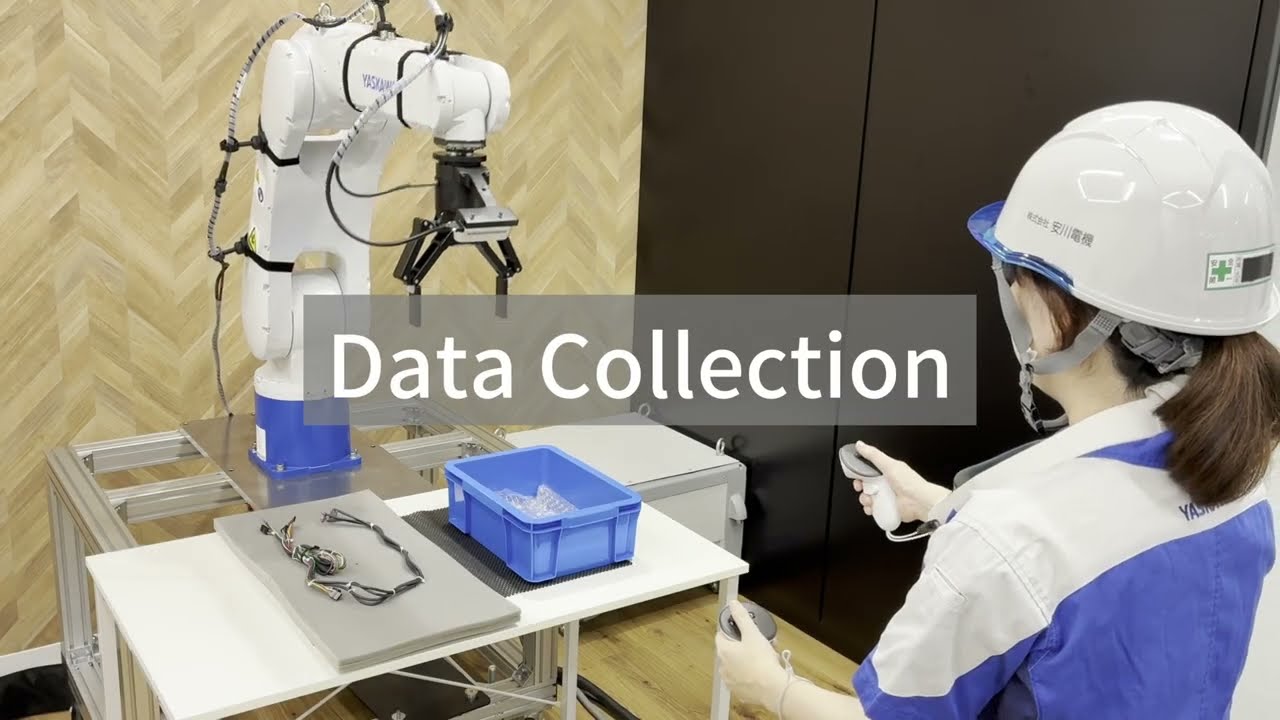
Yaskawa Electric and SoftBank Corp on 13 July validated a Physical AI system that lets Yaskawa's MOTOMAN NEXT robot grasp and box irregularly shaped wire harnesses — a task classical rule-based robotics has struggled with for years — using SoftBank's forthcoming AI Data Center GPU Cloud as the training and evaluation backbone.
Solving the deformable-object problem
Deformable objects — strings, cloth, bags, wire harnesses — change shape and position with every attempt, making stable handling nearly impossible with conventional teach-and-repeat control. Yaskawa built a Vision-Language-Action (VLA) module that recognises harness state from cameras plus natural-language task instructions, then hands off precise motion to the conventional robot controller. The result: repeatable pick-and-place on a moving target, without giving up hard real-time safety guarantees.
SoftBank's GPU Cloud does the heavy lifting
The joint validation ran on the Physical AI development toolkit sitting on top of SoftBank's AI Data Center GPU Cloud, which starts commercial service in October under SoftBank's Neocloud initiative. That end-to-end loop — data collection, synthetic-data generation, model training, simulation-based evaluation and deployment — is what the partners argue turned an eight-week bring-up into days.

Why VLA on the factory floor matters
The demonstration slots into a wider Physical AI wave alongside NVIDIA Cosmos 3 Edge and OMRON's new AMR line in shifting automation from fixed programming to learned perception. Yaskawa framed the work as expanding MOTOMAN NEXT into "tasks that have traditionally been difficult to automate" — a lane that matters as Japanese manufacturers face acute labour shortages and rising labour costs.
Reporting based on coverage from Yaskawa Electric, SoftBank Corp and The Robot Report.