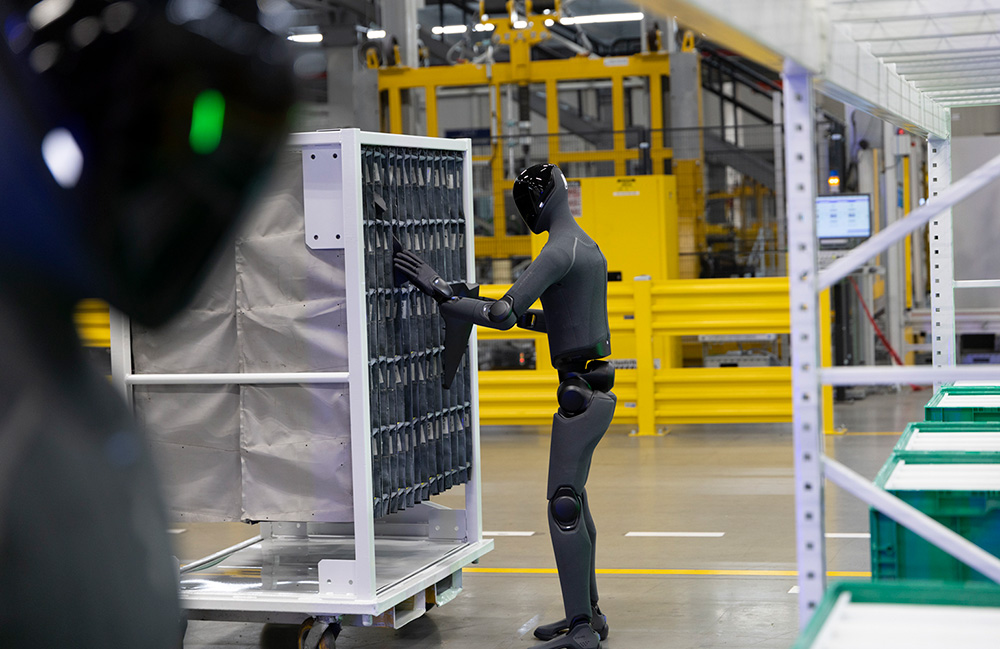
BMW Group is expanding its use of humanoid robots in car production. The automaker said it will deploy Figure.AI's latest Figure 03 humanoid at its plant in Spartanburg, South Carolina, following a successful 11-month pilot with the earlier Figure 02 robot.
From pilot to production line
During the pilot, Figure 02 supported the production of more than 30,000 BMW X3 vehicles, inserting sheet-metal parts for the welding process, a task that is fast, precise and physically demanding. "Plant Spartanburg is the birthplace of humanoid robotics in BMW Manufacturing's operational day-to-day activities," said Ulrich Wieland, vice president of production control and logistics at BMW Manufacturing. "We are now looking forward to deploying Figure 03 for a sequencing use case in logistics."
New capabilities for a new job
Figure 03 adds soft components for enhanced safety, wireless charging, speech-to-speech audio, and improved hands with tactile sensors and palm cameras for greater precision and dexterity. In the new sequencing use case, components will arrive unsorted in large containers; Figure 03 will pick them and sort them into a sequencing trolley for onward "just in sequence" delivery to assembly workers. "Our 11-month deployment of Figure 02 proved that humanoids are no longer lab experiments," said Figure AI founder and CEO Brett Adcock.
A multi-robot automation strategy
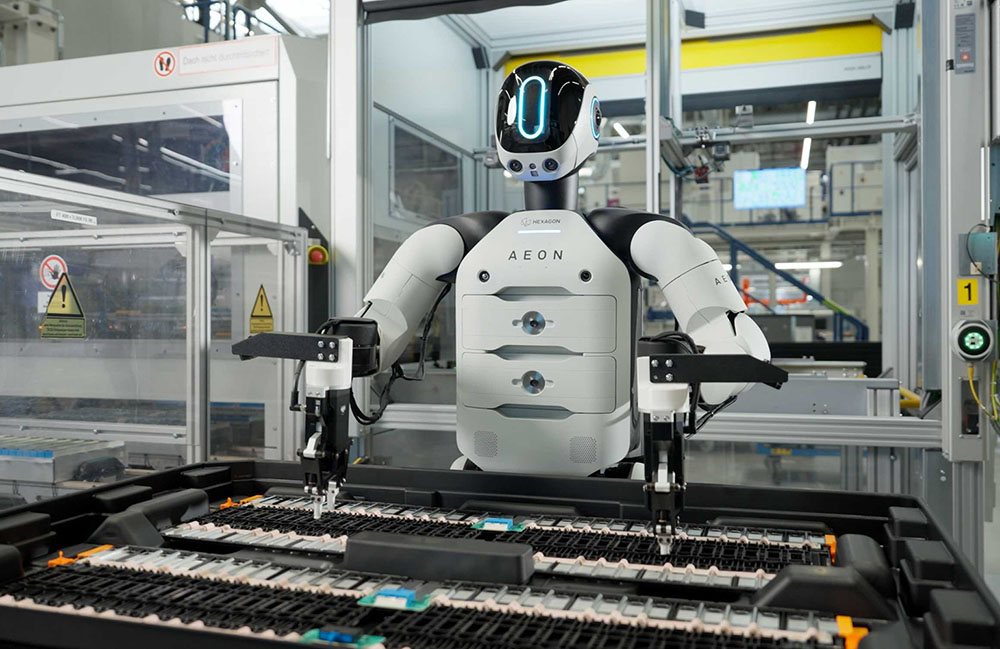
The humanoid rollout is part of BMW's broader push to expand its automation portfolio with physical AI in monotonous, ergonomically demanding or safety-critical tasks. Beyond Figure, BMW is testing Hexagon AB's wheeled humanoid AEON at its Leipzig plant and uses Boston Dynamics' Spot quadruped for inspections at its Hams Hall facility in the U.K. The deployment underscores humanoids' rapid move toward commercialization, echoing Figure's endurance milestones, warehouse partnerships, and rival Agility Robotics' move to go public.
Reporting based on coverage from The Robot Report and BMW Group.