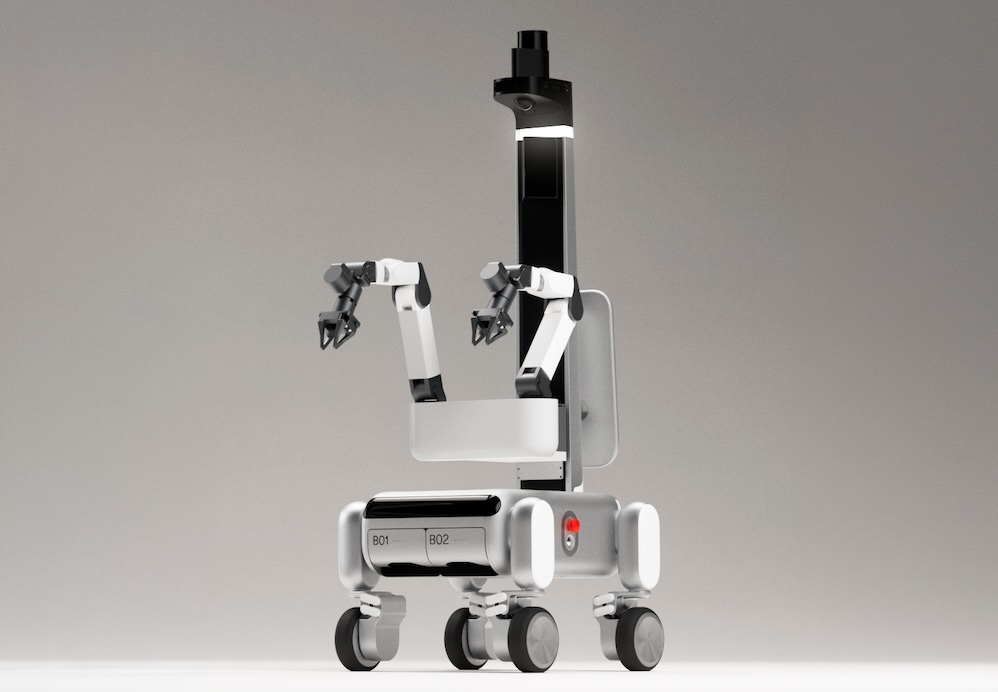
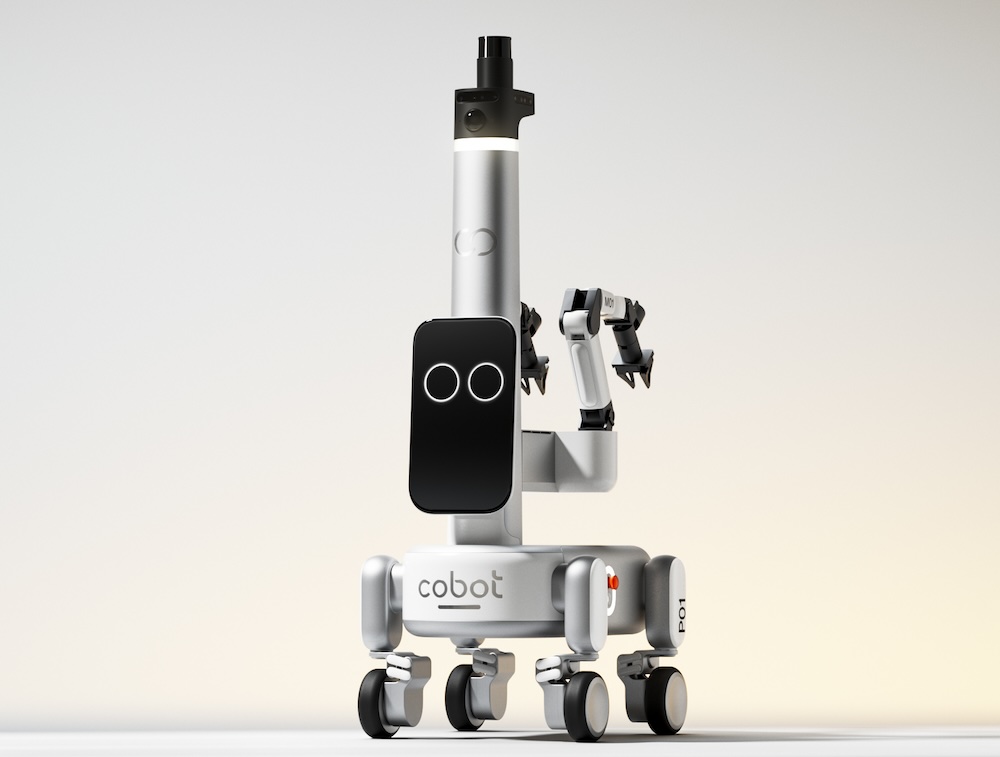
Collaborative Robotics, the Santa Clara startup better known as Cobot, has unveiled the second generation of its Proxie autonomous mobile robot, adding self-swapping batteries, far greater payload capacity, autonomous task discovery, and an optional two-armed manipulation package as it pushes deeper into healthcare, logistics, and manufacturing.
Two years of field data shape Gen 2
Founded in 2022 by former Amazon Robotics and Boston Dynamics executive Brad Porter, Cobot spent two years quietly running robots in production rather than chasing publicity. The company says 28 Proxie units have logged nearly 13,000 operating hours, traveled more than 22,000 miles, and moved over 154,000 carts across hospitals, labs, factories, and warehouses, including a deployment at the Mayo Clinic that handles lab, food-service, and equipment transport.
That experience produced more than 500 design insights. The result is a robot with 40% fewer parts, a smaller footprint for tight hallways and elevators, the ability to move carts up to 1,500 lb, and a vertical spine that lifts up to 220 lb.
Autotasking and a real-time world model
The headline advance is what Cobot calls "autotasking." Rather than depending on warehouse-management integrations or human dispatchers, Proxie builds a real-time world model of its surroundings, observing carts, bins, and workstations to decide what needs moving and where. At one Maersk facility, workers simply wrote destinations on whiteboards attached to carts, and the robot read the lettering to navigate. Porter says roughly 95% of cart movements there were initiated without any human task assignment.
The approach mirrors the broader shift toward physical AI seen across the industry, from Intrinsic's effort to eliminate manual robot coding to FORT and NVIDIA's Outside-In safety blueprint.
Cobot adds mobile manipulation
Gen 2 also marks Cobot's entry into mobile manipulation with an optional dual-arm configuration for two-handed work. Porter says the company deliberately hardened the mobile base first before tackling manipulation, an "open-ended hard problem" now being accelerated by vision-language-action models and diffusion policies. The robot runs perception, planning, and task inference locally on NVIDIA Jetson modules, while Amazon Web Services powers its Vista fleet-management platform.
The manipulation race is intensifying across the sector, with rivals from Bear Robotics to Autonomique chasing general-purpose physical AI.
Built to be easy to deploy
Porter argues the industry's biggest barrier is ease of adoption, not raw hardware performance, comparing today's robots to early personal computers. Proxie Gen 2 is available to order now, with deployments beginning this year, starting at $5,000 per month. Cobot is demonstrating the platform at Automate 2026 in Chicago.
Reporting based on coverage from The Robot Report.