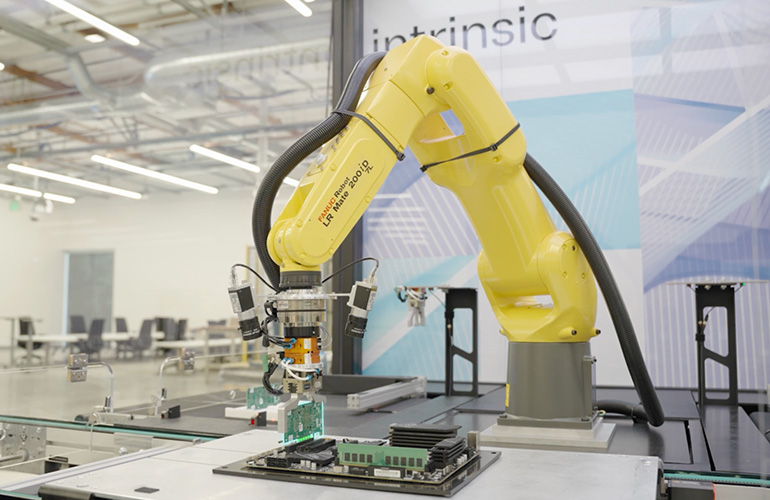
Intrinsic, the industrial robotics software company now part of Google, used Automate 2026 to demonstrate the Intrinsic Intelligence Cell, a modular, software-first robotic workcell built to eliminate the manual coding that has long made factory automation slow and expensive.
Software-first automation
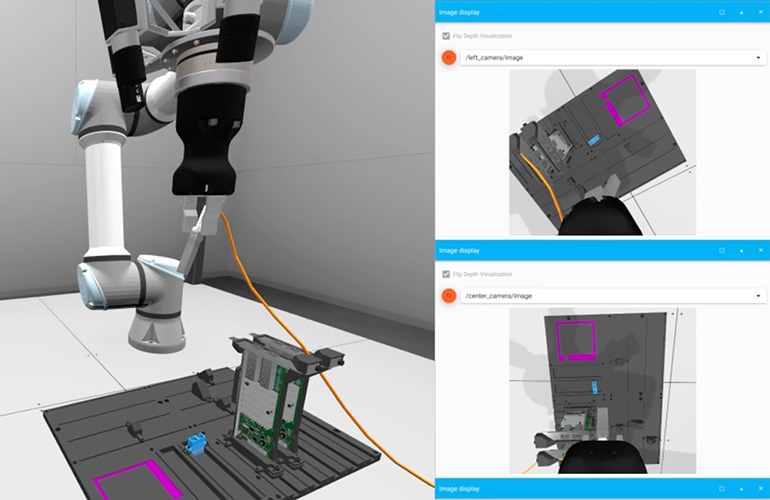
The workcell runs on IntrinsicOS and leans on AI to implement skills-based automation for complex assembly, with drag-and-drop configuration in place of bespoke robot programming. It is designed for "high-mix" production, allowing instant process and tool reconfigurations so a single cell can switch between jobs without re-engineering, an approach that echoes the physical AI toolchains rivals showed at Automate 2026.
Backed by Google's AI
Intrinsic recently folded into Google while remaining a distinct entity, giving it direct access to Google DeepMind research and Gemini models. That pairing aims to make industrial robots far easier to deploy, lowering the barrier for manufacturers that lack large automation teams, much as mobile-robot vendors are simplifying deployment on the factory floor.
Why it matters
If software can absorb the integration work that today requires specialist engineers, the economics of automation shift toward smaller, higher-variety production runs. Intrinsic is betting that an operating system for robots, not new hardware, is the lever that finally broadens access, a thesis it shares with orchestration players like Roboteon.
Reporting based on coverage from The Robot Report and Intrinsic.