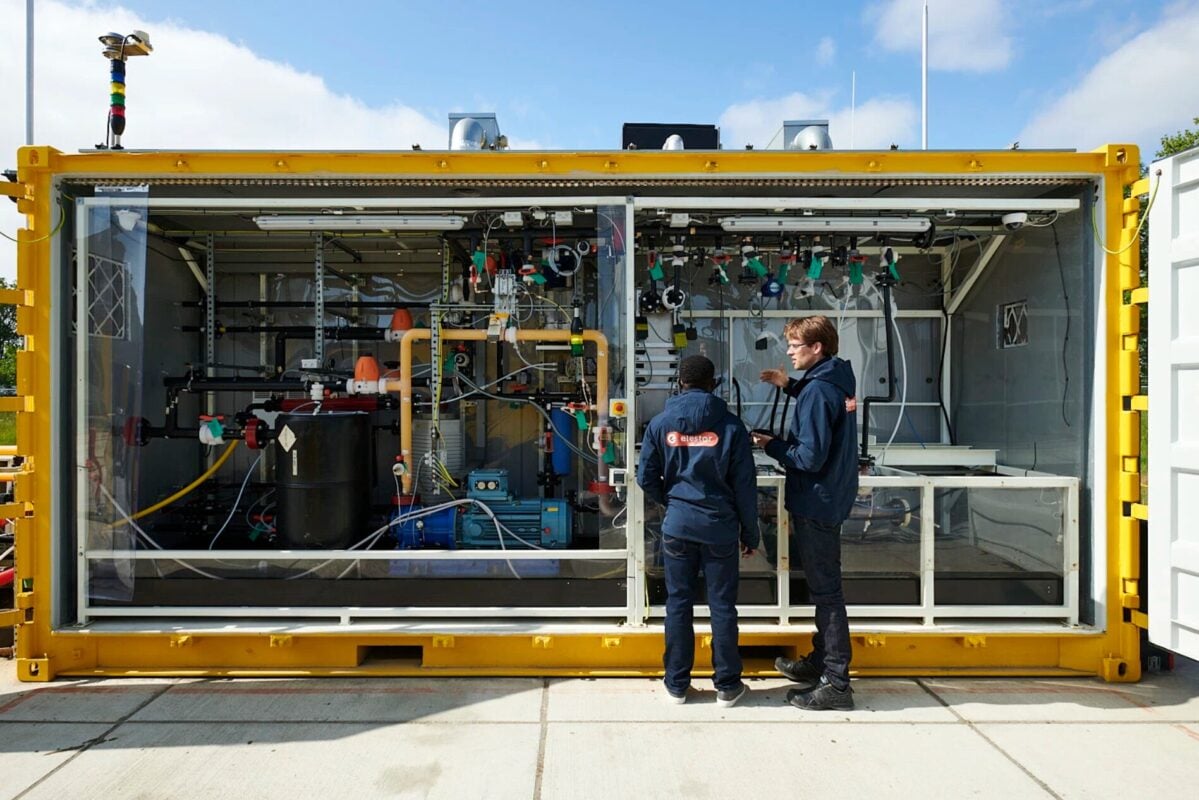
Dutch long-duration energy storage developer Elestor and Windpark Zeewolde announced on July 8, 2026 a partnership to deploy a phased 20 MW / 200-800 MWh hydrogen-iron flow battery at what is described as the largest onshore wind farm in the Netherlands, giving the 322 MW site a way to store surplus generation that grid congestion currently strands.
Turning Curtailed Wind Into Dispatchable Energy
Windpark Zeewolde sits in Flevoland province and includes 222 turbines developed by a cooperative of local farmers and landowners. Like many Dutch renewable projects, its output is capped by grid congestion under Dutch grid operator TenneT during peak periods. Adding a large hydrogen-iron flow battery lets the cooperative shift generation into higher-value hours instead of curtailing wind.
The system will scale in phases, starting at 20 MW and rising toward 800 MWh of storage as commercial performance is proven. Elestor says its architecture supports storage durations from 8 to 150 hours; the Zeewolde deployment will operate in the 10- to 40-hour range depending on dispatch needs.
How Hydrogen-Iron Flow Chemistry Works
Elestor's flow battery stores energy in liquid electrolytes held in external tanks. Because power and energy components are decoupled, capacity can be raised simply by adding more electrolyte, an extremely low-cost material, without duplicating the power infrastructure. The chemistry uses abundant hydrogen and iron rather than lithium, nickel or cobalt, and Elestor claims round-trip efficiencies close to 80% and asset lives beyond 25 years.
A Break From Lithium-Ion Dominance
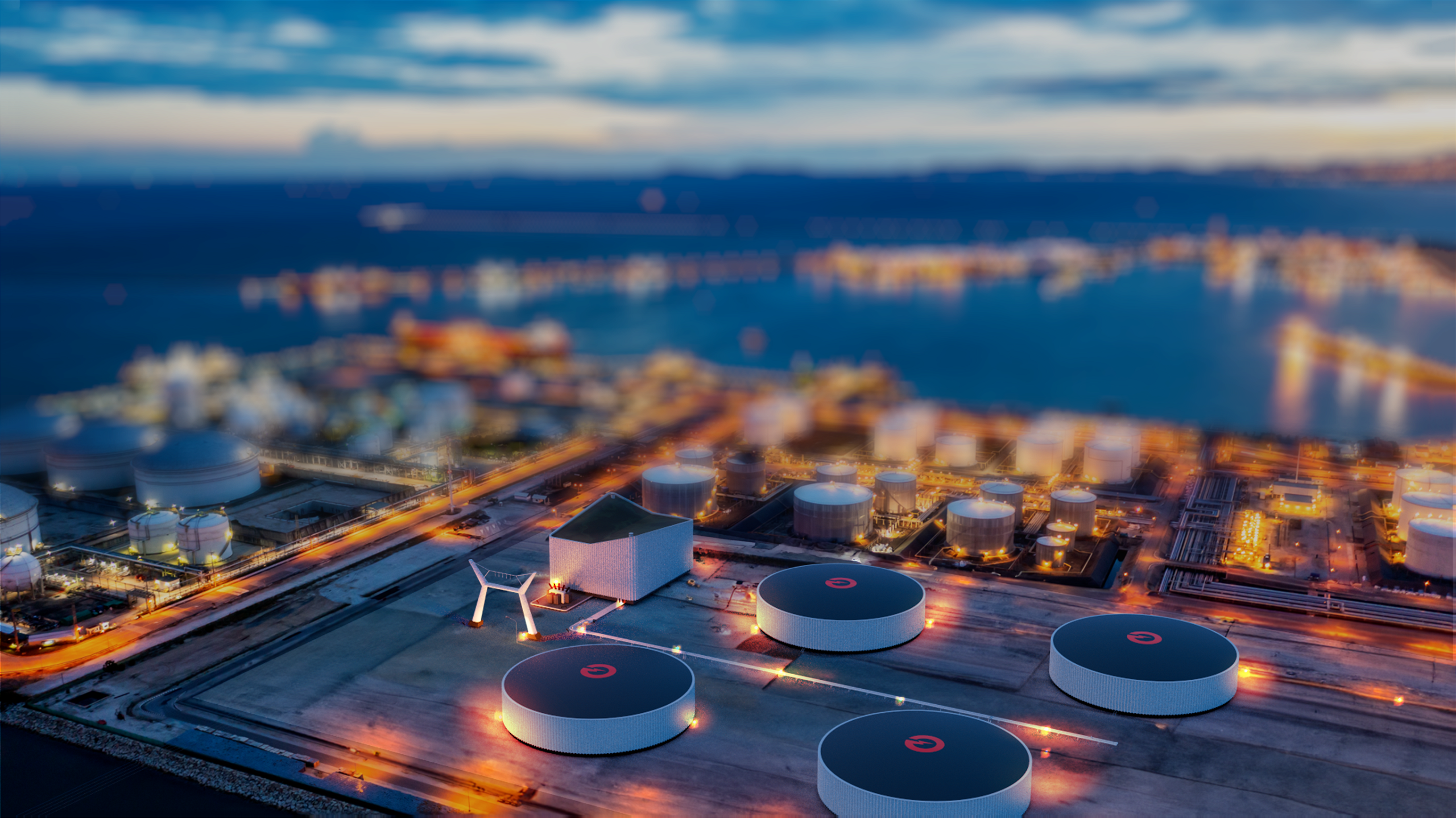
The partnership follows Elestor's €30 million Series A led by Equinor Ventures, with participation from Vopak Ventures, Invest-NL, Somerset Capital Partners, EIT InnoEnergy and Enfuro Ventures, and €22 million from the Dutch National Growth Fund's SLDBatt long-duration storage consortium. It sits within a European LDES market where flow-battery developers have historically struggled to scale against falling lithium-ion prices, though several — Elestor, Invinity and Sumitomo Electric among them — continue to advance commercial pipelines.
Grid Congestion As A Business Driver
The Netherlands has become one of Europe's most compelling LDES markets because transmission expansion has not kept pace with new wind and solar. TenneT has been actively contracting behind-the-meter storage to relieve bottlenecks, signing its first controllable congestion-mitigator BESS contract earlier this year. For further coverage of European storage and industrial deployment models, see our reports on Eni's Brindisi LFP gigafactory groundbreaking and Paladin Power's solid-state ESS launch.
Reporting based on coverage from Energy-Storage.News and Elestor.