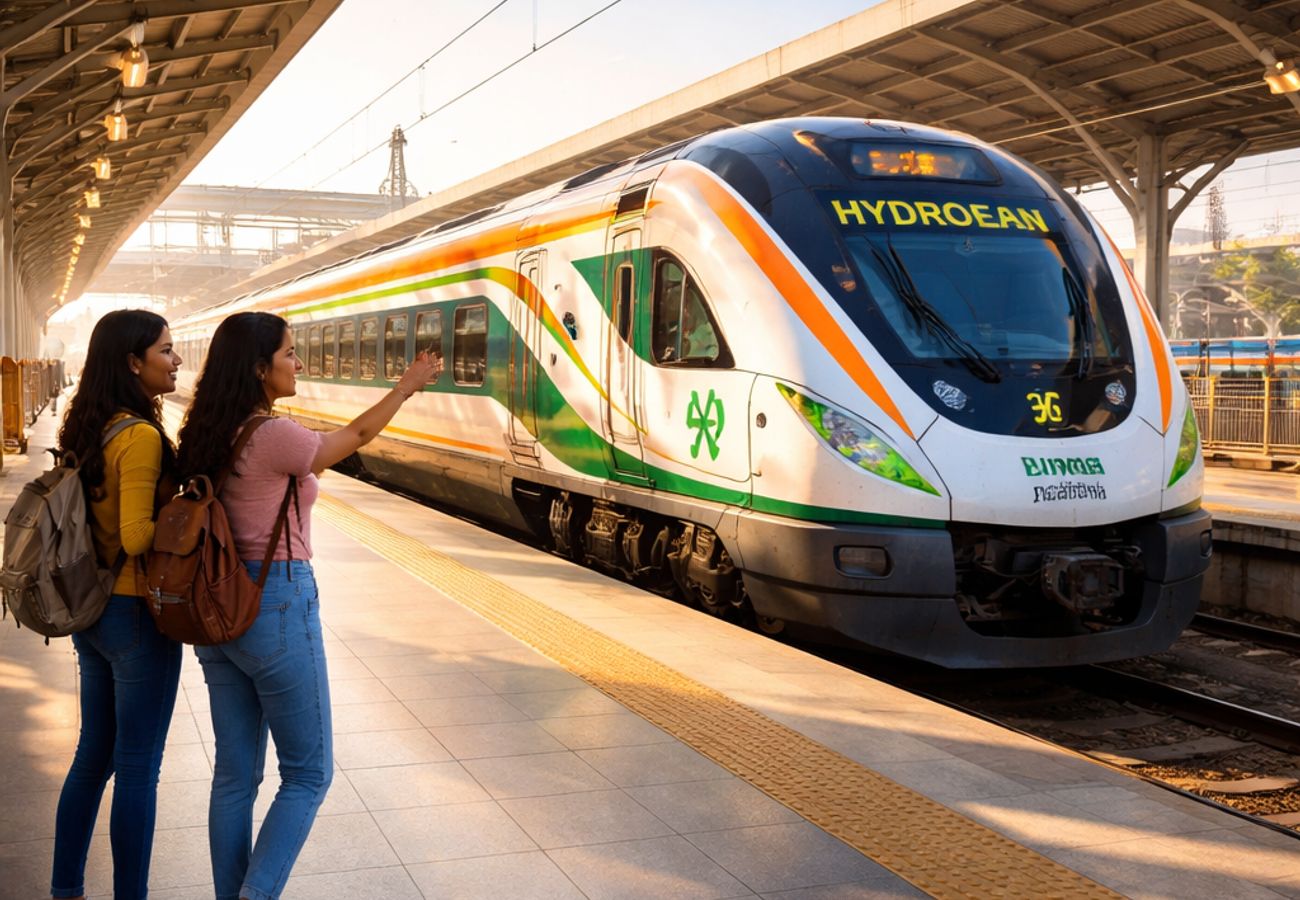
India is moving its rail network into the hydrogen era. Indian Railways has approved pilot operations of the country's first indigenously designed hydrogen fuel cell trainset on the Jind-Sonipat corridor in Haryana, a milestone for one of the world's largest passenger networks and a meaningful step in India's decarbonization strategy.
A 2,400 kW trainset built for Indian conditions
The 10-coach broad-gauge trainset is engineered with a total propulsion capacity of 2,400 kilowatts and was developed entirely to Indian Railways specifications rather than adapted from foreign designs. Hydrogen fuel cells produce electricity through a direct reaction between hydrogen and oxygen, emitting only water vapor and avoiding the carbon dioxide, nitrogen oxides and particulate matter associated with diesel locomotives.
Indian Railways has built dedicated hydrogen facilities at Jind, including a green hydrogen production plant that uses electrolysis powered by renewable electricity. By producing fuel on-site, the railway closes a key sustainability gap that would otherwise be created by trucking hydrogen across long distances.
A 90 km corridor chosen for real-world stress
The Jind-Sonipat route was selected strategically. The 90 kilometre secondary corridor offers moderate traffic and exposes the trainset to authentic operational stressors: summer temperatures exceeding 45°C, seasonal dust storms and varied gradients. Approval has been granted and pilot operations are positioned to commence in the second half of 2026, with preliminary performance data expected by mid-2027.
Multi-layered safety systems include continuous hydrogen storage monitoring, 24/7 leak detection, distributed fire protection and automated compliance enforcement. The architecture draws on lessons learned from hydrogen rail programs in Germany, Japan and South Korea, but the integration and manufacturing are Indian.
A template for diesel replacement
Indian Railways operates the world's fourth-largest rail network by route length and carries more than 1.1 billion passengers annually. Even partial hydrogen rollout could displace millions of tonnes of carbon emissions every year. The Jind-Sonipat trial complements ongoing electrification work and recent automotive hydrogen launches, while large-scale electrolyzer rollouts and hydrogen truck deployments expand the supply ecosystem.
Reporting based on coverage from Nomad Lawyer and Indian Railways public statements.