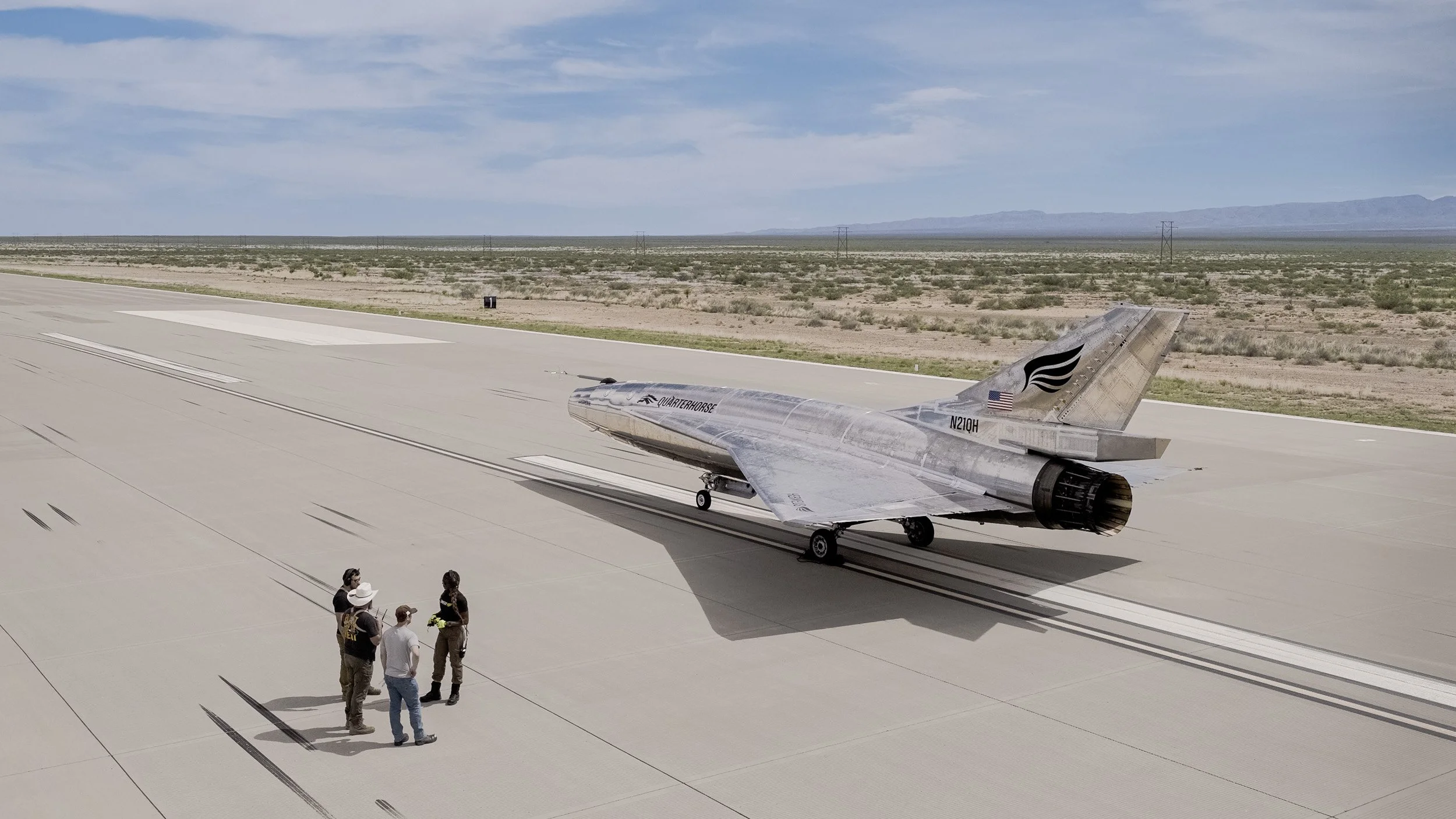
Hermeus, the Atlanta-based defense aviation startup, said its Quarterhorse Mk 2.1 unmanned jet completed its first supersonic flight on May 26, hitting a top speed of Mach 1.21. The flight took off from Spaceport America in New Mexico and was flown through White Sands Missile Range air space.
Third flight, first sound barrier
The Mach 1.21 run came on Mk 2.1's third test flight — less than three months after the aircraft's maiden sortie and 364 days after the first flight of Hermeus' earlier Mk 1 demonstrator. The achievement makes Quarterhorse Mk 2.1 the world's first privately developed unmanned supersonic jet and the fastest unmanned aircraft flying today, the company said, while also making Hermeus the fastest startup in aviation history to go from founding to supersonic flight.
F-16-scale demonstrator powered by F100
Quarterhorse Mk 2.1 is the first of three F-16-scale supersonic aircraft in a development roadmap built around rapid iteration. The vehicle is powered by Pratt & Whitney's F100 engine, the same propulsion family that powers operational F-15 and F-16 fighters. Mk 2.2 is already being built and Mk 2.3 is set to follow, with each version designed to push performance further and move the program toward sustained high-Mach flight.
What the Pentagon wants
"Our customers at the Department of War are paying close attention to how fast this program is moving," said AJ Piplica, CEO and co-founder of Hermeus. "This flight demonstrates a pace of execution that is extremely rare in modern aviation. Our country's ability to deliver new asymmetric military capability at scale depends on teams that can solve hard technical challenges quickly."
The milestone comes as the U.S. military expands its bet on high-speed and unmanned systems amid growing competition with China. Faster unmanned aircraft can shorten response times and add affordable mass in contested environments — capabilities the Pentagon is also pursuing through projects like an order for 200,000 drones revealed at SOF Week and DARPA's push for swarming battlefield robots.
eVTOL and uncrewed aviation context
Hermeus' progress lands as the broader uncrewed aviation sector keeps clearing regulatory and engineering milestones. Archer Aviation just moved its Midnight eVTOL into the UAE's Restricted Type Certificate program, AutoFlight is flying mixed eVTOL formations toward V5000 certification, and the MQ-9B drone recently flew with Saab airborne early-warning pods for the first time.
Hermeus said it will continue flight testing Mk 2.1 in parallel with building the next aircraft, with the goal of unlocking higher-Mach regimes for future Department of War missions.
Reporting based on coverage from Hermeus, Aviation Week, FlightGlobal and Airforce Technology.