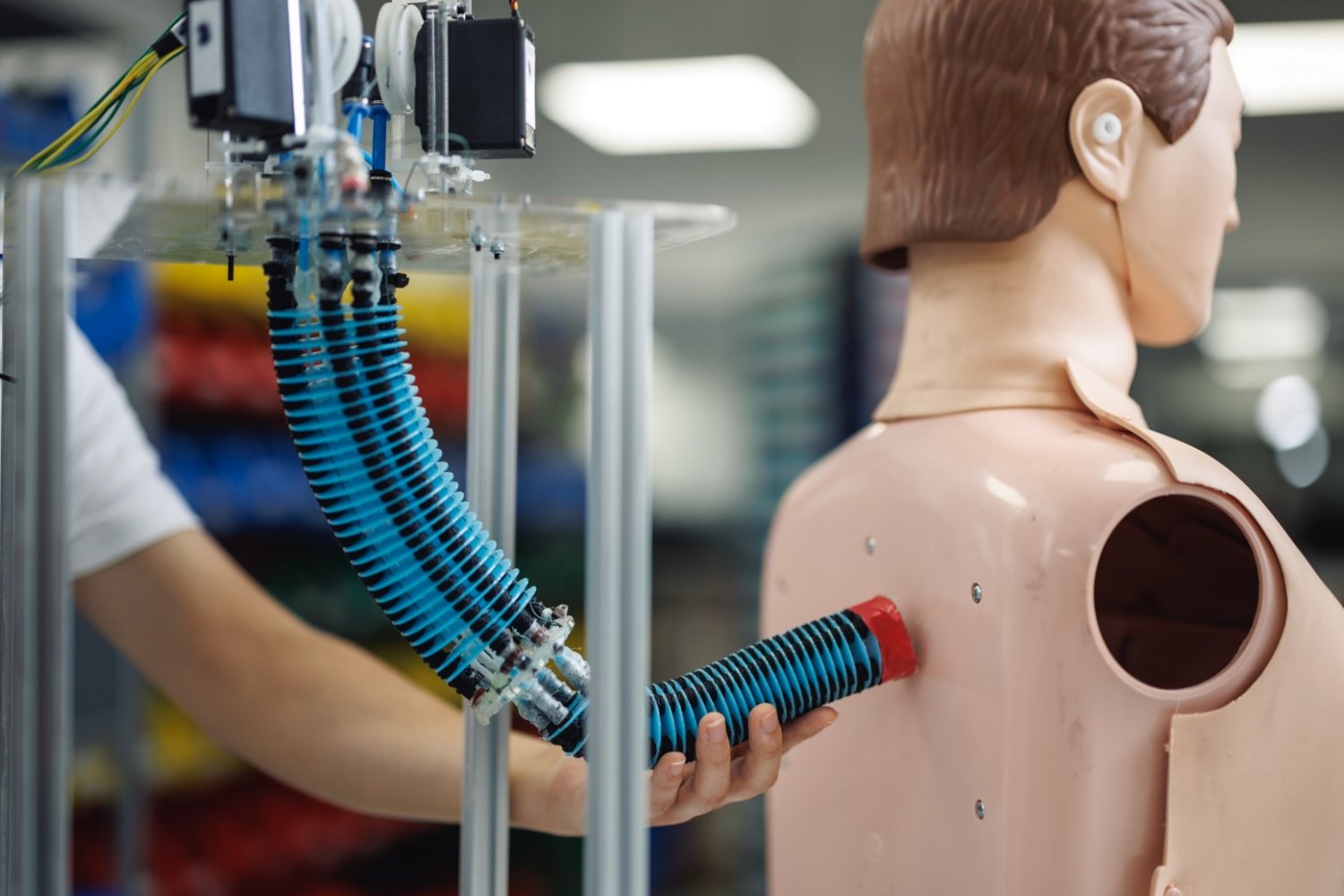
MIT researchers have developed a neural blueprint that enables soft robots to exhibit human-like intelligence, marking a breakthrough in medical training simulation technology. The system integrates advanced neural networks with pneumatic soft robotics to create patient simulators that respond with realistic physiological reactions.
Advanced Patient Simulation Capabilities
The new patient simulators feature integrated sensors and AI-driven response systems that replicate human physiological reactions during medical procedures. Healthcare professionals can practice critical interventions in completely risk-free environments while receiving real-time performance feedback.
These systems collect detailed performance data for analysis, allowing medical schools to track skill development and identify areas needing improvement. The technology offers a cost-effective alternative to traditional cadaver-based training methods.
Impact on Healthcare Education
The simulators bridge the gap between theoretical medical knowledge and practical patient care by providing repeatable training scenarios. Medical professionals can master complex procedures through multiple practice sessions without patient safety concerns.
The neural architecture allows robots to adapt their responses based on treatment inputs, creating more realistic training experiences. This advancement positions soft robotics as a key component in preparing healthcare workers for real-world medical situations.