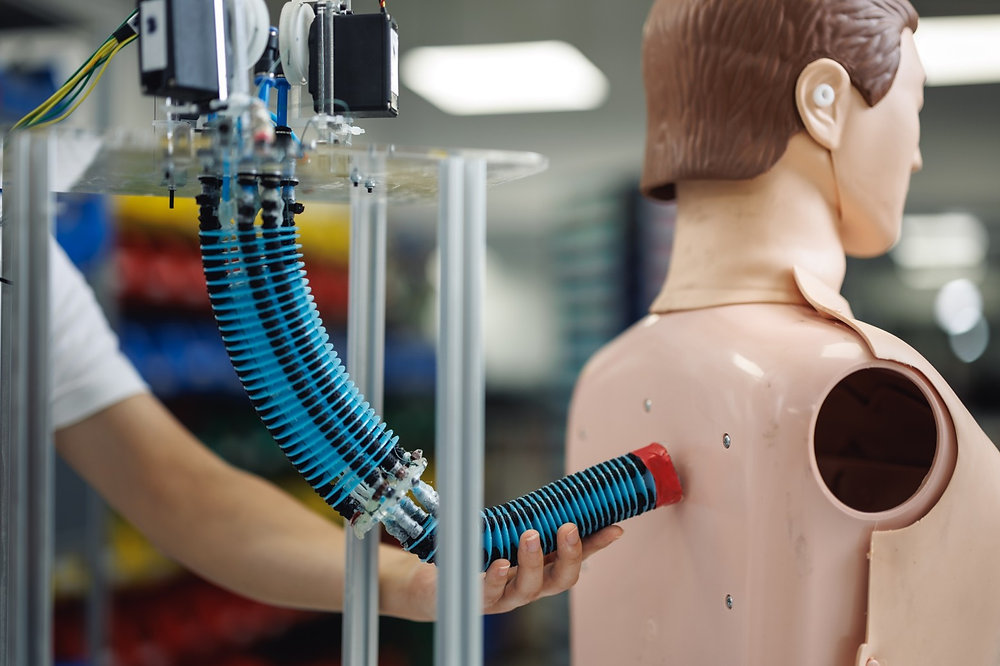
MIT's Singapore-MIT Alliance for Research and Technology (SMART) and the National University of Singapore (NUS) have developed a neural control framework that enables soft robots to exhibit human-like intelligence and adaptability.
The breakthrough addresses a fundamental challenge in soft robotics: creating control systems that can manage the complex, continuously deformable nature of soft materials while enabling intelligent decision-making.
Neural Framework Mimics Human Motor Control
The research team's neural blueprint draws inspiration from how the human brain controls movement through interconnected neural networks. This approach allows soft robots to process sensory information and adapt their behavior in real-time, similar to biological systems.
Unlike traditional rigid robots that rely on precise joint control, soft robots require fundamentally different control strategies due to their infinite degrees of freedom and material properties that change during operation.
Applications in Medical and Industrial Settings
The neural control system enables soft robots to perform delicate tasks requiring human-like dexterity and adaptability. Medical applications include surgical assistance and patient care, where soft robots can safely interact with human tissue.
Industrial applications focus on handling fragile objects and operating in unpredictable environments where traditional rigid robots would fail. The system's ability to learn and adapt makes it suitable for complex manufacturing processes requiring precision and flexibility.