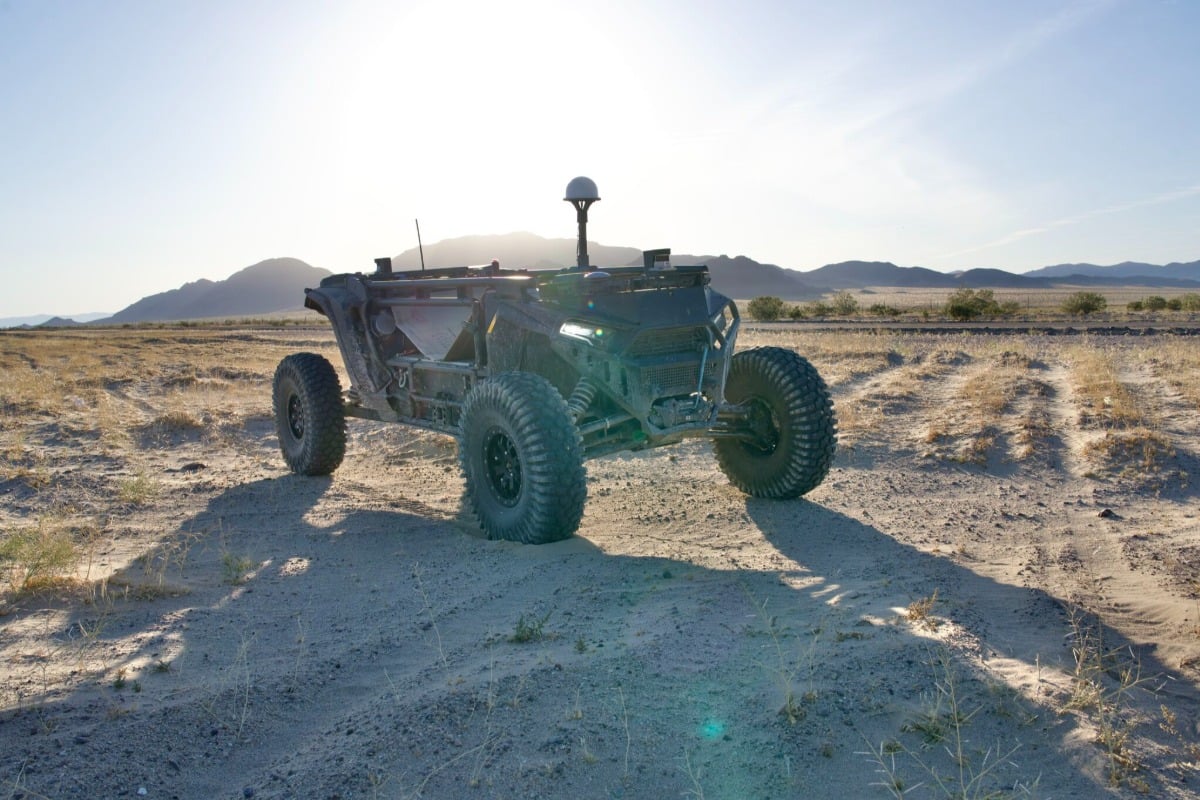
The U.S. Marine Corps has put autonomous ground robots into one of its most demanding combat roles, awarding Seattle-based Overland AI a roughly $20 million contract to supply unmanned ground vehicles and autonomy software in direct support of the Marine Air Defense Integrated System (MADIS), the Corps' primary mobile counter-drone capability.
Robots join the Corps' drone-hunting fleet
MADIS pairs two Joint Light Tactical Vehicles into a maneuverable combat team built to detect, jam, and destroy drones and low-flying aircraft on the move. The Mk1 vehicle handles hard-kill engagement with a 30mm cannon and Stinger missiles, while the Mk2 manages electronic warfare and command-and-control. Marine planners have watched cheap commercial drones reshape the battlefields of Ukraine, Iraq, and Syria, and MADIS is the Corps' answer for the distributed, island-hopping fights it is preparing for in the Pacific.
Overland AI's vehicles add an autonomous sensor and force-protection layer to that architecture, extending detection range and pulling Marines out of the most exposed positions. The first full-rate production MADIS was unveiled in September 2025, and in June 2026 the 12th Marine Littoral Regiment on Okinawa formally received the system as part of the Corps' Force Design modernization push.
Off-road autonomy born from DARPA
The contract buys Overland AI's OverDrive autonomy stack and OverWatch command software. OverDrive grew out of DARPA's RACER program, which spent years testing high-speed off-road autonomy in the harshest natural terrain the government could find. Using onboard passive sensors, the system maps terrain in real time so a vehicle can cross forest, mud, snow, and sand without a human in the loop or a satellite link overhead. OverWatch lets a single operator task and retask multiple vehicles at once through an open API.
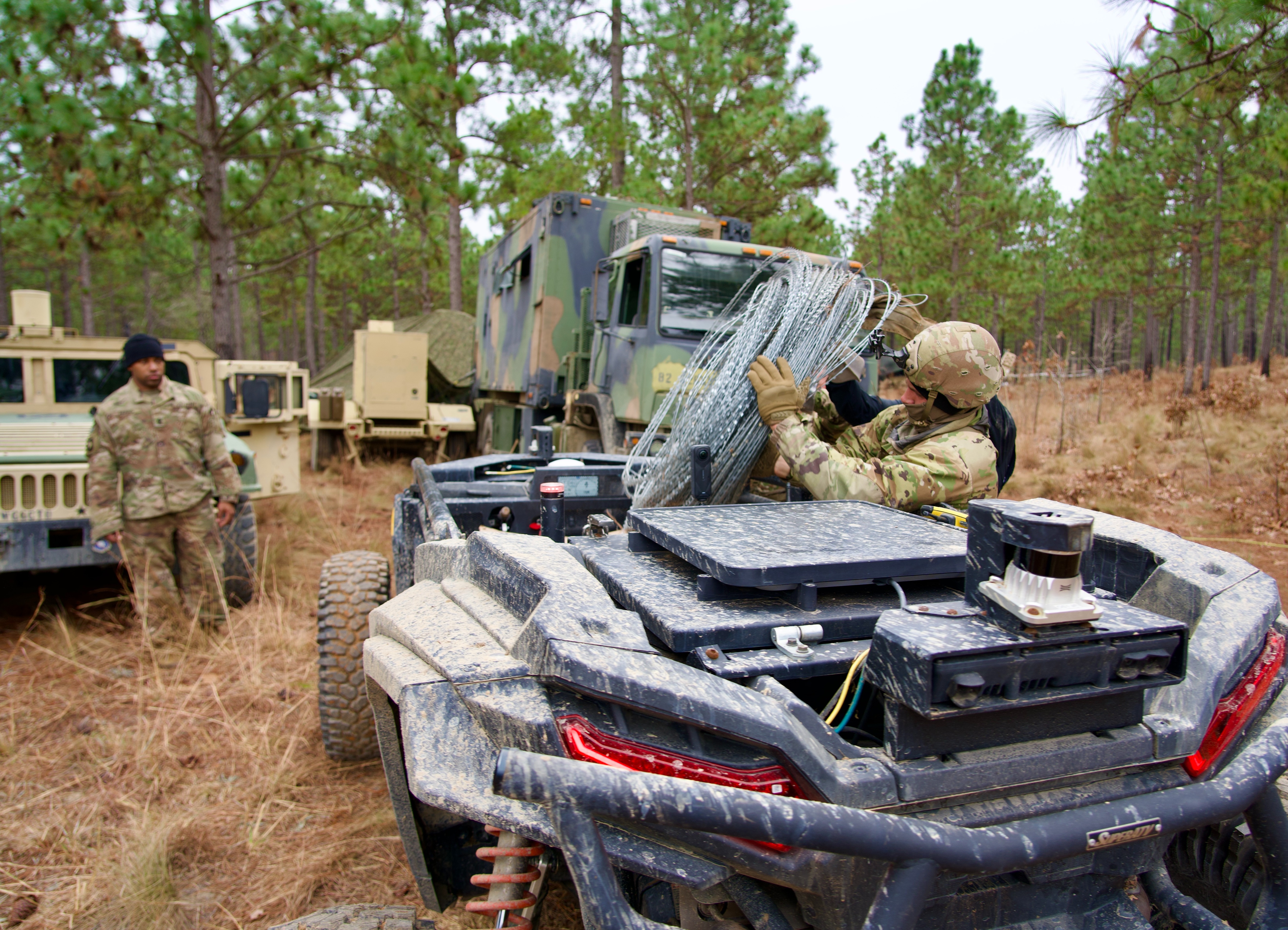
The platform most associated with the company's military work is its ULTRA unmanned ground vehicle, a 1,588 kg machine with a 454 kg payload, a 56 km/h top speed, and about 161 km of range. Overland AI has not confirmed which platform the Marine Corps is procuring, but the vehicles will carry the same OverDrive and OverWatch stack already deployed with the 1st Cavalry Division, 173rd Airborne Brigade, 82nd Airborne Division, 2nd Marine Logistics Group, and U.S. Special Operations Command.
From prototype to fielded hardware
Marine Corps Systems Command issued the award as a sole-source Other Transaction Authority purchase under 10 U.S. Code 4022(f), a follow-on production mechanism that converts years of prototype testing into fielded equipment. Of the $19.7 million total value, $16.9 million in fiscal 2026 procurement funds was obligated at award, giving the program stability through a delivery window that runs to October 2027.
Overland AI raised $100 million earlier in 2026 to scale production across the Army, Marine Corps, and SOCOM, with president Stephanie Bonk saying demand had moved "decisively from experimentation to operational integration." The MADIS deal validates that claim. The award lands amid a wave of counter-drone procurement; for related coverage see our reports on XTEND's $9M multi-drone defense order, the U.S. Army's expanding counter-drone marketplace, and AeroVironment's backpackable UGV at Eurosatory 2026.
Reporting based on coverage from The Defence Blog and Overland AI.