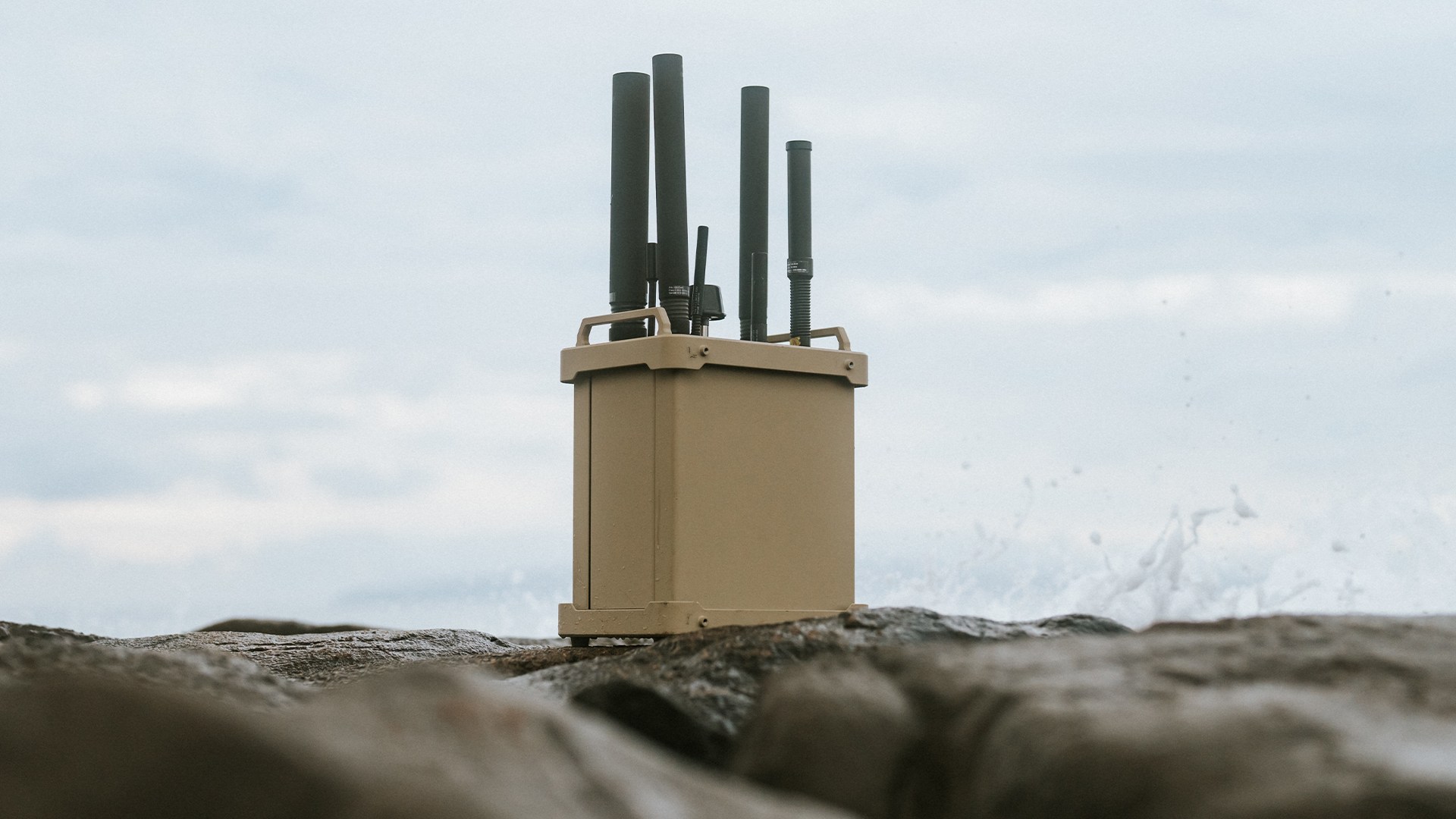
AeroVironment Books $80.5M Titan Task Order for Air Force Base Defense
AeroVironment landed the first purchase order under its $500M Domestic Shield IDIQ, an $80.5M buy of Titan MS counter-UAS systems for Air Force Global Strike Command bases.
Key Takeaways
AeroVironment booked an $80.5 million task order on July 6 for Titan MS counter-UAS systems, the first purchase under its $500 million Domestic Shield IDIQ contract.
The order, placed by Army-led Joint Interagency Task Force 401 (JIATF-401), will harden multiple U.S. Air Force Global Strike Command bases against small drone threats.
Titan-MS uses AI and machine learning to counter both RF-controlled and autonomous drones; Titan variants are now operational in 17 countries, with 118 Titan 4 and 400 Titan-SV systems delivered last quarter.
The award rides a U.S. policy shift toward domestic counter-drone defense, driven by the Restoring American Airspace Sovereignty executive order and the SAFER SKIES Act.
It adds to AeroVironment's growing force-protection portfolio, including the Halo_Shield framework, a $117M Army P550 order, and the $500M JIATF-401 parent IDIQ.
Kaan Tınmaz
AeroVironment on July 6 booked the first task order under its $500 million Domestic Shield indefinite-delivery contract, an $80.5 million buy of Titan MS counter-drone systems that will harden multiple U.S. Air Force Global Strike Command bases against small unmanned aircraft.
What the JIATF-401 task order covers
Joint Interagency Task Force 401 (JIATF-401), the Army-led counter-UAS body stood up to defend homeland defense infrastructure, selected AeroVironment's Titan-MS multi-sensor system for a fielded purchase order under the Department of War's Domestic Shield initiative. Col. Jason Idleman, JIATF-401's Chief for Multi-Domain Operations Division, said the deal delivers "the tools to detect, track, and defend against illicit drones" to base operators. Delivery orders will roll under the wider $500 million IDIQ that AeroVironment landed the same day.
Titan family goes global
AeroVironment's Titan-MS fuses AI and machine learning against both RF-controlled and autonomous drone threats. During the last quarter, AeroVironment delivered 118 Titan 4 systems and 400 Titan-SV systems, and Titan variants are now operational in 17 countries. The lighter Titan4 variant is 17% lighter and 73% smaller than its predecessor while pushing 540W across six RF bands.
Why now: policy and the drone-cost curve
The award lands as U.S. federal policy pivots hard toward domestic C-UAS defense. The White House's "Restoring American Airspace Sovereignty" executive order and the SAFER SKIES Act are opening broader deployment lanes for compliant counter-drone systems, and AeroVironment's Titan revenue growth has tracked that shift. CEO Wahid Nawabi called counter-UAS "no longer a future requirement" but "the defining operational imperative of modern defense."
What is the $80.5 million AeroVironment task order for?
It is the first purchase order under AeroVironment's $500 million Domestic Shield IDIQ, covering Titan MS counter-drone systems to defend multiple U.S. Air Force Global Strike Command bases against small unmanned aircraft.
Who awarded the Titan MS order and why?
Joint Interagency Task Force 401 (JIATF-401), the Army-led counter-UAS body defending homeland defense infrastructure, selected Titan-MS to give base operators tools to detect, track, and defend against illicit drones, per Col. Jason Idleman.
What can the Titan-MS counter-UAS system do?
Titan-MS fuses AI and machine learning to counter both RF-controlled and autonomous drone threats. The related Titan4 variant is 17% lighter and 73% smaller than its predecessor while delivering 540W across six RF bands.
What policy changes are driving domestic counter-drone contracts?
The White House's Restoring American Airspace Sovereignty executive order and the SAFER SKIES Act are opening broader deployment lanes for compliant counter-drone systems, fueling Titan revenue growth.