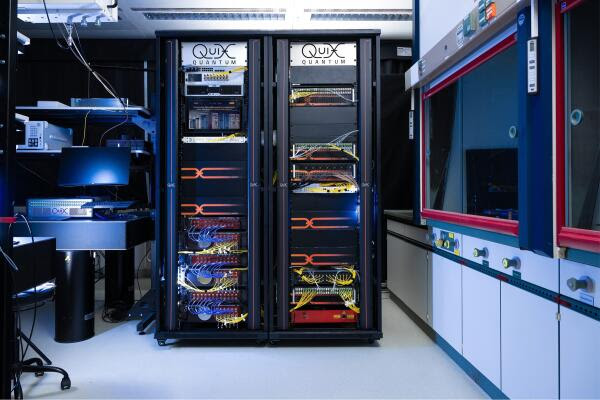
Dutch-German photonic quantum computing pioneer QuiX Quantum unveiled Carina on July 14, calling it the world's first universal photonic quantum computing architecture built to be installed in customer data centers. The system was developed as part of the Universal Photonic Quantum Computer (UPQC) project of the German Aerospace Center's Quantum Computing Initiative (DLR QCI), funded by the German Federal Ministry of Research, Technology and Space.
Universal Gate Set On Single Photons
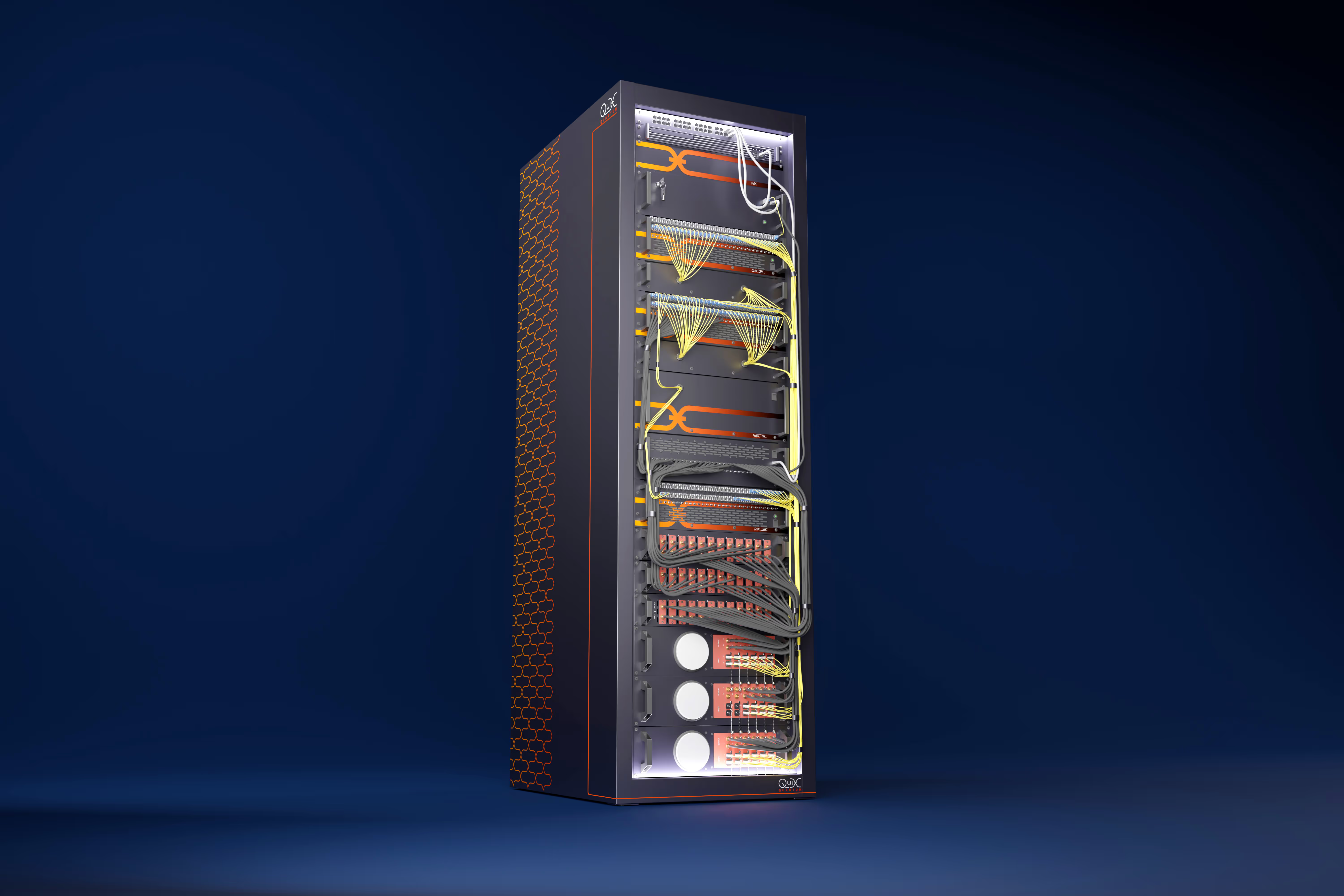
Unlike earlier photonic systems built around narrow computational models such as boson samplers, Carina implements a universal gate set that can run any gate-based quantum algorithm. The architecture combines on-chip single-photon generation, multiplexing, cluster-state generation, measurement, photonic assembly control and fast feed-forward control into a single rack-based stack. QuiX Quantum's Feed-Forward Control Unit (FFCU) converts single-photon detector signals directly into real-time routing actions on the photonic integrated circuits, providing the deterministic universality that measurement-based quantum computing requires.
Room-Temperature, Data-Center-Ready
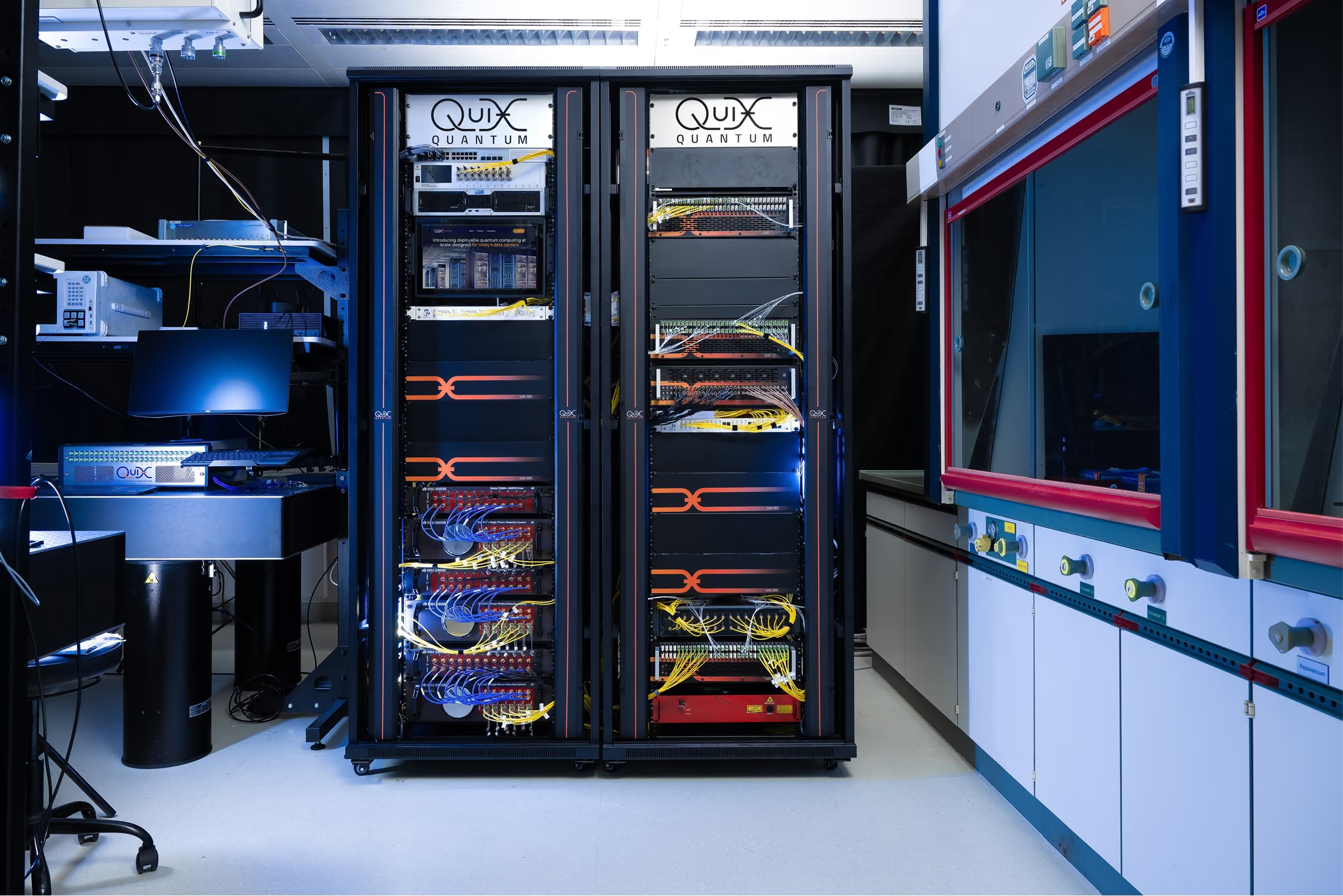
Most quantum computers still rely on cryogenic cooling and specialised laboratory infrastructure. Carina runs primarily at room temperature and fits standard data center racks alongside existing high-performance computing and AI infrastructure, addressing what QuiX Quantum CEO Stefan Hengesbach called the split between "systems that could be commercialized quickly but were not built for universal, fault-tolerant computing, and architectures with long-term scalability potential that remained difficult to deploy." The Carina core hardware has been delivered to DLR QCI's innovation centres in Ulm, where it enters multi-month integration, calibration and operational readiness benchmarking.
Bridge To Fault Tolerance
Carina establishes the physical-qubit foundation for QuiX Quantum's next-generation Dedalo architecture, which the company recently outlined in a white paper as its path from physical qubits to logical qubits and fault-tolerant photonic quantum computing. The company has also demonstrated a production-ready method of "below-threshold" error mitigation on a photonic system, suppressing physical qubit errors to a level compatible with scalable fault tolerance. Prof. Andrew G. White of the University of Queensland called Carina "the first system designed both to generate on-chip cluster states, the fundamental resource for measurement-based quantum computing, and for commercial deployment."
Related coverage: Quantinuum, Rolls-Royce, Riverlane And EPCC Ink Multi-Year UK Gas-Turbine Quantum Pact, Pasqal Leads €50M Q-PLANET Push To Industrialise Neutral-Atom Quantum Chips, Google's Willow Quantum Chip Learns From Its Own Errors.
Reporting based on coverage from The Quantum Insider and QuiX Quantum's press release.