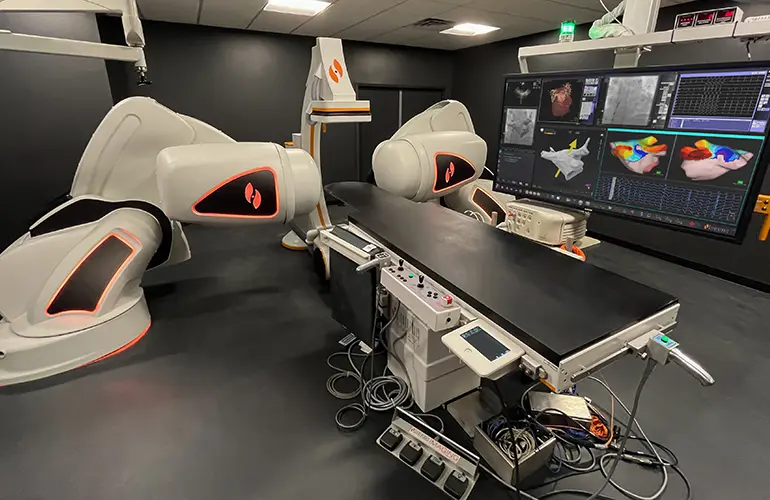
Surgical robotics pioneer Stereotaxis has kicked off the US limited launch of its next-generation GenesisX robotic magnetic navigation system, building on the 510(k) FDA clearance the device earned in late 2025 and the company’s January approval for a paired robotic ablation catheter.
A Cath Lab That Fits Existing Cath Labs
The headline story with GenesisX is install footprint. The redesigned system folds magnetic shielding into its own structure rather than into the operating room walls, runs on standard 120/230V power, requires no structural anchoring, and packs an 80% smaller system cabinet. Hospitals can drop GenesisX into existing non-modified cath labs without expensive construction. That solves a problem that has slowed magnetic navigation for two decades.
Synchrony Completes The Digital Cockpit
Stereotaxis is rolling the system into market alongside its newly cleared Synchrony integration software and an expanded catheter library, finally giving electrophysiologists the “digital cockpit” vision the company first sketched out in 2019. CEO David Fischel told investors GenesisX has already begun a controlled US and European rollout while the company continues to expand x-ray compatibility and catheter approvals through 2026.
Where It Sits In The Surgical Robotics Race
GenesisX joins a 2026 surge in robotic-assisted surgery clearances. CMR Surgical’s Versius Plus just began its US commercial launch, Microbot Medical’s LIBERTY cleared in Israel, and Medtronic’s Hugo system is now in urology launch mode. Stereotaxis is betting that magnetic, catheter-based navigation owns electrophysiology and structural heart corners that arm-and-grasper systems can’t reach.
Reporting based on coverage from Stereotaxis IR, MedTech Dive, MPO and CardiovascularBusiness.