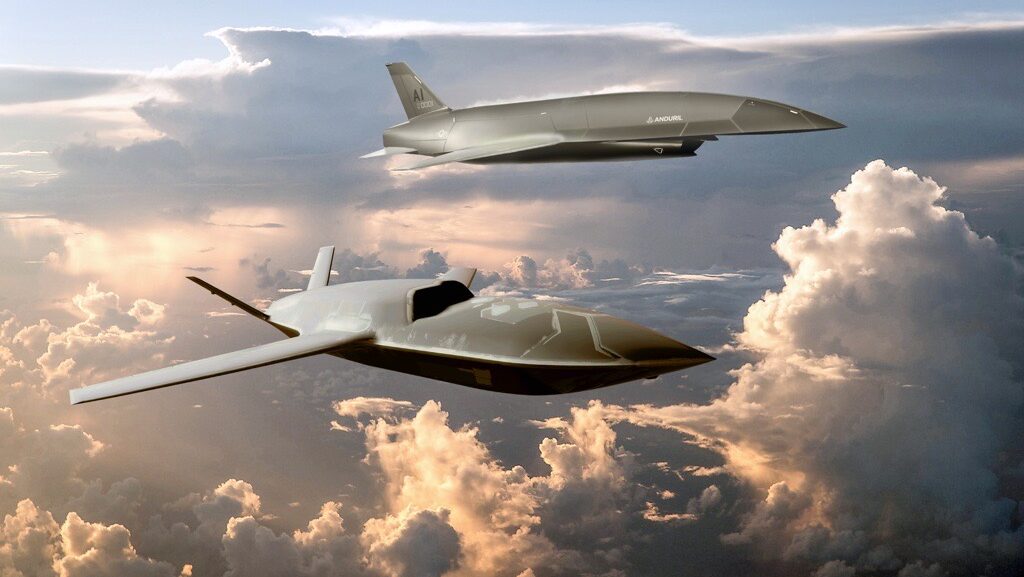
The US Air Force on June 17, 2026 selected General Atomics and Anduril to build the first production lot of its Collaborative Combat Aircraft (CCA) — the loyal-wingman drones that will fly alongside crewed fighters such as the F-35 and the next-generation F-47. In a parallel competition, Anduril, Shield AI and RTX subsidiary Collins Aerospace were tapped to continue developing the autonomy software, with a final downselect to a single autonomy vendor targeted for summer 2027.
What the Air Force bought
According to Col. Timothy Helfrich, portfolio acquisition executive for Fighters & Advanced Aircraft, the program is structured to deliver "150-plus aircraft by the end of the decade", with the service aiming for a unit cost of roughly one-third of an F-35. With Lot 17 F-35As priced near $82.5 million, that implies a CCA unit cost under $30 million. The Air Force is requesting roughly $1.4 billion to develop CCA in fiscal 2027, alongside nearly $1 billion for procurement.
Two airframes, refined from 2024 prototypes
The two airframes — General Atomics' YFQ-42A and Anduril's YFQ-44A — are "at the core" the same designs that won prototyping contracts back in 2024, beating out Boeing, Lockheed Martin and Northrop Grumman. Both airframes will lose their "Y" designations as they move into production. Helfrich emphasised that this was a fully new source selection from the original five competitors, not a continuation, and confirmed that a May 2026 crash of the YFQ-42A prototype played "no" role in the decision.
Three autonomy vendors continue, one will win
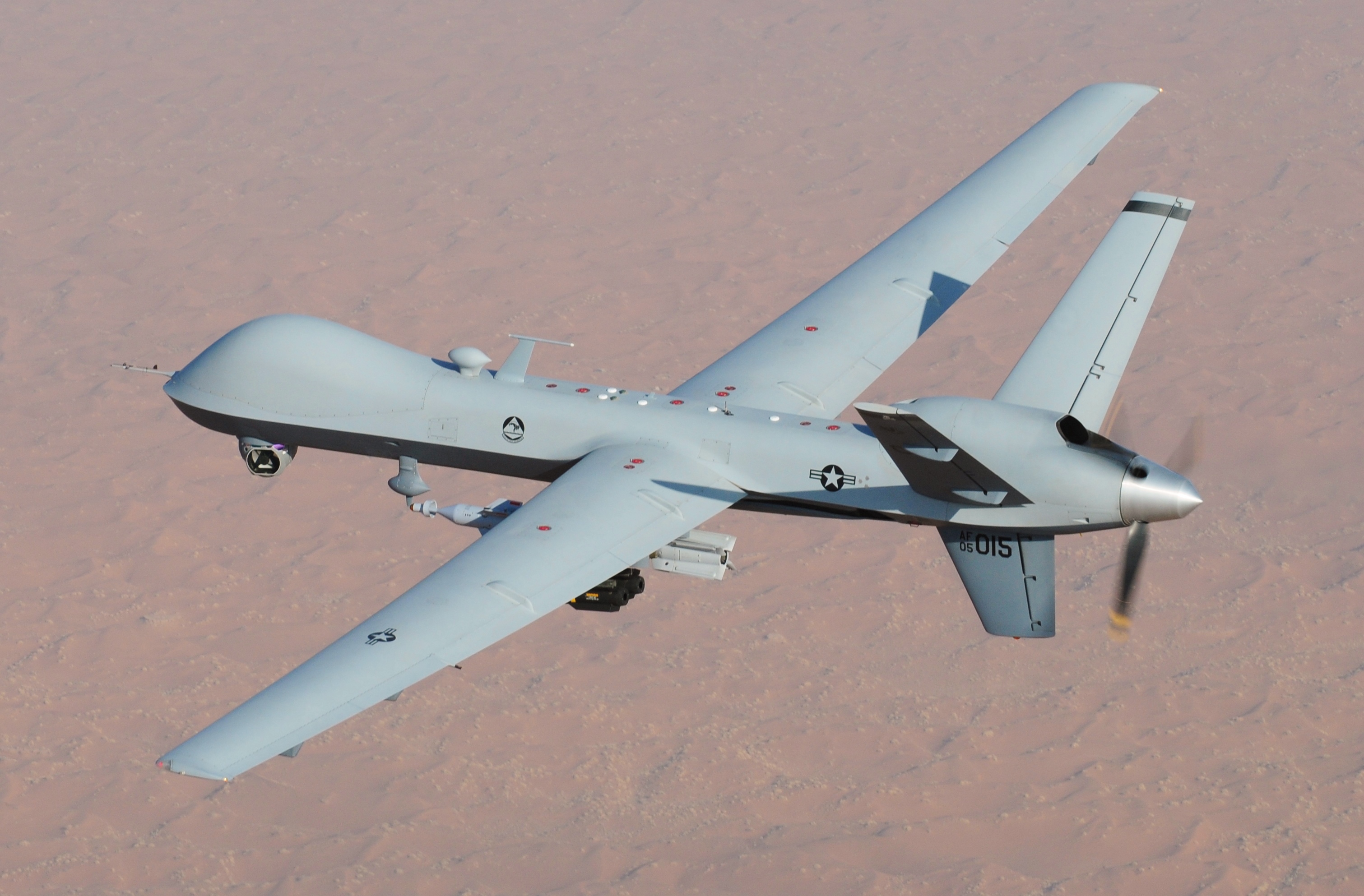
The autonomy competition is more open. RTX's Collins Aerospace had previously been picked to provide the autonomy software for General Atomics' airframe, alongside Shield AI for Anduril's. With Anduril itself now also in the running, the three companies will work through a six-month performance period before "one or two" advance into a second six-month evaluation, with a final winner picked in summer 2027. The Air Force is keeping all six original vendors in a pool as a backup option for licensing flexibility, the service said.
Why it matters
The CCA program is the first concrete step toward fielding fleets of autonomous "loyal wingman" combat drones at scale, designed to multiply the combat capacity of crewed fighters in contested airspace. Beyond the Air Force's stated goal of 150-plus aircraft this decade, the program creates a foundation for follow-on increments and effectively anchors Anduril and Shield AI as long-term autonomy primes alongside legacy defense majors. It also caps a sweeping June 2026 expansion of US and allied drone procurement that has included multi-billion-dollar Pentagon kamikaze-drone buys and an extension of the Army's UAS / counter-UAS marketplace at Eurosatory.
Reporting based on coverage by Breaking Defense (Aaron Mehta and Michael Marrow, 17 June 2026) and US Air Force briefing materials.