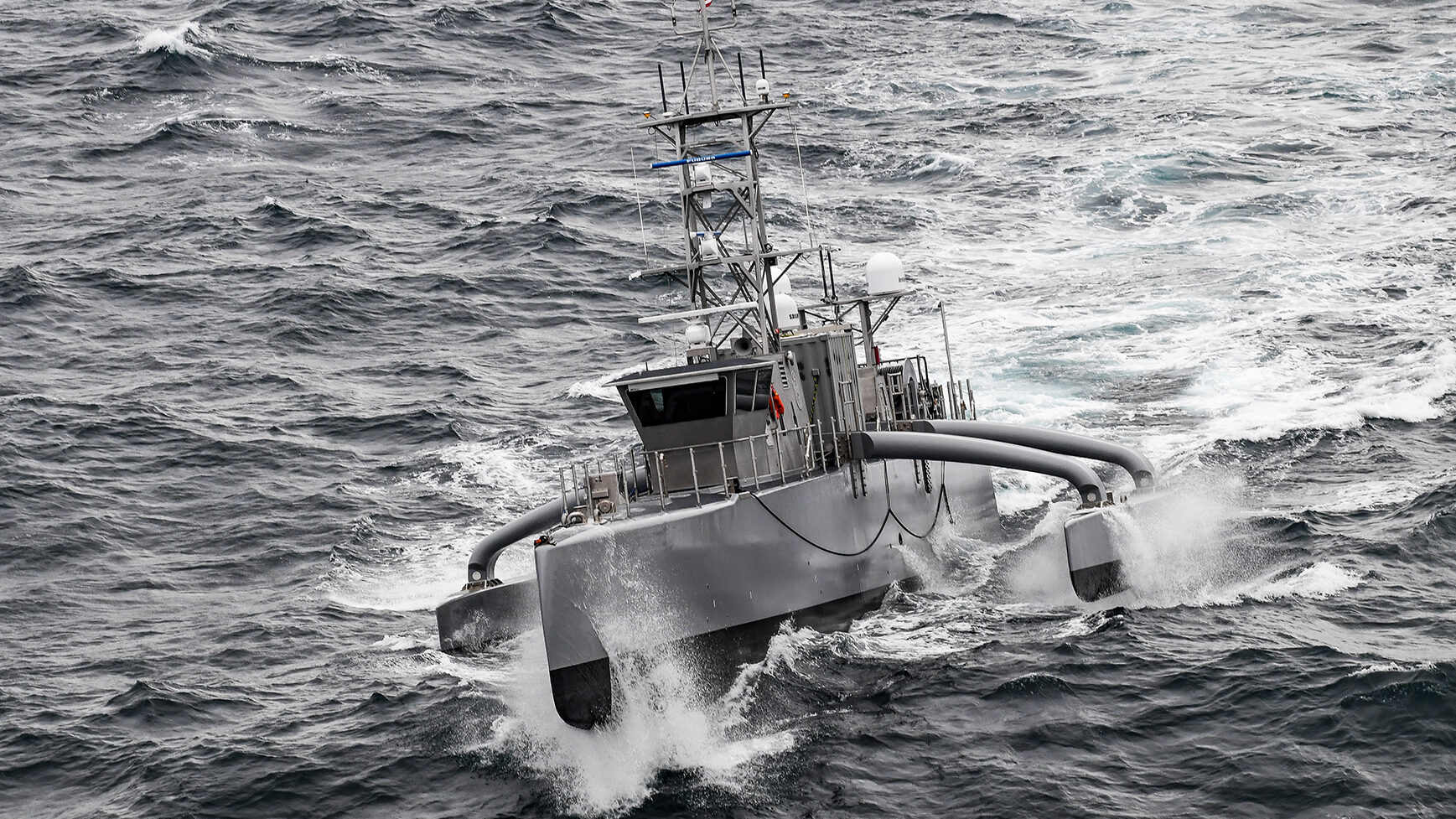
The aircraft carrier USS Theodore Roosevelt is preparing for a deployment that will fold an unmanned surface vessel into the strike group for the first time, U.S. Navy officials told Breaking Defense on June 4. The Seahawk medium unmanned surface vessel (MUSV) will sail as a designated member of the strike group rather than as a side experiment — the clearest signal yet that the Navy is moving robotic ships from testbed to fleet asset.
From Demo To Strike Group
Seahawk has been operating as part of the Navy’s Unmanned Surface Vessel Division (USVDIV) for several years, accumulating long-duration autonomous transits and limited-payload trials. The Theodore Roosevelt deployment marks the first time a carrier strike group commander will own a robotic surface combatant as part of the operational order of battle. That changes the tasking model: the Navy can now experiment with persistent unmanned ISR pickets, mine-countermeasure escort screens and decoy contributions without pulling crewed combatants off other missions.

Why USVs Now
The Navy’s shift on unmanned surface vessels has accelerated since 2024 as Chinese surface combatant production has continued to outpace U.S. shipyards. A medium USV like Seahawk costs a small fraction of a destroyer and can be reproduced quickly — useful both as a sensor multiplier and as a force the Navy can afford to put forward in contested waters. Strike-group integration is the inflection point: once unmanned ships are routinely interoperable with carrier-based communications, refueling and command, the case for buying them at scale gets easier.
How It Fits With AUKUS And Allied Programmes
The Seahawk integration lands alongside other June moves we covered: the AUKUS Pillar II undersea drone project announced this week, with first deliveries in 2027, and the Pentagon CDAO Crucible 2 swarm selection. Read together, they signal a U.S. and allied push to put unmanned platforms in the water at the same rate the Pentagon is pushing them into the air.
What To Watch On Deployment
Three signals matter. First, whether Seahawk operates persistently with the carrier or only during specific evolutions. Second, what payloads are revealed publicly — ISR, electronic warfare, mine countermeasures, or limited strike. Third, whether the Navy uses lessons from the Theodore Roosevelt deployment to accelerate the larger Large USV programme, which has been slowed by congressional concerns about autonomous lethality. Operationally proving that a robotic ship can live inside a strike group is the prerequisite for the rest of the Navy’s unmanned fleet plan.
Reporting based on coverage from Breaking Defense, Naval News and U.S. Navy statements.