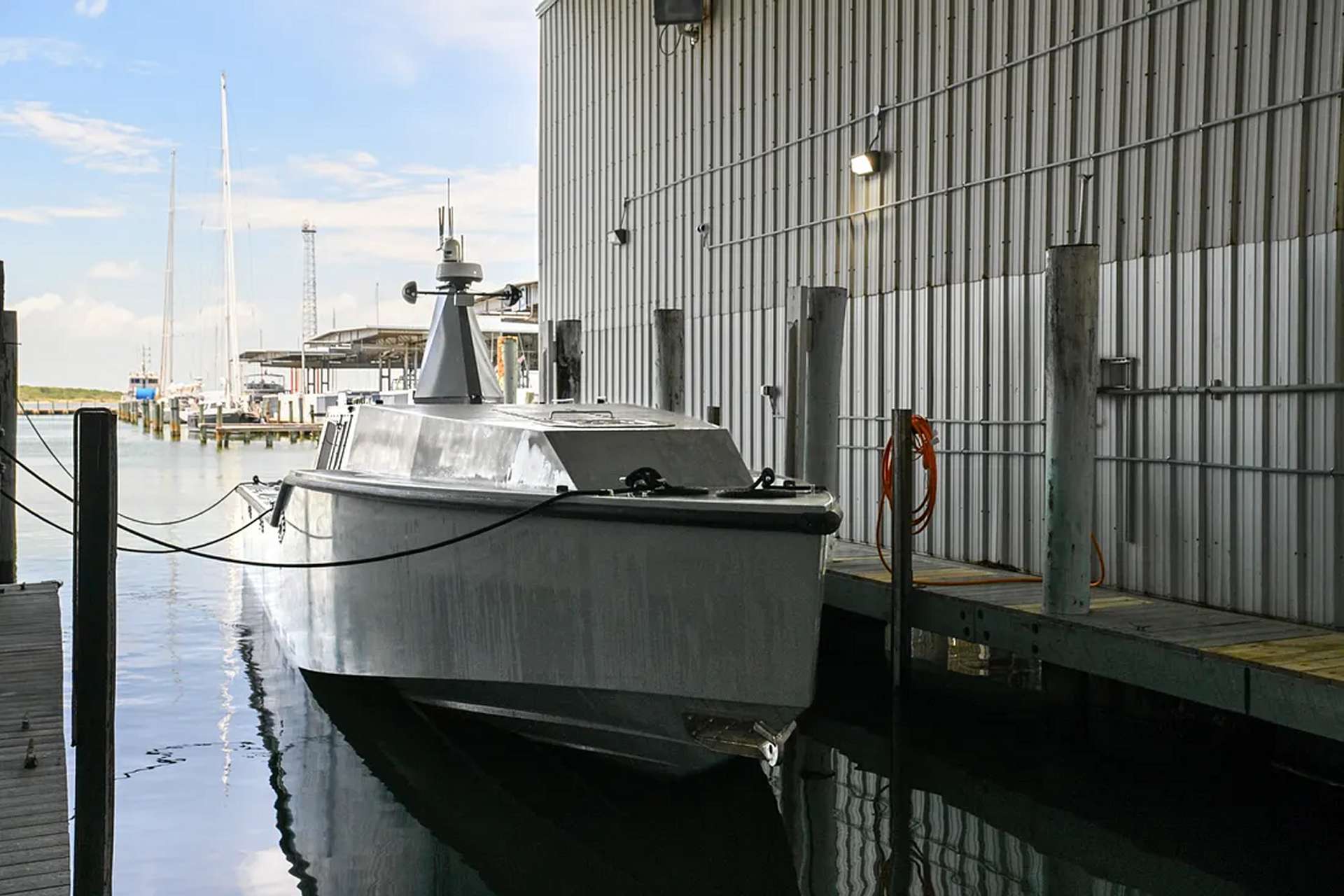
Saronic Technologies launched Mirage on July 3, 2026, a 52-foot autonomous surface vessel that gives the US Navy a substantially larger unmanned platform for long-range missions and heavier payloads. The vessel began on-water trials in Galveston, Texas, arriving at a moment when the Navy is shifting unmanned surface systems from experimentation toward full procurement programs.
Speed, Range and a 3,500-Pound Payload
Mirage is designed to exceed 35 knots, cover more than 2,500 nautical miles and carry up to 3,500 pounds of payload, roughly 3.5 times the capacity of Saronic's 24-foot Corsair. That envelope leaves room for modular combinations a smaller craft cannot host, including stabilized remote weapon stations, electro-optical/infrared turrets, surface-search radar, electronic warfare packages or canisterized precision munitions, depending on what a government customer certifies. Saronic has not announced an installed weapon fit; the vessel is best understood as a payload truck for distributed maritime operations.
Shared Autonomy Stack, Growing Factory
The vessel runs the same core autonomy software as the rest of Saronic's fleet and can operate fully autonomously or under remote human supervision through Echelon, the company's command-and-control suite for mission planning, simulation and control. One control cell can supervise several craft at once, letting a Mirage detachment screen tens of nautical miles ahead of crewed ships and force adversaries to spend time classifying unmanned contacts.
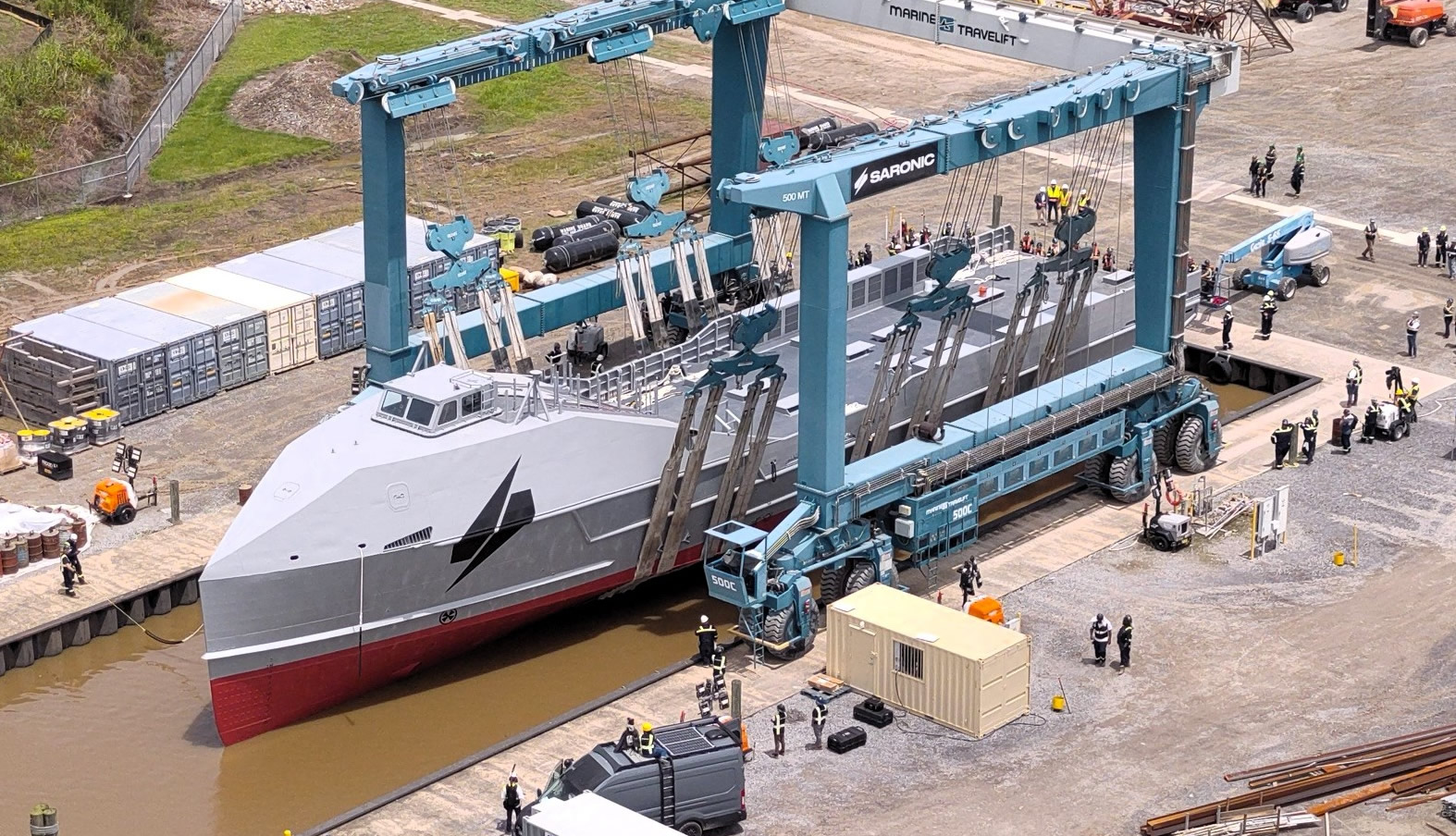
Mirage was designed and built at Saronic's Austin facility, which the company says can produce hundreds of Mirage vessels per year alongside thousands of Corsairs. It slots between Corsair and the 150-metric-ton-payload Marauder medium USV launched at the Franklin shipyard in May.
From Demonstrations to Procurement
The launch lands amid rapid commercial momentum. Saronic closed a $1.75 billion Series D at a $9.25 billion valuation in March, and public accounts describe a $392 million Navy production effort centered on Corsair. Its Corsair craft have already supported Task Force 59 operations in the Strait of Hormuz, while the new IMO MASS Code for autonomous ships took effect on July 1, giving unmanned vessels a clearer regulatory lane. The central question for planners is whether autonomous hulls like Mirage can be produced, armed, cyber-hardened and integrated fast enough to create measurable fleet capacity rather than another isolated demonstration.
Reporting based on coverage from Army Recognition and Saronic Technologies.