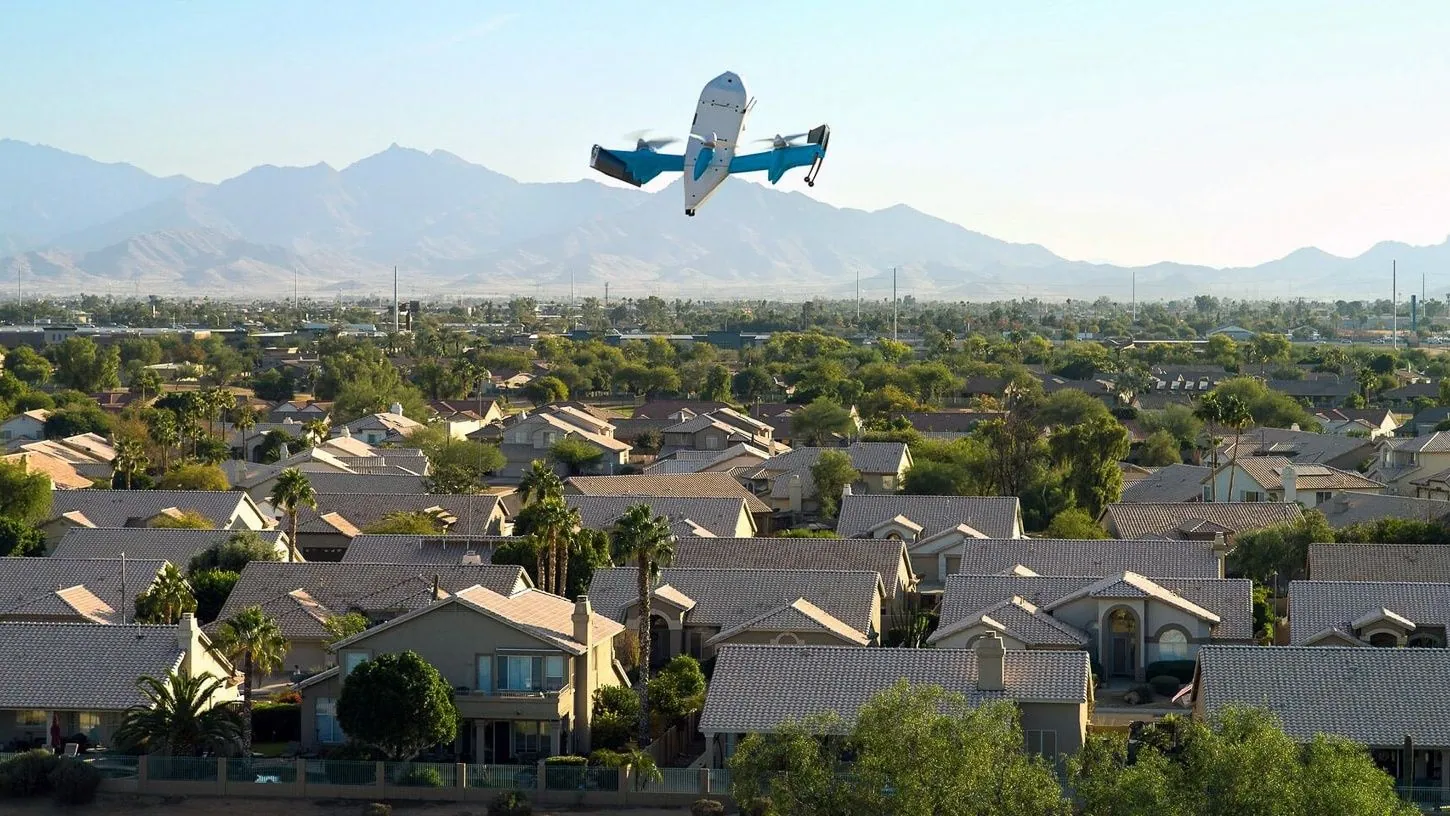
Amazon's Prime Air drones started flying deliveries out of a facility in Gwinnett County, metro Atlanta, the weekend of November 14-15, 2026, reaching homes within 7.5 miles in under an hour. But unlike Wing, the Alphabet-owned drone delivery company that also serves the Atlanta area, Amazon's launch left no public environmental review document on the FAA's drone index for Georgia, according to DroneXL.
The service uses Amazon's MK30 drone, an 83.2-pound aircraft that carries no parachute, to deliver items weighing up to 5 pounds, such as over-the-counter medicine or small electronics, to parts of Redan, Lilburn, Snellville, Tucker and Lithonia. Prime members pay $2.99 for orders under $50; non-members pay $4.99. Amazon says the launch created around 30 local jobs.
Why did Amazon skip the public filing that Wing didn't?
Every drone delivery operator needs environmental clearance from the Federal Aviation Administration before it can fly. Wing went through a site-specific environmental assessment for its Atlanta operation, a process that included a public comment period and drew zero comments during its July-to-August review window. Amazon, by contrast, relied on a national environmental finding the FAA signed last year covering its Part 135 drone delivery operations broadly, a blanket approval that lets individual city launches proceed through internal FAA review without triggering a new public notice.
That national finding did draw public attention when it was first proposed: 241 comments were submitted during its own comment period between December 2025 and January 2026. But once in place, it allows Amazon to open new delivery hubs, including in Atlanta, Ohio and Idaho, without a fresh public filing each time. Wing, which has not sought a similar blanket approval, continues to file site-by-site, meaning the public gets visibility into Wing's launches that it doesn't get into Amazon's under the current setup.
Why does this matter beyond one city?
Drone delivery is moving from pilot programs into dozens of US metro areas at once, with Amazon, Wing and Zipline all racing to add cities this year. As that expansion accelerates, the gap between operators who file public assessments and those who rely on blanket national approvals is likely to become a bigger point of friction with residents and local officials who want a say before drones start flying over their neighborhoods. Amazon has pointed residents with concerns to a customer service line and chat rather than a public comment process.
Amazon has not issued an official newsroom post announcing the Atlanta launch; the rollout was first reported locally by Atlanta news outlets before being flagged through FAA filing records. The Atlanta expansion follows Amazon's broader push this year to add drone delivery hubs across new US metro areas, a pace that is likely to keep the regulatory transparency question in front of local communities as more cities come online.