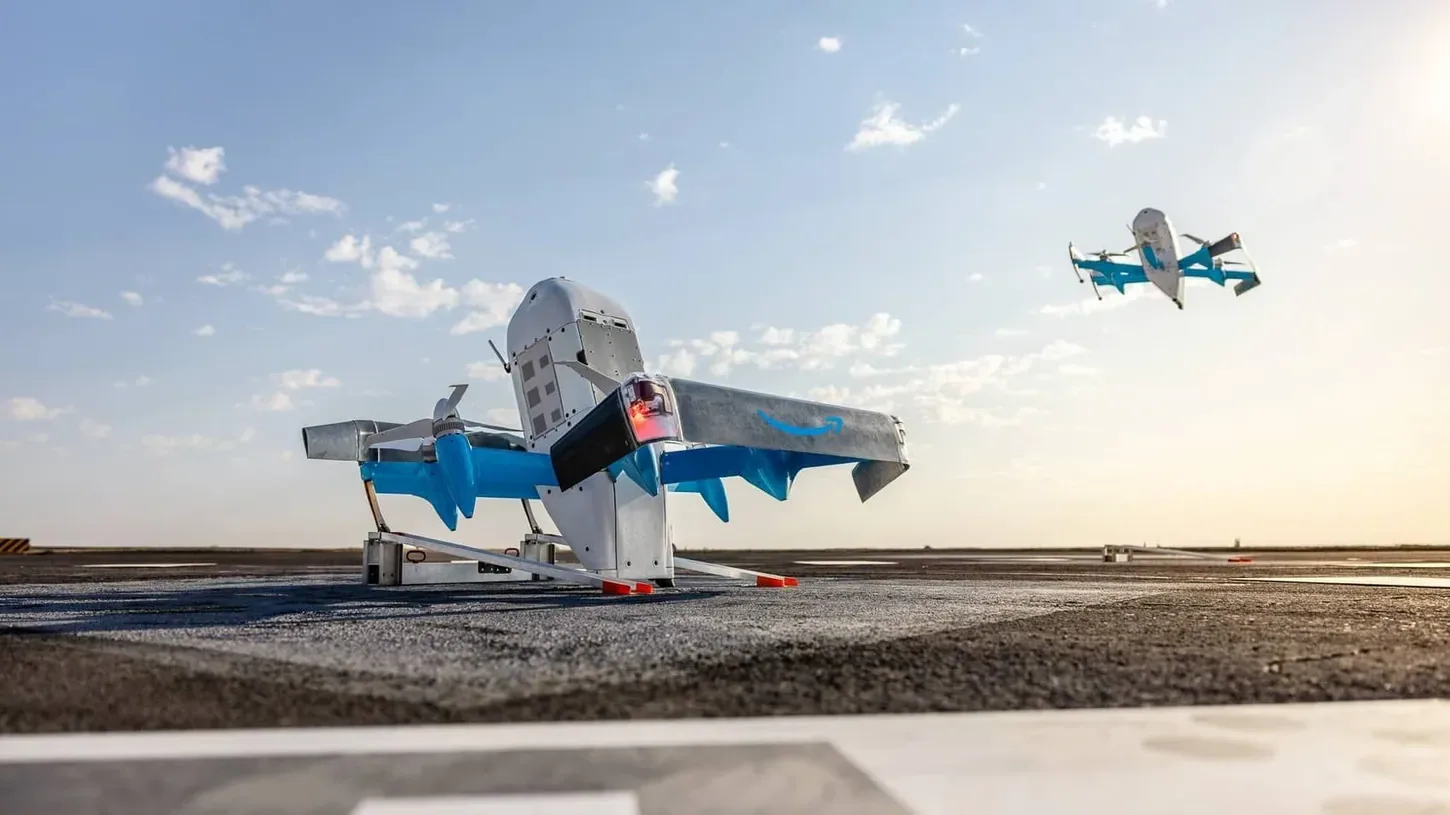
Amazon says it will reroute Prime Air drone flights out of its Nampa, Idaho hub after data requested by the city showed some homes seeing dozens of drone passes a day, just weeks after the service launched on October 30.
How many drones are actually flying over these homes each day?
According to flight data reviewed by DroneXL, homes in the Cherry Creek Estates subdivision saw between 63 and 79 drone passes a day during a measurement period from November 2 to 8 — roughly one every seven to nine minutes throughout operating hours. That works out to about 553 passes a week over the busiest addresses, even though those homes account for only about one-fifth of the roughly 350 daily flights launched from the hub.
The City of Nampa received 20 to 25 complaints in the two weeks after launch, prompting officials to request the flight data directly from Amazon rather than rely on resident estimates alone.
How loud are we talking, exactly?
Recorded flyover noise peaked between 49.1 and 51 decibels against a background level of roughly 40 to 42 decibels — a gap of 7 to 11 decibels, noticeable but well below the roar of a passing car. Amazon's own modeling estimates flyover noise closer to 55 decibels, and the drones' average altitude near these addresses measured between 262 and 285 feet, with one recorded pass as low as 194 feet, just above the company's 200-foot en-route minimum.
Nampa's planning director, Rodney Ashby, said the altitude data "reflects a higher altitude than many of the concerns we received reported," suggesting the frustration may be more about frequency and duration than any single flight.
What is Amazon actually promising to change?
Amazon spokesperson Nissa LaPoint said the company is making adjustments to "reduce the concentration of flights over certain areas" while keeping the same safety standards. In practice, that means spreading delivery routes more evenly across the area the Nampa hub serves, rather than funneling a disproportionate share of flights over Cherry Creek Estates specifically.
Amazon has not told the city or residents which routes will change or when, and the current permit for the hub sets no explicit limits on noise, altitude variance, or daily flight counts — leaving Amazon broad discretion over how, and how quickly, it responds.
Has this happened before with Amazon's drones?
Nampa is not the first city where neighbors near a Prime Air launch site have organized complaints over flight concentration this year, as Amazon expands its drone delivery footprint into new markets. The pattern suggests that as Amazon adds hubs ahead of its stated goal of scaling deliveries nationally, the choke point may not be regulatory approval but the tolerance of the neighborhoods closest to each new facility.
For a program still expanding into new cities, repeated noise disputes risk becoming a recurring local story at every launch, even as the company's safety record and overall flight volumes continue to grow.