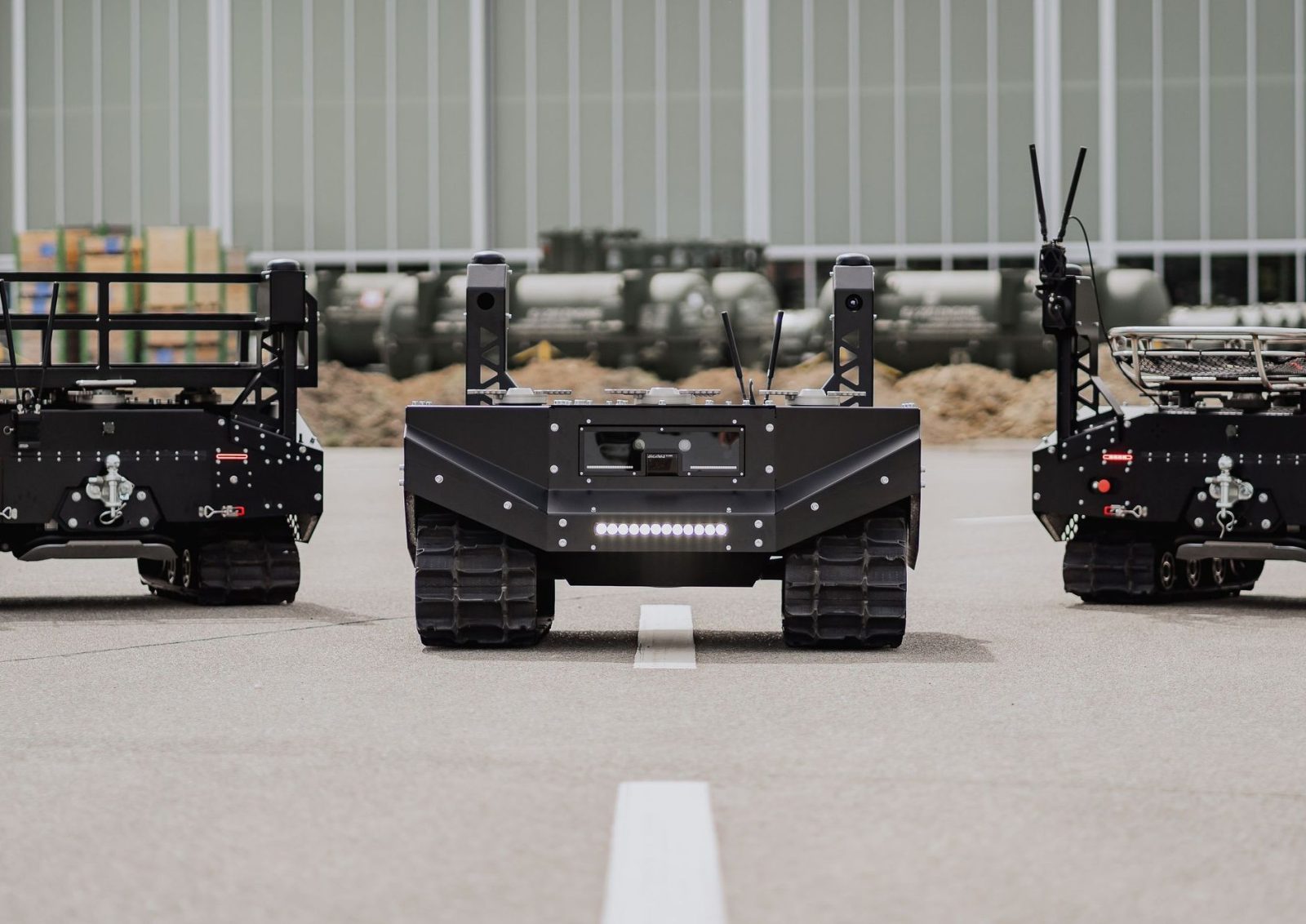
Twenty kilometers ahead of the infantry line, a four-wheeled robot sat motionless, cameras scanning. When it spotted something, the data did not wait for a radio call to a command post. It flowed straight into ASGARD, the British Army's AI-enabled digital targeting network, cutting the time between spotting a target and acting on it by a factor of ten.
That is what happened during Exercise Haraka Storm in Kenya, where German-British startup ARX Robotics became the first company to successfully integrate an unmanned ground vehicle into ASGARD, according to UK Defence Journal. ARX Robotics UK deployed two of its GEREON ground vehicles alongside soldiers from 1st Battalion, The Duke of Lancaster's Regiment and the Light Dragoons, part of 4 Brigade.
The GEREON system can operate up to 20 kilometers ahead of frontline troops, functioning as a persistent remote sentry over supply routes and gathering real-time intelligence through onboard sensors. During the exercise, it fed that data directly into ASGARD rather than requiring a human to relay it manually, which army officials say sped up the force's "sense-decide-effect" cycle tenfold. General Sir Roly Walker, Chief of the General Staff, said of the targeting network broadly: "What took hours, now takes minutes."
Why ground robots are catching up to drones in militaries' plans
Much of the attention on battlefield autonomy over the past two years has gone to aerial drones, particularly after their heavy use in Ukraine. ARX Robotics itself built its reputation there, and the company says it now operates the largest Western-built unmanned ground vehicle fleet in that conflict. The Kenya trial signals that armies are now trying to fold ground robots into the same automated targeting pipelines built for drones and satellites, rather than treating them as a separate, slower category of equipment.
ASGARD is the British Army's contribution to NATO's broader Digital Targeting Web, an AI-driven system meant to link sensors, data and weapons across allied forces by 2027. For a startup's hardware to plug directly into a program with that level of institutional backing is a meaningful validation step, well ahead of most competitors still running unmanned ground vehicles as standalone platforms with separate control software.
What comes next for ARX and the British Army
The integration arrives ahead of 4 Brigade's planned deployment to NATO's eastern flank in April 2027, giving the Army roughly five months to expand the trial before troops rely on the system operationally. ARX Robotics, founded in 2022 and backed by the NATO Innovation Fund, is investing £45 million in British manufacturing and research to support that scale-up.
The Kenya exercise followed an earlier GEREON demonstration in Estonia under Exercise Spring Storm earlier this year, suggesting the Army is testing the system across varied terrain before committing to wider fielding. Other Western militaries, including the US Army and Marine Corps, have separately begun funding unmanned ground vehicle programs this year, among them Overland AI's IBEX platform, indicating a broader shift toward budgeting for ground robots rather than treating them as experimental add-ons.