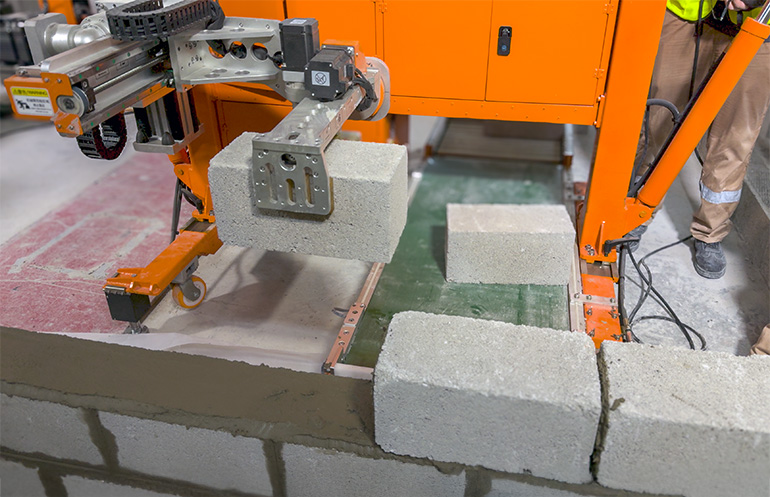
Buildroid AI, a construction robotics startup, will begin its first U.S. projects in 2026, bringing a model-based automated bricklaying platform to American job sites in a market the company argues is starved of skilled labor.

The company, led by construction-tech veteran Slava Solonitsyn and automation engineer Anton Glance, says its block-laying systems can place units weighing up to 40 kilograms and build walls up to four meters wide and three meters tall, with the entire deployment pipeline simulated up-front in NVIDIA Omniverse before reaching the site.
The technology stack
Buildroid's pitch is less about a single robot than about a digital-twin-first delivery model. Architectural plans and site conditions get loaded into Omniverse, where the company evaluates robot reach, sequencing and material handling. The same simulation produces the work plan the robots execute on site, eliminating much of the trial-and-error that has dogged earlier construction robotics deployments.
Market pull
U.S. commercial construction is dealing with persistent labor shortages and rising wages, particularly for skilled trades like masonry. The Hadrian X from Fastbricks Robotics already showed bricklaying robots can lay over 300 blocks per hour, compared with about 50 to 60 for a human bricklayer. Buildroid is betting that pairing that throughput with a simulation-driven planning approach will unlock more commercial-scale orders.
NVIDIA's silicon and software role
The deal puts another marker on NVIDIA's Omniverse-led push into industrial simulation, where the company is targeting construction, manufacturing and logistics customers who haven't traditionally consumed GPUs but increasingly will. Each Buildroid site effectively becomes an Omniverse-licensed workload.
Outlook
With three-storey 3D-printed concrete buildings, exoskeleton-assisted ironworkers, and now model-based bricklaying robots all arriving on commercial sites, 2026 is shaping up as the year U.S. construction takes its first big swing at jobsite automation. Buildroid's early projects will be a test of whether bricklaying — long resistant to automation — can finally cross the line into commercial deployment at scale.
Reporting based on coverage from Engineering News-Record and Daily Commercial News.