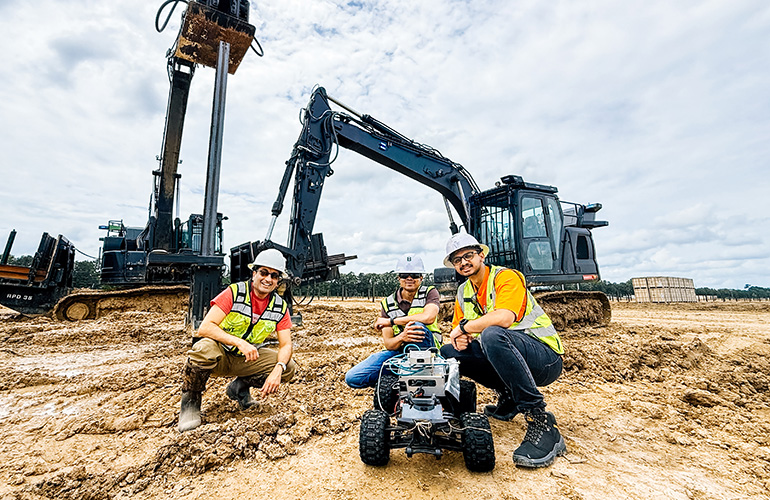
Built Robotics is teaming up with the University of Pennsylvania's Safe Autonomous Systems Lab (xLAB) to turn active construction sites into a proving ground for physical AI. Announced on June 16, 2026, the partnership aims to build a world foundation model for how machines and people can safely coexist on the jobsite - a frontier the companies call one of the most demanding tests of real-world autonomy.
Data from the dirt
Built will deploy small, sensor-equipped mobile robots to scan jobsites and assemble a dataset for xLAB researchers to analyze. The goal is to capture the messy edge cases that work-focused machines rarely see - odd body poses, occlusions, strange lighting and unexpected human behavior - and use them to push an edge-AI personnel-detection model toward "superhuman" perception that can flag transient dangers humans might miss.
A decade of field data
Built Robotics has operated autonomous heavy equipment since 2016 and entered utility-scale solar in 2023 with its RPD 35 Robotic Pile Driver. The company has logged more than 50,000 operating hours, installed over 3 gigawatts of solar and deployed across 40-plus sites. Founder and CEO Noah Ready-Campbell, a Penn alumnus, framed safety as an industry-wide good: "Safety is a rising tide that lifts all boats."

Validation meets the real world
xLAB principal investigator Rahul Mangharam said the collaboration bridges the gap between validation in controlled environments and robust performance in the field. The first phase will run Built's edge-AI model across a fleet of survey robots on live solar projects, feeding improvements back into Built's models and expanding them to other platforms. The deal joins a broader industrial physical-AI push that includes NVIDIA's expanded Doosan pact, PepsiCo and Gatik's driverless freight rollout and new general-purpose machines like Genesis AI's Eno.
Reporting based on coverage from The Robot Report and the University of Pennsylvania.