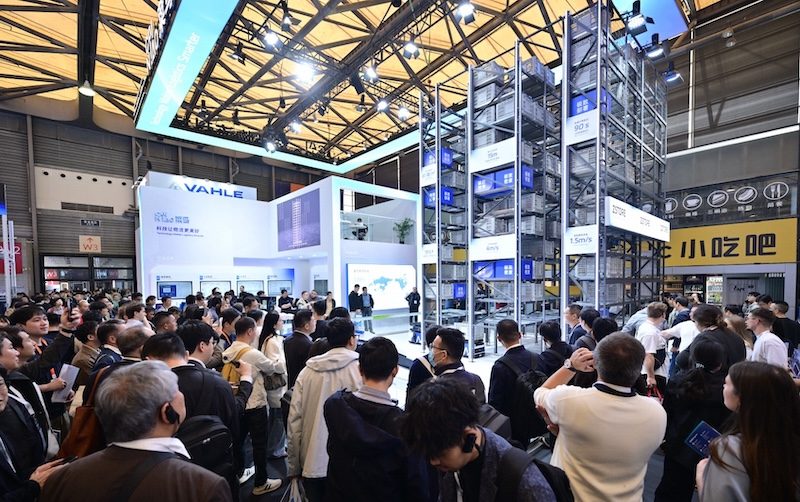
A warehouse aisle that used to need a 90-degree stop-and-turn can now flow in a smooth S-curve, and that small mechanical change is part of why Cainiao says its newest robot squeezes 20 percent more goods into the same floor space. Alibaba's logistics arm showed the upgraded version of its self-developed climbing robot at CeMAT Asia this month, adding four-side item retrieval and double-deep storage to a system first launched in April, according to Robotics & Automation News.
The robot climbs storage racks to retrieve items rather than relying on a human or a forklift to bring the rack down to ground level, a design that lets warehouses stack goods higher without widening aisles for vehicle access. The new four-side retrieval means the robot can pull items from either side of an aisle front or back, and double-deep storage lets operators store two units deep rather than one, both changes aimed squarely at the same problem: fitting more inventory into warehouses that are expensive or impossible to expand.
Smaller Moves, Bigger Numbers
Cainiao says the combined upgrades lift operating efficiency by 15 percent and storage density by 20 percent compared with the robot's original version, numbers that matter more to a logistics operator's bottom line than most flashier robotics announcements. The company also added an AI planning tool that generates a warehouse layout, selects equipment, and runs a simulation-based trial within about 10 minutes, compressing a design process that typically takes consultants days or weeks of manual modeling before a single robot is installed.
The robot is built to meet EU and US compliance standards, a detail that matters because it signals Cainiao is positioning the system for sale outside China rather than treating it as a domestic showcase product. The company says it has already secured orders in Vietnam, the Netherlands, and Spain, with deployments now underway in the latter two countries.
A Bigger Logistics-Tech Push
The climbing robot sits inside a much larger business: Cainiao says its logistics technology arm now runs more than 1,100 projects across 29 countries for over 400 customers, spanning cross-border e-commerce, footwear and fashion, consumer electronics, fast-moving consumer goods, healthcare, and automotive manufacturing. That breadth suggests Cainiao is trying to sell warehouse automation as a general-purpose product line rather than a tool built only for its own Alibaba-linked fulfillment network.
The timing lines up with a broader scramble among Chinese logistics and robotics firms to win customers in European and North American warehouses, where labor costs and space constraints make density gains financially attractive even for operators wary of adopting Chinese-built systems. Whether Cainiao's compliance claims and early European orders translate into a larger installed base will depend on how the climbing robots perform once they are running unsupervised in the Netherlands and Spain, rather than on a CeMAT Asia show floor.