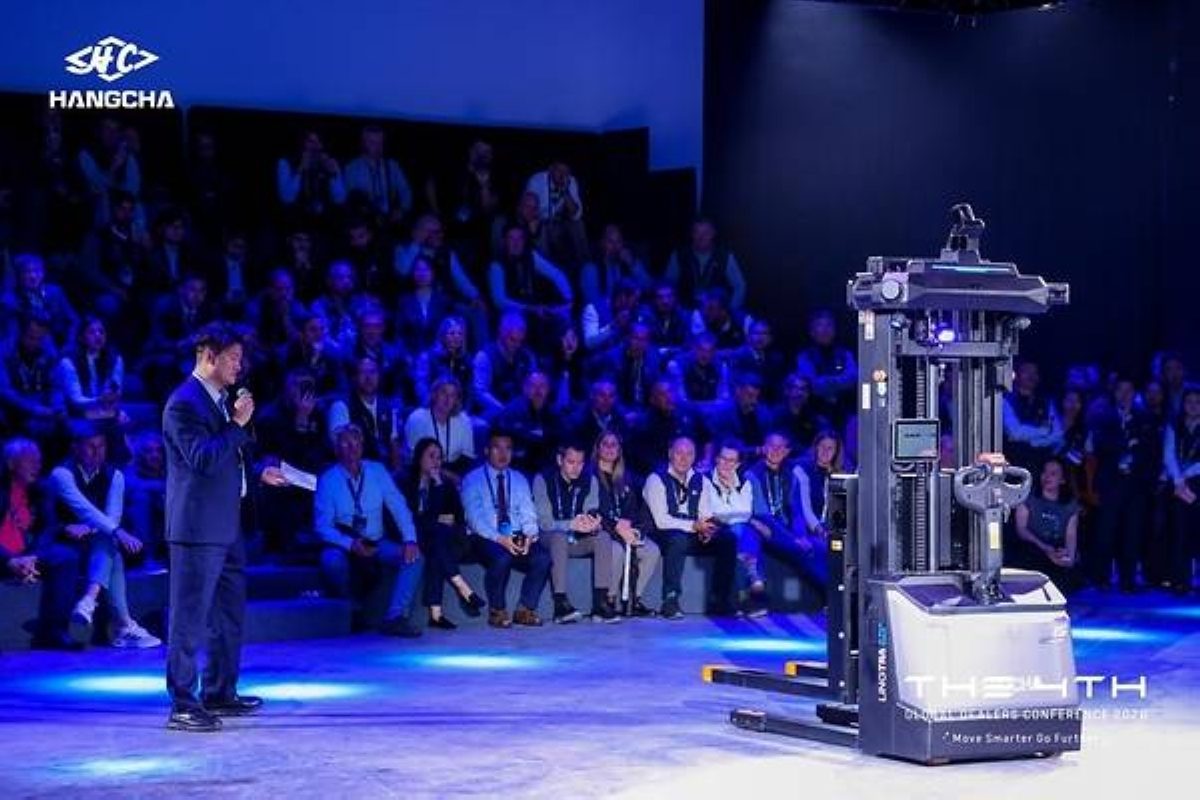
An autonomous forklift stacked fourteen pallets inside roughly twenty minutes on a demo floor in Hangzhou last week, a small number that Chinese forklift maker HANGCHA is using to argue its machines are ready for warehouses that currently run on human drivers. The company unveiled a five-model lineup of LINGTRA AI-Fork robots at its 4th Global Dealers Conference on November 11, alongside a new electric counterbalance forklift series and two additional X Series reach trucks, in front of roughly 500 dealers from more than 100 countries, according to a PR Newswire release carried by The Manila Times.
The LINGTRA line runs on HANGCHA's own embodied AI model, called LogiMind, which the company says lets the trucks interpret their surroundings, plan movements, and adapt when a warehouse layout or task changes mid-shift. That is a meaningful shift from the line-following automated forklifts most logistics operators already use, which generally need a fixed path and struggle when a pallet or person shows up somewhere unexpected.
A Decade of Growth Behind the Bet
HANGCHA is not a startup placing a speculative bet on robotics; it is a legacy manufacturer trying to defend a large existing business. The company's annual sales grew from 138,000 units in 2019 to 334,000 units in 2025, with revenue climbing from roughly 8.9 billion yuan to 17.7 billion yuan over the same stretch, and overseas sales now make up 43.4 percent of the total. HANGCHA says it has produced and sold more than 2.8 million forklifts and related vehicles since 1974, giving it a distribution and service network that AI-forklift startups without decades of dealer relationships would need years to replicate.
Deputy General Manager Li Yuansong told the conference that "great products open the door, but great service wins the game," a line aimed squarely at that advantage: HANGCHA is betting dealers already selling and servicing its conventional forklifts will be the fastest route to placing autonomous ones, rather than competing purely on robot capability against newer entrants.
A Factory to Match the Ambition
To back the push, HANGCHA announced plans to invest more than 2 billion yuan, roughly $280 million, in a new smart factory dedicated to building intelligent forklifts and reach trucks, targeted for operation by 2030. That is a sizable capital commitment for a single product category, and it signals HANGCHA expects AI-equipped material handling equipment to become a meaningful share of its business rather than a side project.
The move puts HANGCHA in more direct competition with warehouse robotics specialists and other forklift makers racing to add autonomy, at a moment when large logistics operators are increasingly comfortable mixing robot fleets from different vendors on the same floor. For HANGCHA, the advantage is less about having the most advanced AI model and more about already owning the sales channel, service network, and manufacturing scale that a newer AI-forklift company would need years to build from scratch. Whether LogiMind-equipped trucks can match that commercial reach with comparable autonomy performance in messy, real-world warehouses is the open question the 2030 factory investment is meant to answer.