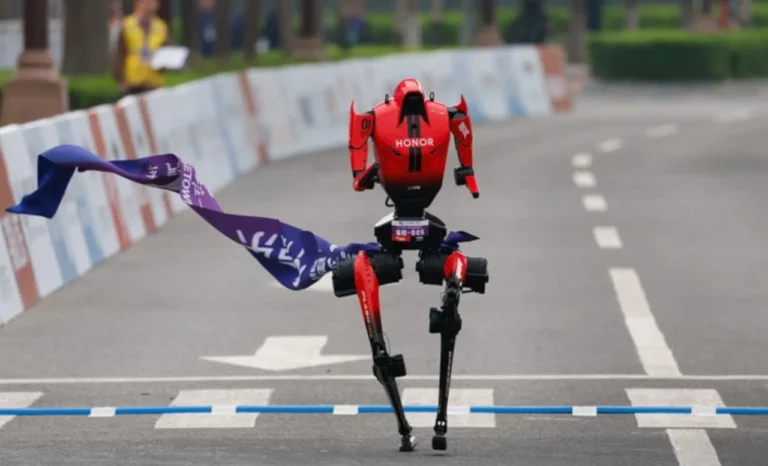
China hosted its second annual Robot Half Marathon featuring over 300 humanoid robots, marking the largest robotic endurance competition in history. The event demonstrated unprecedented advances in bipedal locomotion technology and long-distance robotic performance.
Technical Breakthroughs in Robotic Endurance
The participating robots showcased advanced balance algorithms, energy-efficient power systems, and real-time terrain adaptation capabilities. These humanoid machines completed the 13.1-mile course using dynamic stability control and AI-driven movement optimization systems.
The marathon serves as a real-world testing ground for robotic mobility under extended operational periods. Engineers collected data on mechanical durability, power consumption rates, and autonomous navigation performance throughout the race.
Applications Beyond Sports
Marathon-capable robots have immediate applications in search and rescue operations, security patrols, and industrial inspections requiring extended mobility. The endurance capabilities demonstrated could enable robots to operate in remote locations for hours without human intervention.
China's investment in robotic athletics positions the country as a leader in bipedal robotics development. The event highlights progress toward fully autonomous systems capable of handling complex, unpredictable environments over extended durations.