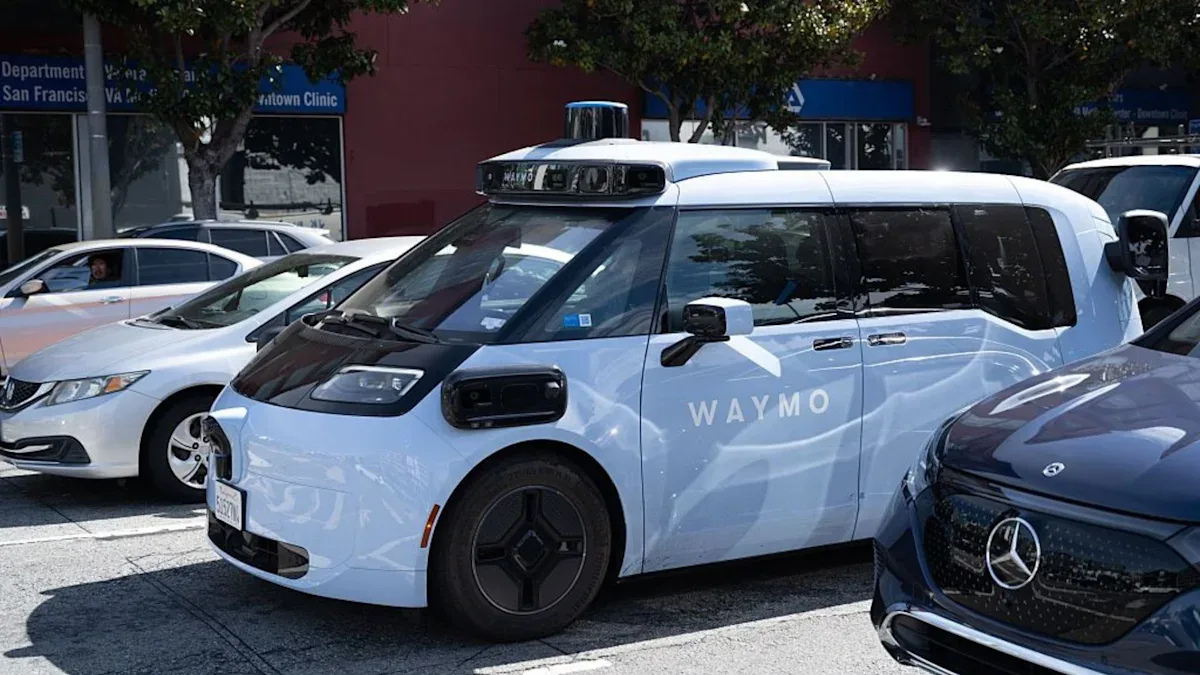
A Denver man has found a way to stop Waymo's driverless cars cold: surround them with traffic cones, then throw eggs. Waymo has linked the same individual to at least 30 separate incidents in downtown Denver since September, according to Electrek.
The method is almost comically simple. The man, described as being in his 40s and driving a silver Toyota Corolla, pulls ahead of a Waymo vehicle, hops out, and arranges several orange cones around it. Because Waymo's software treats cones as temporary hazards it must not drive through, the robotaxi simply stops and waits. With the car immobilized, the man then pelts it with eggs, sometimes from inside his own vehicle, sometimes after stepping outside it. Waymo says cleaning bills for the incidents it has documented and reported to police have topped $2,000, and each affected car has had to be pulled from service for professional detailing.
A Narrow Exploit With a Broad Lesson
The trick works because of a safety rule, not a flaw in sensors or perception. Waymo's vehicles are built to respect construction and hazard markers rather than barrel through them, a design choice meant to keep the cars predictable around road crews and accident scenes. That same caution becomes a liability when a person uses cones as a deliberate trap rather than a legitimate warning. It is a reminder that autonomous vehicles are only as resilient as the assumptions baked into their rulebooks, and that assumptions written for cooperative humans can be turned against the system by an uncooperative one.
Denver's police department has filed a report on at least seven of the incidents, but the Denver District Attorney's Office has declined to pursue criminal charges, calling the matter civil rather than criminal. The city attorney's office is now looking at other legal avenues, including potential property-damage claims. Waymo, meanwhile, has kept operating; the company runs more than 100 vehicles across roughly 60 square miles of the Denver market, which it launched on September 1, 2026.
Why It Matters Beyond One City
Robotaxi operators including Waymo, Zoox, and Tesla are expanding into dozens of new US cities over the next two years, and each new market brings a fresh set of local test cases for how robots handle bad-faith human behavior. Waymo has previously dealt with vandalism, including cars being flipped over during unrest in Los Angeles, but a single repeat offender quietly exploiting a safety rule is a different category of problem. It suggests companies may need to rethink how long a vehicle should tolerate being boxed in before escalating to a remote operator or local authorities.
Waymo has not said whether it plans a software update to address the cone exploit specifically. For now, the company is leaning on law enforcement and civil remedies while its cars keep stopping, every time, for a ring of orange plastic.