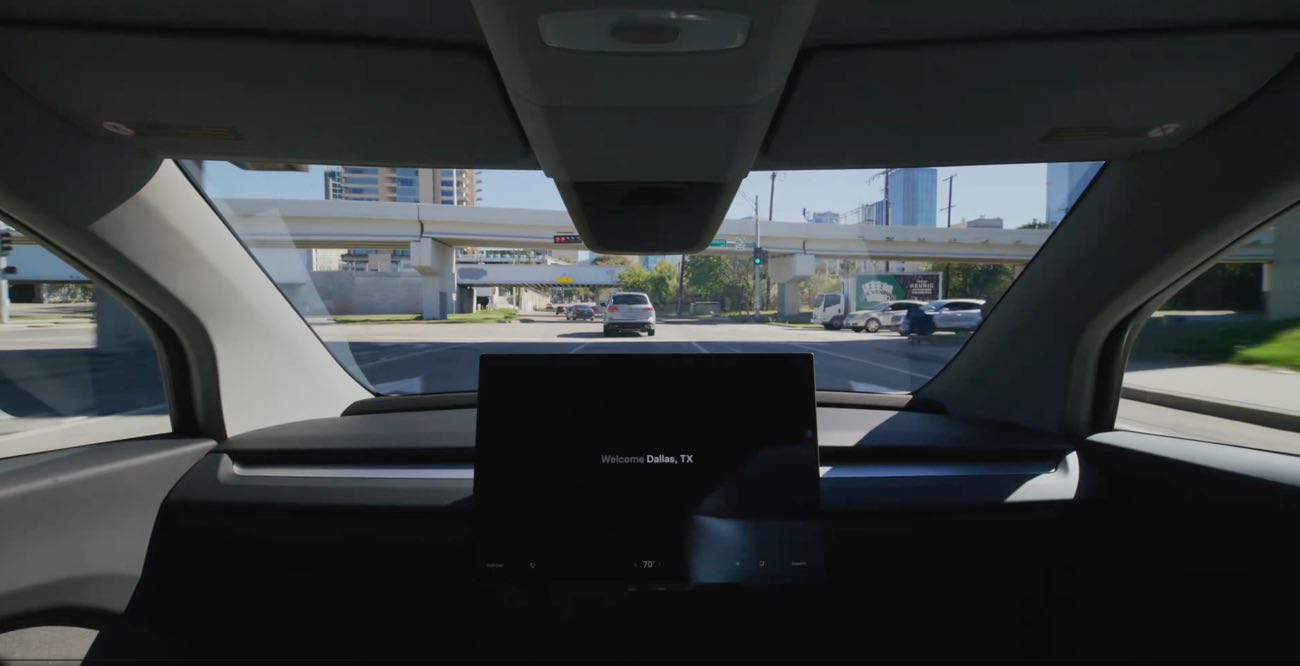
Tesla expanded its Dallas Robotaxi operating area by 83% on November 25, 2026, growing coverage from 82.0 to 150.4 square miles, an addition of 68.4 square miles, according to Drive Tesla Canada. The new territory stretches into Farmers Branch, Carrollton and Addison and pushes the service's eastern boundary closer to Richardson. The move comes roughly one week after Tesla's steering-wheel-free Cybercab began carrying riders in Dallas.
Tesla's Robotaxi account marked the expansion with a holiday-timed post: "More cars, less $, Happy Thanksgiving!"
How does Tesla decide where to expand a robotaxi zone?
Tesla has not published its exact methodology, but the pattern across its US markets points to incremental geofence expansion driven by fleet size and accumulated driving data within a city. Each ride inside the existing zone generates sensor and decision-making data that Tesla's software uses to validate performance before a new neighborhood is added to the map. Growing the service area without growing the fleet in proportion also lets Tesla test demand density, since more square miles covered by the same number of vehicles means longer average response times unless utilization is carefully managed.
The specific areas added, Farmers Branch, Carrollton and Addison, are suburban communities bordering the north and northwest edges of Dallas, filled with residential and light commercial traffic rather than dense downtown streets. That suggests Tesla is prioritizing lower-complexity driving environments as it scales the Cybercab, saving the city's busiest corridors for later once the fleet has logged more miles in the current footprint.
Why does an 83% expansion matter in a crowded robotaxi market?
Tesla's Robotaxi fleet in Texas had already surpassed 1,500 driverless vehicles across Austin, Dallas, Fort Worth, Houston and San Antonio before this expansion, alongside service in Miami, Orlando and Tampa and a supervised pilot in the San Francisco Bay Area. Dallas specifically had only just gained steering-wheel-free Cybercabs, making this one of the fastest territory expansions Tesla has executed after a new city launch.
Speed matters because Tesla is racing established robotaxi operators including Waymo, which operates in more US metros with a longer safety record, and regional rivals such as WeRide and Pony.ai that are expanding internationally. A rapid geofence expansion signals confidence in the Cybercab's software performance in Dallas traffic, but it also raises the stakes if an incident occurs in newly added territory before the vehicles have accumulated the same mileage as the original zone. Tesla has not detailed any changes to safety monitoring tied to the expansion, and it did not specify how many additional vehicles, if any, were deployed to serve the larger area.