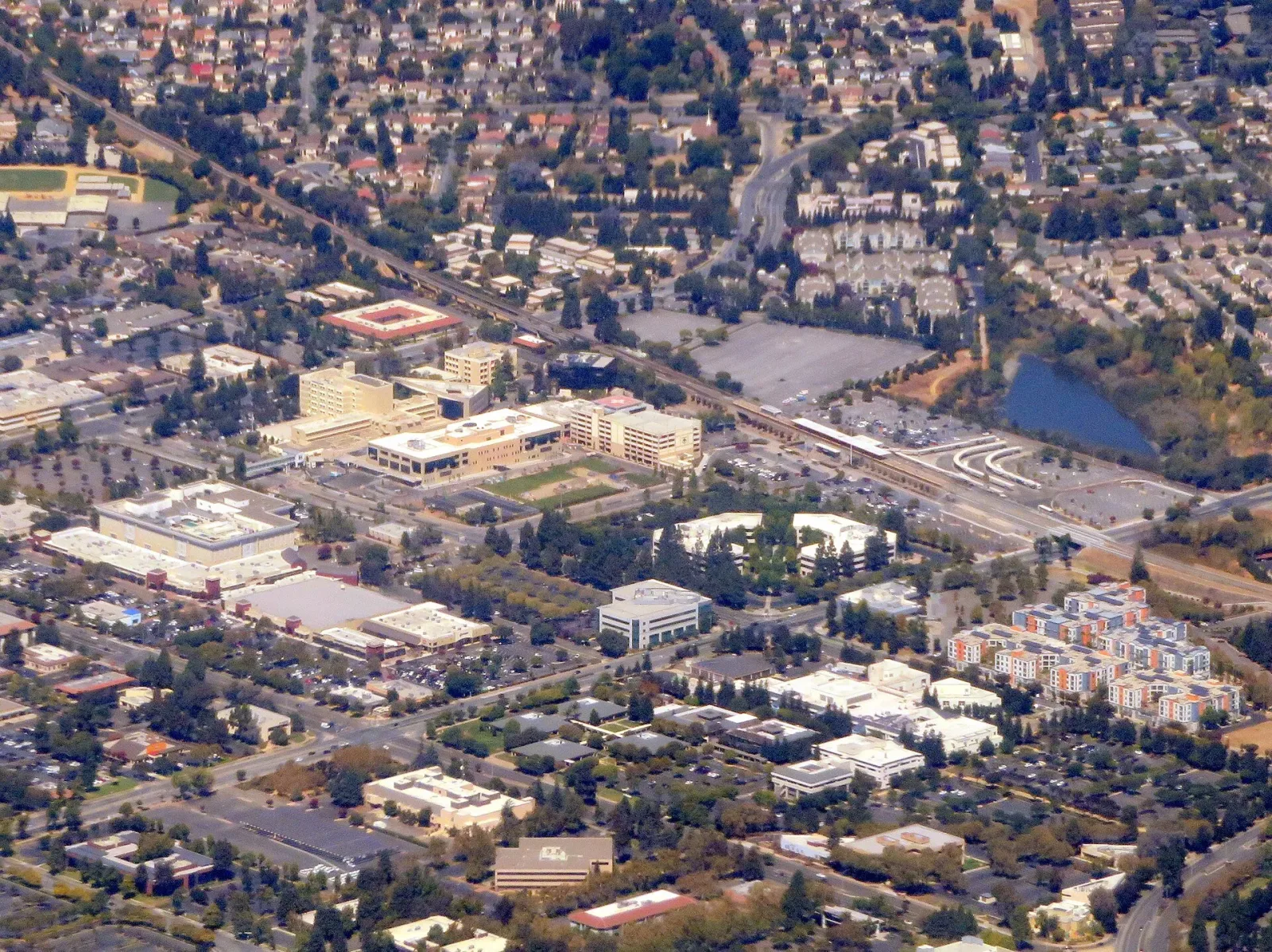
DoorDash started running its Dot delivery robot on the streets of Fremont, California on Nov. 16, 2026, making it the second Bay Area city to get the service after Sunnyvale, which began in September. The 350-pound, roughly four-and-a-half-foot-tall robot is built about a mile from its new delivery routes, at Sonic Manufacturing Technologies' Fremont facility, a detail Mayor Raj Salwan leaned on when he called the rollout "Fremontinnovation."
Dot carries up to 30 pounds of food, groceries or parcels and travels at roughly 5 mph on sidewalks, 16 mph in bike lanes and 20 mph on neighborhood streets. Initial service covers Fremont's Downtown/City Center, Centerville and Irvington districts, running along Fremont Boulevard, Walnut Avenue, Mowry Avenue, Stevenson Boulevard and Paseo Padre Parkway. DoorDash's vice president of autonomy, Ashu Rege, said the rollout followed months of work with the city, and the company is starting with a small, closely monitored fleet before adding more robots.
Why the local manufacturing angle matters
Sidewalk and street robots have a mixed political track record in US cities; some have restricted or banned them over right-of-way and safety concerns. DoorDash's pitch in Fremont leans less on the robot's novelty and more on the fact that it is assembled there. That framing gives city officials a direct economic stake in the robot's success beyond traffic-sharing questions, and it is a template DoorDash can reuse as it seeks permits in other California cities that have been wary of autonomous delivery devices on public streets.
It also reflects a broader shift among delivery-robot makers toward domestic, and even hyper-local, manufacturing. Rather than importing hardware, DoorDash is building its case for expansion partly on local jobs and supply-chain proximity, a pitch that is harder for city councils to wave away than pure convenience arguments.
The competitive field for street-legal delivery robots
Dot was unveiled in September 2025 and first ran commercially in the Phoenix metro area before any Bay Area city. Its closest rivals operate on sidewalks rather than mixed traffic: Serve Robotics and Starship Technologies both run fleets limited mostly to sidewalk speeds, while Nuro and various robotaxi operators handle full-lane driving but with much larger vehicles. Dot's bike-lane-and-street design occupies a middle tier, built to move faster than a sidewalk bot without requiring the regulatory load of a full-size autonomous vehicle.
That middle position is also where the scrutiny is likely to concentrate. Bike lanes are shared with cyclists, and 20 mph street travel puts Dot closer to e-bike speeds than to the walking pace of sidewalk robots. How Fremont residents and cyclists react to a fleet of robots moving at those speeds through mixed-use corridors will shape how aggressively DoorDash expands the model, and how other cities calibrate their own permitting rules for the next generation of delivery robots.