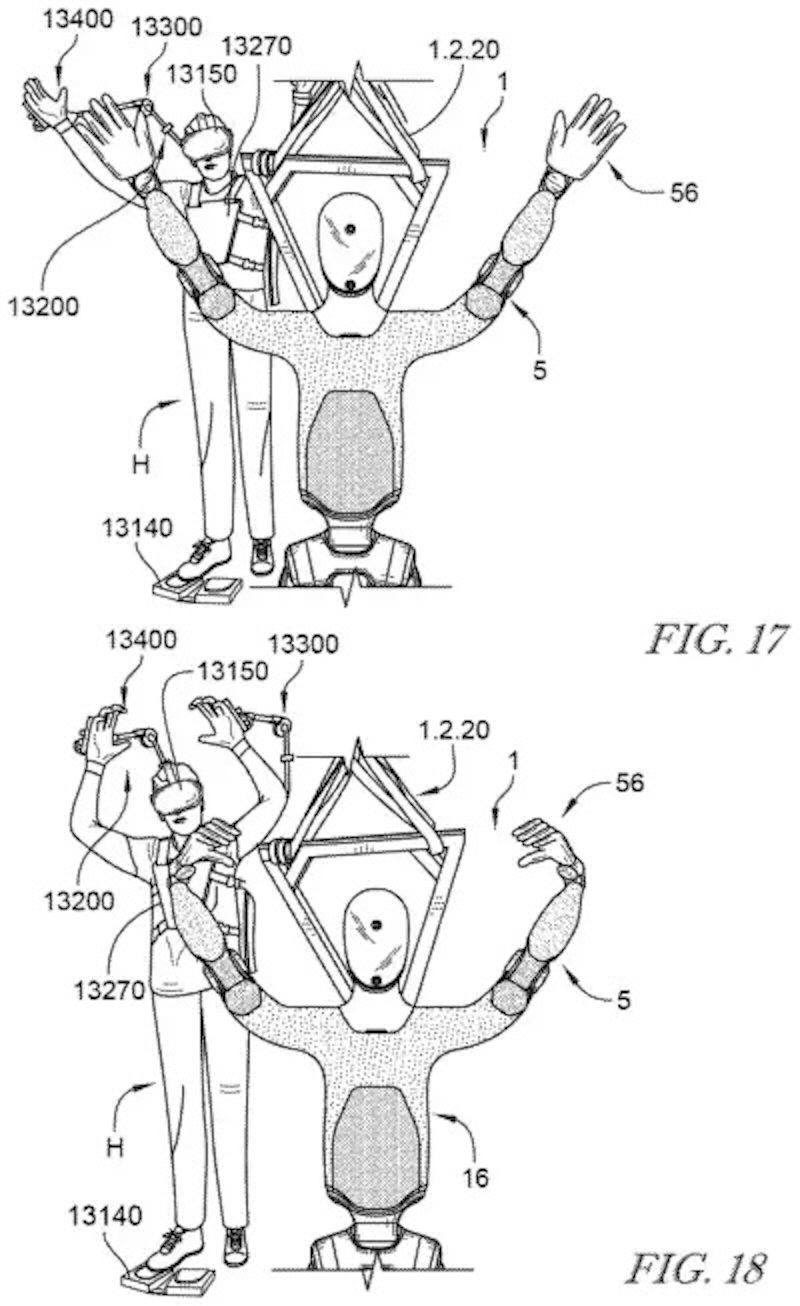
Figure AI has published a patent application for a backpack-mounted wearable rig designed to capture how humans move their arms and turn that data into training material, or live control signals, for its humanoid robots. The filing, numbered US 2026/0364774 A1, was published on November 19, 2026, and lists five Figure engineers as inventors: Victor Ragusila, Nathan Jenest, Corey Lynch, Michael Rose and Lee Magnusson. It was filed in June 2026 as a continuation of an international application from February.
The device straps onto a human operator's torso like a backpack, with two mechanical arms extending over the shoulders and connecting to the wearer's hands through glove-style attachments. Each arm tracks up to seven axes of rotation, with joint encoders and inertial measurement units reading the position of the shoulder, elbow and wrist as the person moves. According to the filing, the system can convert that motion into robot commands with less than 20 milliseconds of end-to-end delay, fast enough that an operator could plausibly drive a humanoid's arms in near lockstep with their own.
Why a Backpack Matters More Than It Sounds
Humanoid robot companies live or die by the quality of their training data, and the industry's biggest bottleneck isn't compute, it's collecting enough real-world examples of hands doing useful work. Most data-capture rigs today require a fixed motion-capture studio, handheld controllers, or VR headsets that tether an operator to a lab bench. Figure's filing explicitly frames its wearable as a way to collect demonstrations during ordinary warehouse and factory tasks, without a dedicated capture room.
That matters because Figure has staked its business on vertically integrating hardware, software and data collection rather than buying motion data from third parties. A wearable that an employee can put on while actually stocking shelves or packing totes turns every shift into a potential training session. The patent also describes a clutch mechanism that can pause data transmission, with machine learning eventually flagging natural pauses in activity to switch it off automatically, which suggests Figure is thinking about data hygiene and operator privacy as much as raw volume.
The Teleoperation Angle Rivals Are Also Chasing
The dual purpose baked into the filing, offline data collection and live teleoperation, puts Figure in the same lane as rivals experimenting with human-in-the-loop control. Companies including Apptronik and Sanctuary AI have discussed remote operators supervising or directly piloting humanoids during early commercial deployments, since fully autonomous policies still fail often enough that a human backstop reduces risk for paying customers. A sub-20-millisecond latency claim, if it holds up in practice, would make Figure's rig competitive with specialized teleoperation gloves and exosuits built by robotics research labs over the past few years.
It's worth remembering that a published patent application describes a proposed system, not a shipped product. Patent offices publish filings regardless of whether the underlying device ever reaches a factory floor. Still, the specificity here, named inventors, detailed sensor placement, a concrete latency target, suggests this isn't a defensive filing meant only to block competitors. For a company racing to scale Figure 03 production, owning the pipeline that turns human movement into robot skill is arguably as valuable as the robot itself.