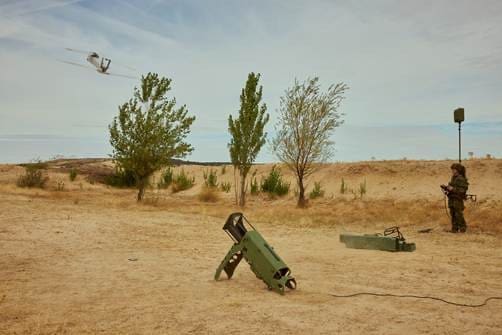
Global Ordnance Holdings and ARQUIMEA USA signed a teaming agreement on November 12 to expand the drone and counter-drone systems available to U.S. and allied forces. Under the deal, ARQUIMEA USA will manufacture the hardware — including its Q-SLAM loitering munitions, WISE autonomous underwater vehicles, and KRONOS unmanned surface vehicles — while Global Ordnance acts as prime contractor to the Department of War, handling contracting, program management and delivery.
The headline number is production capacity: ARQUIMEA says it can now build up to 1,000 drones a month after adding more than 129,000 square feet of manufacturing space. Global Ordnance CEO Marc Morales put the rationale plainly: "Drones have fundamentally changed modern warfare, and demand for affordable autonomous systems is outpacing what any single supplier can deliver." No contract value was disclosed, and the agreement is a teaming arrangement rather than a signed Pentagon award.
A manufacturing play dressed up as a partnership
This deal is less about new technology and more about capacity arbitrage. Global Ordnance already sells UAS and counter-UAS systems to the U.S. military; what it was missing was volume manufacturing to meet orders that have ballooned since Ukraine proved cheap drones can be decisive. ARQUIMEA brings exactly that — a 20-year-old company with factory space built for high-volume output, plus products spanning air, sea-surface and underwater systems rather than just aerial drones. Pairing a contracting specialist with a manufacturer is the same playbook Oshkosh used when it partnered with Grid Aero on cargo drone production, or that AeroVironment used when it folded BlueHalo's production lines into its own portfolio.
The counter-drone market is now a capacity race, not just a technology race
What makes this deal notable against the broader defense-drone landscape is the emphasis on monthly output rather than new capability. Companies like TYTAN Technologies have opened plants aiming for thousands of interceptor drones a month in Europe, and Ukrainian-linked suppliers like Swarmer and UForce have raised hundreds of millions specifically to scale production lines, not just R&D. The Pentagon's own messaging, through initiatives like the five-agency counter-drone pact signed earlier this year, has shifted from funding prototypes to demanding suppliers who can actually deliver volume on contract.
That shift squeezes smaller, innovation-only startups that can demo a drone but cannot build a thousand of them a month. It favors companies willing to combine with established contractors, which is exactly what this agreement does. The risk for Global Ordnance and ARQUIMEA is that teaming agreements are easy to announce and hard to convert into actual task orders — the real test will be whether the Department of War signs purchase orders against that 1,000-unit-a-month capacity, or whether it remains a marketing figure.