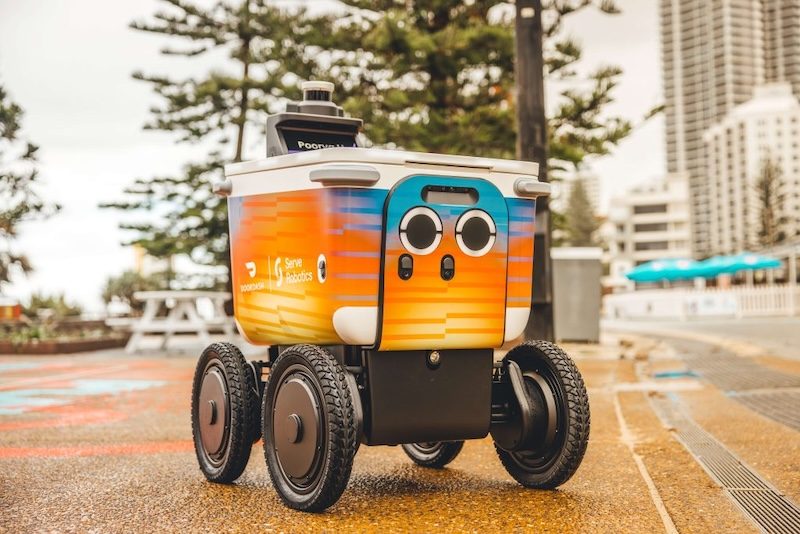
Serve Robotics has sent its sidewalk delivery robots outside the United States for the first time, launching a DoorDash-powered service on Australia's Gold Coast in late October 2026. The rollout marks the Nasdaq-listed company's first international market after building a US fleet across cities including Los Angeles, Miami, Dallas, Chicago and Atlanta.
The service began in the Gold Coast Health and Knowledge Precinct, an area home to roughly 3,000 residents and 20,000 students near Griffith University. A local restaurant, Gnocchi Gnocchi, became the pilot merchant running orders through the robots. "This is the first time we've taken Serve beyond the United States," said Serve Robotics CEO Ali Kashani, who framed the launch as a test of whether the company's footpath delivery model can translate to a new regulatory and urban environment.
Why the Gold Coast, and why now
City officials pushed for the pilot specifically because of the precinct's density of students and health workers, a population that already orders food delivery frequently and lives within tight, walkable blocks suited to small wheeled robots. Gold Coast Mayor Tom Tate said the city wants to be "a place where those technologies are developed," positioning the launch as part of a broader bid to attract robotics and automation investment to the region.
The deal builds on Serve's existing partnership with DoorDash in the US, which began in 2025 and has since expanded to more than 4,500 restaurants. Rather than building new infrastructure from scratch, Serve is exporting an operating playbook it has already refined domestically: a defined delivery radius, sidewalk-level navigation software, and a direct integration into DoorDash's ordering app so customers see robot delivery as just another fulfillment option alongside human couriers.
What it means for the robot delivery race
Serve already opened its US fleet of roughly 2,000 robots to outside developers earlier this month, signaling a pivot toward platform economics rather than just unit growth. Rivals Starship Technologies and Coco have focused on separate international footholds, while Amazon's Scout and various Chinese players remain largely domestic. An Australian beachhead gives Serve a toehold in a market where competitors have been slower to commit ground robots at scale, and a second geography to point to when courting new city partners and investors.
The Gold Coast pilot is small by design, limited to one precinct and one merchant, which lets Serve and DoorDash gather data on footpath rules, pedestrian interactions and weather before any wider Australian rollout. Serve has not said which city might be next, but Kashani's comments suggest the company sees this as a repeatable template rather than a one-off experiment. The real test will be whether order volume and delivery costs on the Gold Coast match what Serve has achieved in its home market, and whether other Australian cities follow Gold Coast's lead in inviting the robots in.