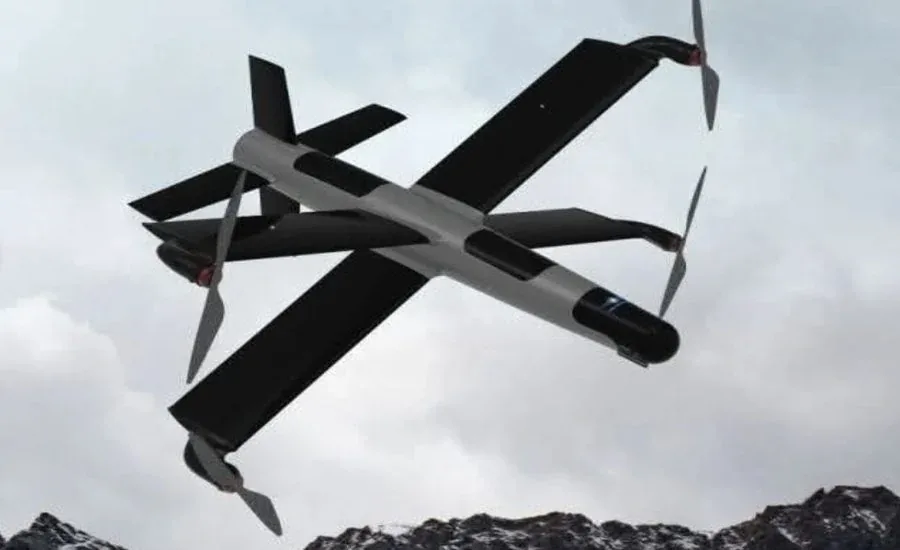
At the Pokhran test range in Rajasthan, eleven Indian defense companies are putting jet-powered kamikaze drones through field evaluations this week, competing for a share of a ₹2,000 crore ($240 million) Indian Army program for 540 units, according to a report from Indian Masterminds.
The Jet Based Kamikaze Drone System program is being run through a Fast Track Procurement mechanism reserved exclusively for domestic manufacturers. It is the Indian Army's first dedicated procurement for jet-powered loitering munitions, a step up from the propeller-driven kamikaze drones that have dominated recent conflicts. Jet-powered variants reach roughly 450 kilometers per hour, compared with 150 to 200 kilometers per hour for standard propeller-driven designs — speed the Army is betting makes the drones far harder for enemy air defense systems to intercept.
From 60 bidders to 11 finalists
The Army's Request for Information drew responses from around 60 companies when it was issued in July 2026, with 18 ultimately submitting formal bids and 11 clearing the technical screening to reach the Pokhran trials. The shortlisted competitors include Bharat Forge paired with VEDA Aeronautics, Adani Defence, NIBE, Tonbo, Munitions India Limited, Apollo Micro Systems, and SMPP paired with NewSpace Research and Technologies, among others not publicly named by the Ministry of Defence.
During the trials, vendors must demonstrate more than just the drone itself — the Army is requiring a full operational ecosystem including transport vehicles and specialized units for mission briefing and planning. The Defence Acquisition Council granted Acceptance of Necessity for the program on October 26, 2026, following initial approval of the broader Long Range Kamikaze Drone System category earlier in the year.
Why India is betting on speed over cost
Propeller-driven kamikaze drones have become the cheap, disposable workhorse of modern warfare, but their slow speed makes them vulnerable to layered air defenses and electronic warfare once an adversary adapts. India's pivot toward jet propulsion trades some of that low cost for survivability, on the theory that a faster-moving munition compresses an enemy's reaction window too much for interception.
SMPP has already delivered 106 jet-powered Agniveg drones, also called Peacekeeper, to the Indian Army, giving the Fast Track Procurement program a working domestic precedent to build on rather than starting from an unproven technology base. If the Pokhran trials go as planned, the 540-unit order would mark one of the largest single commitments yet to jet-powered loitering munitions outside of established drone powers, and would lock in a domestic supply chain — transport vehicles, planning units and the drones themselves — exclusively among the Indian firms competing this week.