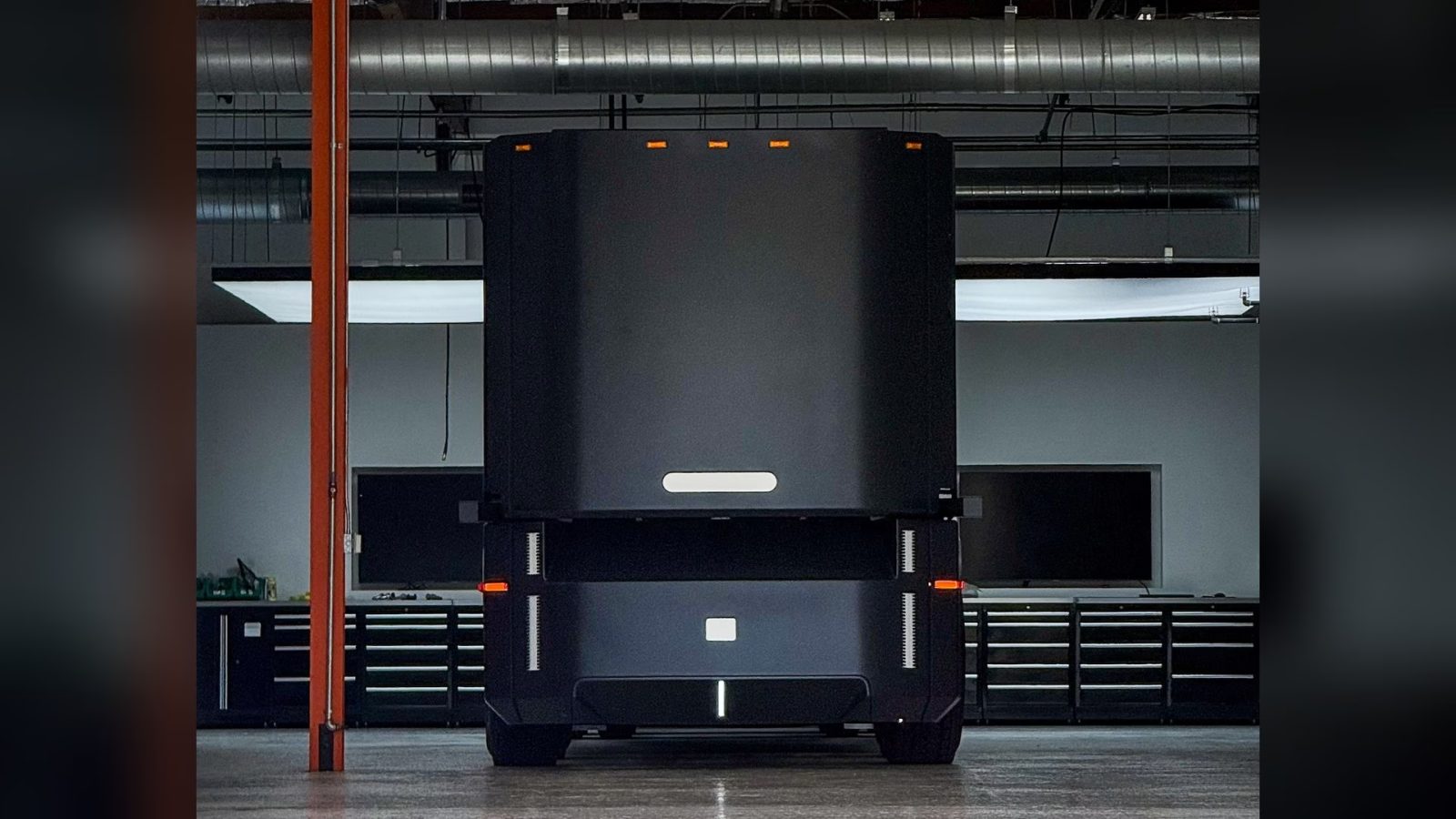
Humble Robotics has raised a $51 million Series A led by Obvious Ventures, with Eclipse and Energy Impact Partners also participating, the company announced this week. The round pushes Humble's total funding to $75 million less than a year after it was founded, and roughly six months after it left stealth with its first vehicle, the Humble Hauler.
Obvious Ventures has built a portfolio around climate and mobility bets, while Energy Impact Partners focuses on grid and electrification infrastructure, a pairing that signals investors see the Hauler's electric drivetrain as much a part of the pitch as its autonomy stack. Eclipse, which backed Humble's $24 million seed round about six months ago, returned for the Series A, a sign of continuity that's rare among autonomy startups racing to show early traction.
Unlike most autonomous-trucking companies that bolt self-driving hardware onto an existing semi, Humble designed the vehicle and the software together from the ground up. The result is a Class 8 electric truck with no driver's cab at all, a decision the company says cuts roughly 20% of the vehicle weight needed to haul the same load as a conventional semi. The Hauler tops out at 55 mph with a 200-mile range, aimed squarely at regional freight rather than cross-country runs.
Why skip the cab
Most autonomous-trucking companies, including Aurora and Kodiak, retrofit sensors and compute onto trucks built by Freightliner, Peterbilt or Volvo for human drivers. Humble's pitch is that a truck designed with no driver in mind from day one can be lighter, cheaper to manufacture, and easier to electrify, since there is no cab, windshield, seats or climate-control system to carry around. CEO Eyal Cohen, who worked on Apple's early self-driving project and later ran commercial freight efforts at Uber, assembled an engineering team pulled from Tesla, Waymo and Cruise to chase that thesis.
The company is targeting what it calls dock-to-dock operations on regional routes under 250 miles, a segment it says accounts for 87% of U.S. truck tonnage. That's a narrower target than long-haul rivals pursuing highway autonomy, but it sidesteps some of the hardest parts of the problem: cross-country weather extremes, multi-day routes and unpredictable highway merges. Shorter, repeatable routes between distribution hubs are easier to map, monitor and insure.
A crowded but maturing field
Humble arrives in a market where capital and attention have shifted from flashy demos toward commercial contracts. Aurora has been running driverless freight on Texas highways for over a year, and Kodiak recently reported a 99% safety score ahead of plans to run driverless on Interstate 45 by the end of 2026. Gatik, Plus and Waabi, where Cohen also worked, are chasing similar middle-mile and regional niches, but through partnerships with existing truck manufacturers rather than a purpose-built chassis.
What differentiates Humble is vertical integration: owning both the chassis design and the autonomy stack lets the company tune weight, sensor placement and power draw simultaneously rather than negotiating around an OEM's existing platform. That control comes at a cost. Building and certifying an entirely new vehicle platform is slower and more capital-intensive than integrating into an existing manufacturing line, and Humble has not yet moved a single commercial load.
The company says customer pilots will begin in the first quarter of 2027, with commercial operations targeted for the third quarter of that year. Until then, the $51 million buys time for testing, validation and early manufacturing, and a chance to prove that building the whole truck, not just the software riding inside it, is worth the added complexity.