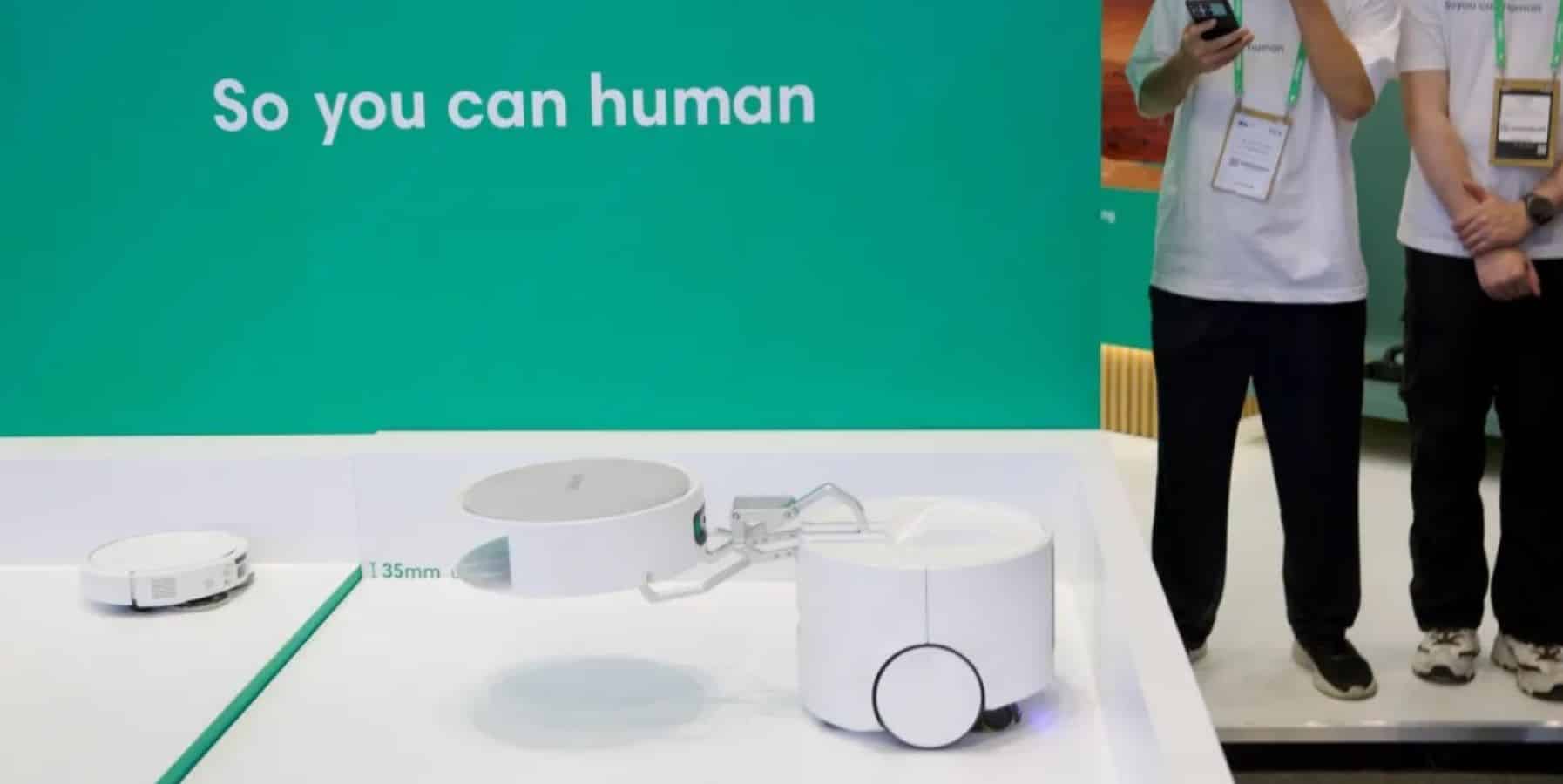
American consumer robotics maker iRobot used IFA 2026 in Berlin on 4 September to reveal the Roomba Duo, a concept that finally admits one robot vacuum cannot do everything and splits the job across two coordinated machines instead.
One home map, two robots
The main unit is a tall cylindrical robot built around large water tanks, a high-capacity battery and an internal steam heater. It vacuums and steam-mops with a 60mm roller pushed into the floor at 46 newtons of pressure, then dries the surface with hot air so wooden floors are not left pooling water. When it detects a low-clearance zone, a mechanical arm on the main body lowers a slim companion robot to the floor.
That companion cleaner is based on iRobot's Roomba Plus 575 Combo, measures 29.8cm wide and stands just 8.35cm tall, letting it slide beneath low sofas, beds and TV cabinets. An edge mop extends 31mm outward for skirting boards, and the sub-unit can climb sills up to 3.5cm high.
Shared navigation and a self-cleaning dock
Both robots share a single map and are controlled through the Roomba Home app. Dual-line LiDAR and camera-based obstacle avoidance keep them clear of cables, shoes and pet accidents; the main unit's higher-mounted cameras add an elevated view of the room. When cleaning ends, both return to a shared AutoWash station that vacuums debris into a sealed bag, drains dirty water, washes the mop pads and dries them with heated air.

Concept, not shipping product
iRobot demonstrated working hardware in Berlin but was clear that Roomba Duo is a prototype. There is no retail price and no launch date. The reveal comes after iRobot's December 2025 bankruptcy filing and acquisition by Shenzhen Picea Robotics, and lands in an IFA 2026 hall already crowded with new cleaning robots from LG's ThinQ CLAW ecosystem, MOVA's TactiPercept-equipped vacuums and Roborock's stair-climbing Saros Rover.
Why the two-robot approach
The concept targets the trade-off that has defined robot vacuums for two decades: wet-dry machines have the muscle for real cleaning but poor autonomy, while robot vacuums are hands-off but lack punch. Pairing them under one navigation stack, iRobot argues, is a cleaner way to solve corners, edges and low-clearance areas than another year of incremental suction gains. It also gives iRobot's new owners a splashy technical narrative just months into their tenure.
Reporting based on coverage from PC-Tablet, iRobot and PR Newswire.