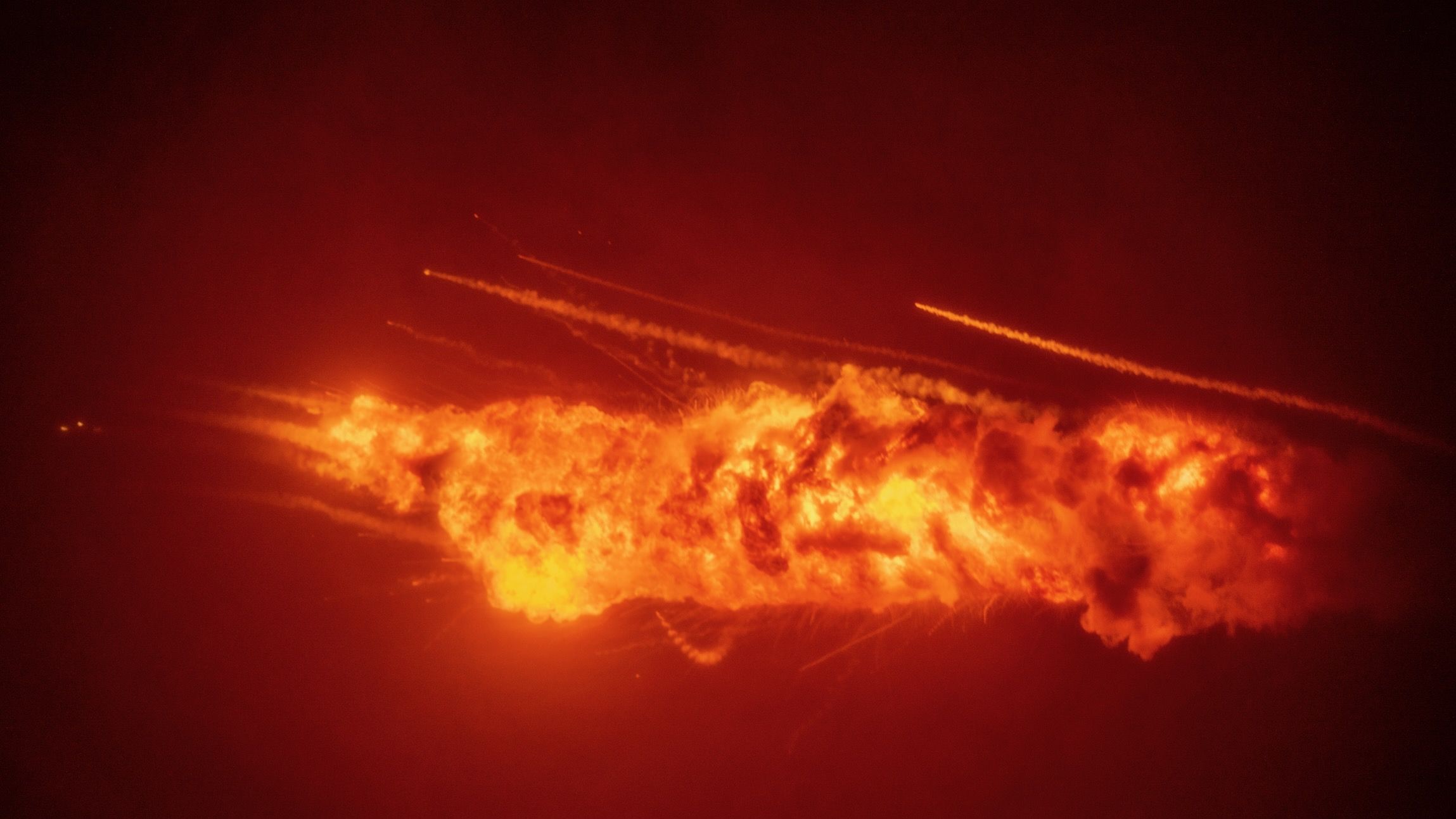
China's Long March 7A rocket exploded roughly 85 seconds after lifting off from the Wenchang Space Launch Site on Monday evening local time, destroying the ChinaSat 4B communications payload in the launcher's second failure since it debuted in 2020.
Anomaly Below The First-Stage Cutoff
The mission left Complex 201 at 08:02 p.m. local time (12:00 UTC) on August 10 and appeared nominal through pitch-over. Onboard telemetry and range video showed a rapid structural breakup at roughly T+85 seconds, well before first-stage separation.
China Aerospace Science and Technology Corporation, which operates the vehicle, has not yet published a root cause. Investigators are expected to focus on the YF-100 kerosene engines that power the first stage and four liquid-propellant boosters — the workhorse motor for much of China's medium and heavy-lift fleet.
ChinaSat 4B Payload Lost
The stricken payload was ChinaSat 4B, a geostationary communications satellite ordered by China Satellite Communications to expand voice, data, radio and television transmission services across the country. It followed ChinaSat 4A, launched successfully in 2024.

Second Failure In 18 Flights
The Long March 7A had flown 17 successful missions since a 2020 maiden-flight failure. Any grounding of the vehicle would ripple across geostationary launches and could delay other national programs while engineers examine the propulsion train.
The setback lands the same week SpaceX prepares its 72nd Starlink launch of 2026 from Cape Canaveral, underscoring the widening cadence gap between the U.S. commercial fleet and China's state-run providers. It also comes just weeks after Long March 10B's sea-recovery debut at the same coastal spaceport.
Reporting based on coverage from SpaceNews, Space.com and CNN.