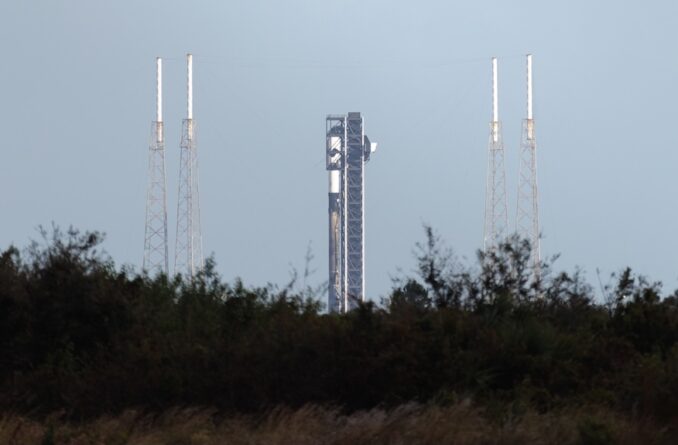
SpaceX is set to launch its Starlink 10-19 mission from Space Launch Complex 40 at Cape Canaveral Space Force Station this week, delivering another 29 Starlink V2 Mini Optimized satellites to low Earth orbit. It will be the 72nd Starlink flight of 2026 and, upon liftoff, the 93rd Falcon 9 launch of the year.
Booster B1085 On Its 18th Trip
The mission uses first-stage booster B1085 on its 18th flight, a resume that includes NASA's Crew-9, GPS III-7 and Fram2. Roughly 8.5 minutes after liftoff, B1085 will target droneship A Shortfall of Gravitas in the Atlantic off South Carolina; a successful catch would be the 163rd landing on that vessel and the 647th Falcon booster landing overall. Weather forecasters gave the launch a 90% chance of favorable conditions at the opening of the window.

Cadence Keeps Climbing
The pace mirrors SpaceX's escalating Starlink build-out and follows recent milestones including the August 5 AST SpaceMobile BlueBird triple launch, the Falcon 9 upper-stage moon impact near Einstein crater, and Rocket Lab's $397M Flatellite deal with the Space Force. Analysts expect SpaceX to blow past 100 Falcon 9 flights before year-end as V2 Mini Optimized production catches up with launch demand.
Direct-To-Cell Backdrop
The Starlink 10-19 batch continues a run of V2 Mini Optimized satellites that also carry direct-to-cell payloads, part of a constellation increasingly built to compete with AST SpaceMobile in mobile satellite service.
Reporting based on Spaceflight Now's live coverage and SpaceX launch disclosures.