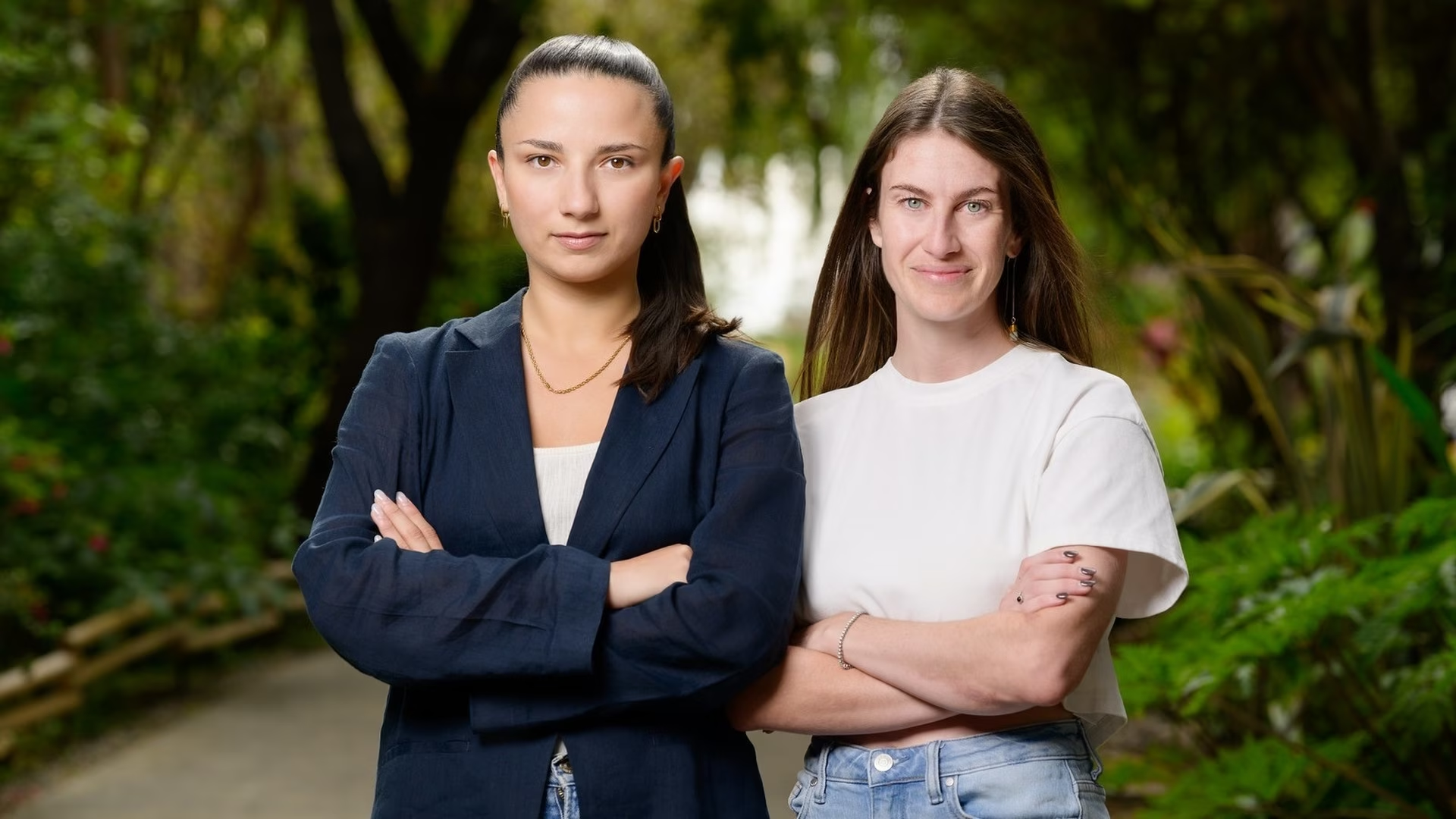
Mosaic Intelligence Labs has pulled in $47 million across two seed rounds to build surgical catheters that can see where they're going inside a human body. The San Francisco startup is led by two executives whose previous surgical systems have already touched more than 20 million patients, and its pitch is simple: give a catheter the kind of spatial awareness a self-driving car has, except the road is a blood vessel.
How much did Mosaic Intelligence Labs raise, and who's behind it?
The company closed $47 million combined across two seed rounds, co-led by 8VC and Fundomo, with Lingotto Innovation and Obvious Ventures also participating. The announcement landed November 10, 2026, and no valuation has been disclosed. It's the company's first disclosed funding, so the full $47 million represents its total raised to date, according to The Next Web.
CEO Ileana Pirozzi and CTO Alison Mackanic founded the company, and their resumes are doing a lot of the convincing here. Before Mosaic, the pair worked on surgical systems that collectively reached more than 20 million patients, giving investors a reason to bet on a team that already understands how device approvals and operating-room workflows function, rather than engineers encountering medicine for the first time.
What does the catheter actually do once it's inside a patient?
Mosaic's device carries sensors that build a live 3D map of the vessel it travels through, instead of relying solely on external imaging like fluoroscopy. That map feeds a navigation system designed to steer the catheter semi-autonomously toward a target, giving physicians a continuously updated picture of anatomy that shifts and flexes as the procedure progresses.
The target use case is endovascular surgery, where catheters are threaded through arteries to treat conditions like aneurysms, clots and blockages. These procedures currently depend heavily on a surgeon's manual dexterity and repeated X-ray exposure to confirm position. Mosaic is betting that onboard sensing and semi-autonomous guidance can cut both the skill ceiling and the radiation burden.
Why does this fit a bigger pattern in physical AI?
Mosaic's raise lands in the same month that Nvidia and other players have pushed simulators and training tools aimed at giving robots and surgical devices better spatial reasoning. Investors are increasingly willing to fund hardware that borrows directly from autonomous-vehicle style perception stacks and applies them to tightly constrained, high-stakes environments like the inside of a blood vessel, where the margin for navigation error is measured in millimeters rather than meters.
Surgical robotics has historically been dominated by large, capital-intensive platforms built around arms and consoles. Mosaic's approach is narrower and cheaper to iterate on: a smart instrument rather than a full robotic system, which could let it move faster through development and regulatory review than a company building an entirely new surgical platform from scratch.
What happens next?
The $47 million will go toward hiring engineers, physicians and designers at Mosaic's San Francisco base to keep building what the company calls intelligent surgical machines. With no product on the market yet, the next milestones to watch are a first clinical demonstration, any disclosed regulatory pathway, and whether a hospital system signs on as an early testing partner.