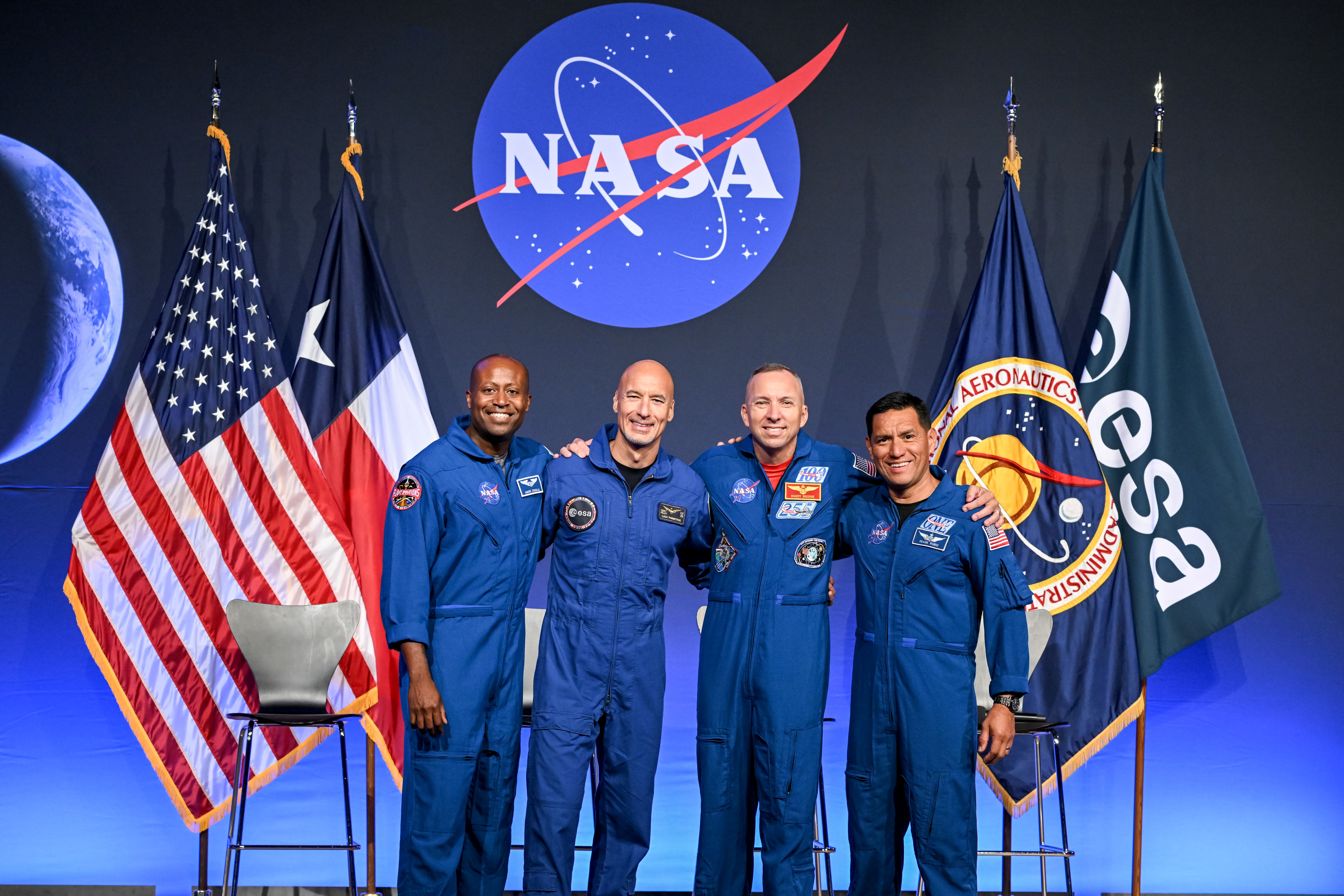
NASA on June 9, 2026 named the four-person crew that will fly Artemis III, the agency's first crewed mission since Artemis II, on a 2027 Orion flight to low Earth orbit designed to wring out rendezvous and docking with the first generation of commercial human landing systems from SpaceX and Blue Origin.
Who Is On The Crew
NASA astronaut Randy Bresnik will command the mission, with European Space Agency astronaut Luca Parmitano serving as pilot. NASA astronauts Andre Douglas and Frank Rubio will fly as mission specialists. NASA astronaut Bob Hines will train with the crew as a backup. The selection brings two seasoned spaceflight veterans — Bresnik and Parmitano — together with a first-time flyer in Douglas and a record-setter in Rubio, who in 2023 spent 371 days on the International Space Station after his Soyuz return vehicle leaked coolant.
What Artemis III Will Actually Do
Despite the mission's original billing as a Moon landing, the Artemis III mission NASA outlined this week is a low Earth orbit shakedown rather than a lunar surface flight. The agency's SLS rocket will launch Orion from Kennedy Space Center, and the spacecraft will perform a series of rendezvous and docking demonstrations with uncrewed test versions of both the SpaceX Starship Human Landing System and Blue Origin's Blue Moon lander. Those exercises are the gating step for Artemis IV, the first crewed lunar South Pole landing now scheduled for 2028.

Why The Crew Was Named Now
NASA leadership said naming the Artemis III crew now — more than a year before launch — gives the four astronauts the runway to train as a team on Orion, on commercial lander interfaces and on contingency operations across two very different lander architectures. The agency is intentionally testing rendezvous against both SpaceX and Blue Origin systems on the same flight, hedging against single-vendor schedule risk on the lunar landing track that NASA has been pushing since the $1B Moon base award round earlier this year.
The Path To A Lunar Landing
Bresnik's crew will not touch the lunar surface, but the maneuvers they fly are what unlocks the rest of the Artemis architecture. NASA is treating Artemis III as the operational dress rehearsal for the docking that any future crewed lunar lander will have to execute. The agency has also been advancing parallel robotic and life-support research aboard the ISS to feed Artemis, which it described in earlier crew robotics work ahead of Artemis II launch preparations.
Reporting based on coverage from NASA, ESA and Spaceflight Now.