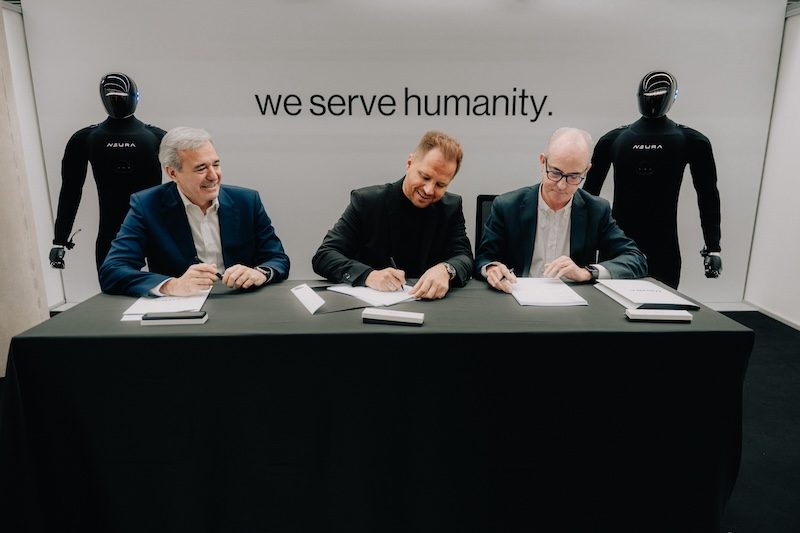
Germany's Neura Robotics is leading an investment of tens of millions of euros to build a Physical AI training and testing hub in Aragón, Spain, the company announced on November 27. Agri-food group Costa Group, the regional government of Aragón and the University of Zaragoza are partners in the project, which targets a mid-2027 opening.
The initiative centers on two facilities: Neura Gym Aragón, a training site combining robotics hardware, AI models and simulation on Neura's Neuraverse platform, and a Physical AI Model Zone where robots get tested under real operating conditions rather than in a lab.
An industrial partner as the test bed, not just a customer
Costa Group, headquartered in Fraga, Spain, is positioned as the industrial anchor for the project. Rather than simply buying robots once they're finished, the agri-food company is handing over real operational problems from its food production facilities for Neura's systems to train against from the start.
That approach reflects a bet Neura's CEO, David Reger, made explicit in announcing the deal: "The knowledge of how to produce, handle and assemble things is one of Europe's greatest assets." The company's strategy is to capture that operational knowledge as reusable robot skills rather than treating every new deployment as a from-scratch engineering project.
The commercial hook is Neuraverse, Neura's platform for packaging and distributing robot skills. Under the arrangement, companies that develop skills through the Aragón hub can keep that knowledge private or license it commercially to other operators, effectively creating a marketplace for transferable robotic capabilities across agriculture, food production, logistics, automotive manufacturing and material handling.
Why a regional government and a university are in the deal
The involvement of the Aragón government and the University of Zaragoza points to a structure increasingly common in European industrial AI projects: public money and research institutions co-funding private infrastructure in exchange for local jobs, training pipelines and research output. Costa Group's chief executive, Jorge Costa Cerezuela, framed the regional angle directly, saying being located in Aragón "will allow us to strengthen collaboration between universities and businesses."
Neura has positioned itself as a European counterweight to the US and Chinese humanoid and industrial-AI players dominating headlines through 2026, pitching deals like this one as evidence that European manufacturers can supply both the capital and the factory floors needed to train physical AI at scale, rather than importing systems built and trained elsewhere.
The mid-2027 target gives Neura and its partners roughly 18 months to stand up the Neura Gym and Model Zone facilities and get the first skills transferred from Costa Group's operations into the Neuraverse platform. Whether the licensing model attracts other manufacturers to buy or sell skills through the platform will be the real test of whether this becomes a repeatable business rather than a one-off regional investment.