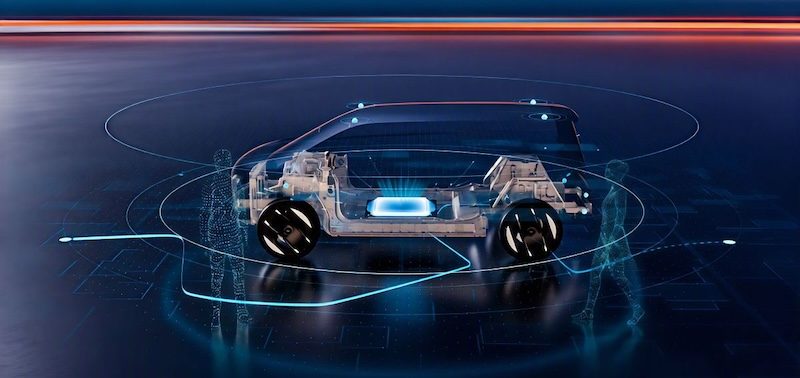
Wayve, Stellantis and Nvidia announced a three-way partnership on November 19, 2026, to accelerate autonomous vehicle development in France, unveiled at the Assises du Véhicule Autonome forum in Paris alongside the country's transport minister.
The arrangement combines Wayve's AI Driver software, Stellantis' Level 4-ready vehicle platforms, and Nvidia's Halos operating system running on its Hyperion computing architecture. France's transport minister, Philippe Tabarot, said the country is "committed to adapting its regulatory framework to accelerate autonomous vehicle development while maintaining strict safety and data sovereignty requirements." No launch date, pilot city or vehicle count was disclosed.
Wayve's Widening Automaker Bench
Wayve, a London-based autonomous driving company founded in 2017, closed a $1.2 billion Series D round in February 2026 at an $8.6 billion valuation, with backers including Microsoft, Nvidia, Uber, Mercedes-Benz, Nissan and Stellantis. Uber separately committed $300 million to deploy Wayve-powered robotaxis, under a model where Uber owns and operates the fleet while Wayve supplies the driving software. The France announcement extends that same automaker-plus-chipmaker template to a specific national market, with Stellantis — headquartered partly in France — acting as the vehicle supplier this time instead of just an investor.
The move comes a day after a separate announcement that Bolt, Stellantis and the Métropole du Grand Paris plan autonomous mobility trials in Greater Paris starting in 2028, covering up to five municipalities. Together, the two announcements signal that Stellantis is positioning itself as France's default industrial partner for autonomous vehicles, pairing with Bolt on the ride-hailing side and with Wayve and Nvidia on the underlying software and compute stack.
Wayve VP Kaity Fischer said "France is leading the way in preparing for autonomous vehicles," according to Robotics and Automation News. The announcement frames France as a potential European hub for autonomous vehicle regulation, but it stops short of naming a pilot city, a fleet size or a date — leaving the substance of the partnership to future announcements once France's regulatory framework and Stellantis' production timeline align.