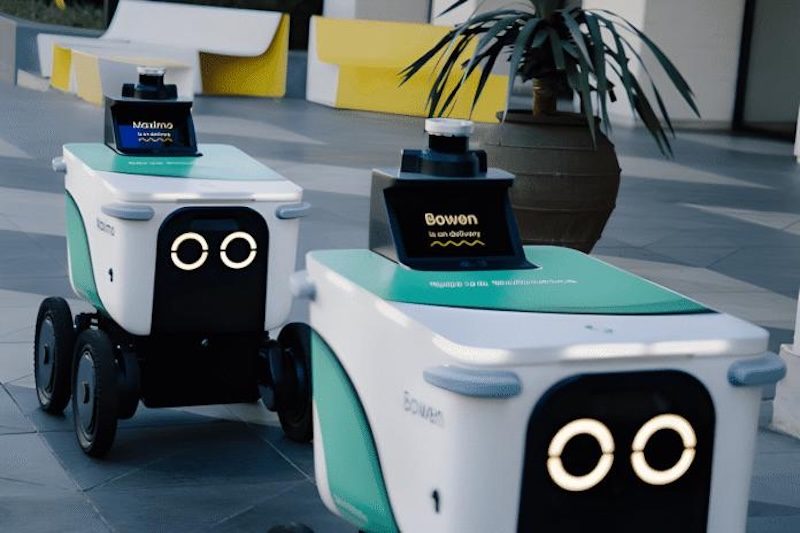
Serve Robotics launched Physical AI Services on November 19, 2026, packaging the infrastructure it built to run its own sidewalk delivery fleet into a product other robotics companies can buy. The launch customer is Bedrock Robotics, which builds autonomous systems for heavy construction equipment, according to Robotics and Automation News.
The offering has three parts. Serve Link connects robots to off-board intelligence over Wi-Fi, LTE, 5G and satellite, letting field machines talk to data-center-based models in real time. Serve Data Curator sorts through fleet observations to surface the moments worth using for model training, rather than feeding engineers raw, undifferentiated footage. The Foundation Model Data Catalog sells access to real-world terrain, infrastructure and sidewalk data collected across Serve's own operations — now running more than 2,000 robots across over 40 cities and 27 hospitals. CEO Ali Kashani framed the pitch bluntly: "Building a robot is only the beginning. Keeping thousands of them connected, learning and improving requires another layer of technology."
Why a Delivery Robot Company Is Selling Infrastructure, Not Robots
Serve's move acknowledges something most robotics hardware companies learn the expensive way: the hardware is rarely the bottleneck. Connectivity, data labeling and fleet-scale learning pipelines are. Companies like Bedrock Robotics, working in construction, don't need to reinvent that stack — they need it fast, and Serve has already spent years and millions of delivery runs building and debugging it on sidewalks, arguably a harder sensing environment than a job site.
It also turns Serve's existing fleet into a data business, not just a delivery business. Every Serve robot already generates sidewalk and infrastructure data as a byproduct of making deliveries; selling curated access to that data, rather than giving it away or sitting on it, adds a second revenue line that doesn't require scaling the robot fleet itself. That matters for a company whose core delivery economics are still being proven out against DoorDash, Uber and Amazon's own drone and sidewalk efforts.
Competing With Nvidia and the Robotics Data Brokers
Serve isn't alone in spotting this opportunity. Nvidia's Cosmos platform, Physical Intelligence and a growing list of robotics data startups are all chasing the same gap between "we built a robot" and "our robot gets smarter at fleet scale." What differentiates Serve is provenance: its data comes from real deployed robots navigating cities, not simulation or curated capture rigs, exactly the messy, high-variance data that physical AI foundation models are short on.
The risk is dilution of focus. Serve is still a young public company competing hard on delivery economics, and standing up a B2B infrastructure arm pulls engineering attention toward a second business model. Whether Physical AI Services becomes a meaningful revenue line or stays a single-customer pilot with Bedrock will say a lot about whether sidewalk delivery data actually transfers to robotics companies working in completely different physical environments.