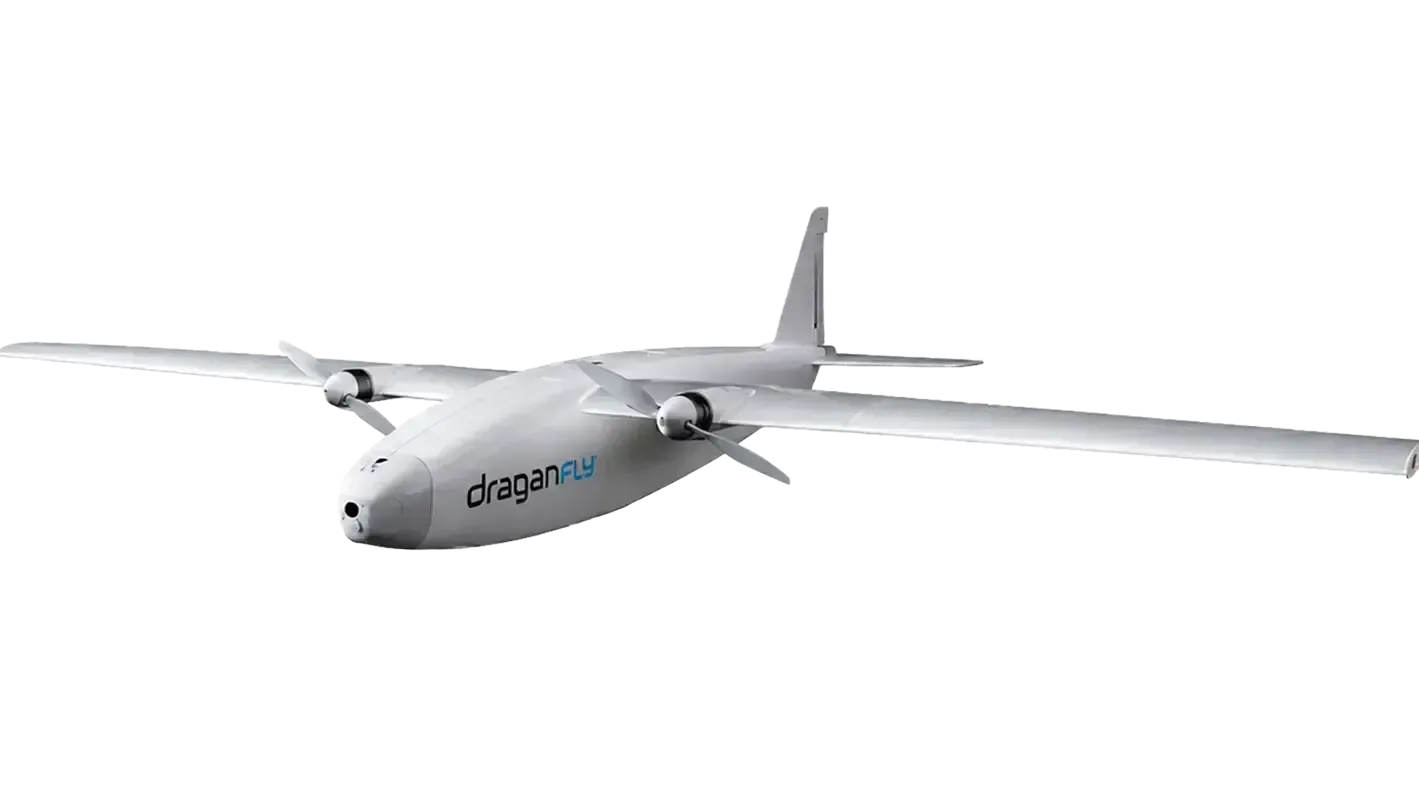
Draganfly signed two memoranda of understanding with Ukrainian unmanned systems companies during a ceremony at the Embassy of Canada to Ukraine in Kyiv on November 20, 2026, publicized November 23. One agreement, with TAF Industries, explores developing and manufacturing Ukrainian unmanned aerial and ground systems in Canada. The other, with DOD Solution, sets up integration of DOD Solution's AURA AI autonomy platform into selected Draganfly aircraft.
Both deals extend a relationship Draganfly has built over the course of 2026, including a prior strategic investment in DOD Solution, and arrive alongside the Canada-Ukraine Declaration for a 100-Year Partnership that Prime Minister Mark Carney and President Volodymyr Zelenskyy signed in Calgary on September 10.
What each agreement actually covers
The TAF Industries memorandum frames joint evaluation of aerial and ground vehicle designs for manufacturing in Canada, alongside joint research and development work. It does not commit either side to a production order; it is an exploratory framework, consistent with how most Canada-Ukraine defense industrial agreements have been structured in 2026 as both governments try to onshore drone and ground robot production outside the active conflict zone.
The DOD Solution agreement is more technical: it targets putting AURA AI into Draganfly's aircraft, including the fixed-wing Orca, specifically for operation in environments where GPS or communications links are degraded or unavailable. That is the central battlefield problem Ukraine's drone operators have faced for more than two years, as Russian jamming has pushed both sides toward autonomy that does not depend on a continuous signal.
A crowded field of Western-Ukrainian drone tie-ups
Draganfly's moves land in an increasingly busy lane. Auterion and SkyFall have announced plans for a German factory to supply Ukraine and the Bundeswehr, Quantum Systems and Frontline Robotics have committed fresh capital to Ukrainian drone output, and the UK has separately agreed to build Ukraine's strike drones on British soil. Canada's own push, formalized through the 100-Year Partnership, is pulling Western manufacturers toward combining their production capacity with Ukrainian battlefield engineering that has been tested under real jamming and real fire.
Cameron Chell, Draganfly's chief executive, said the company is committed to supporting Ukraine \"through practical, long-term relationships with its technology developers,\" framing the agreements as connecting technology with the ability to manufacture and support it. Neither memorandum includes disclosed dollar figures, and both remain non-binding frameworks rather than signed production contracts, leaving the real test for 2027: whether exploratory MOUs convert into actual Canadian manufacturing lines and fielded, jam-resistant aircraft.