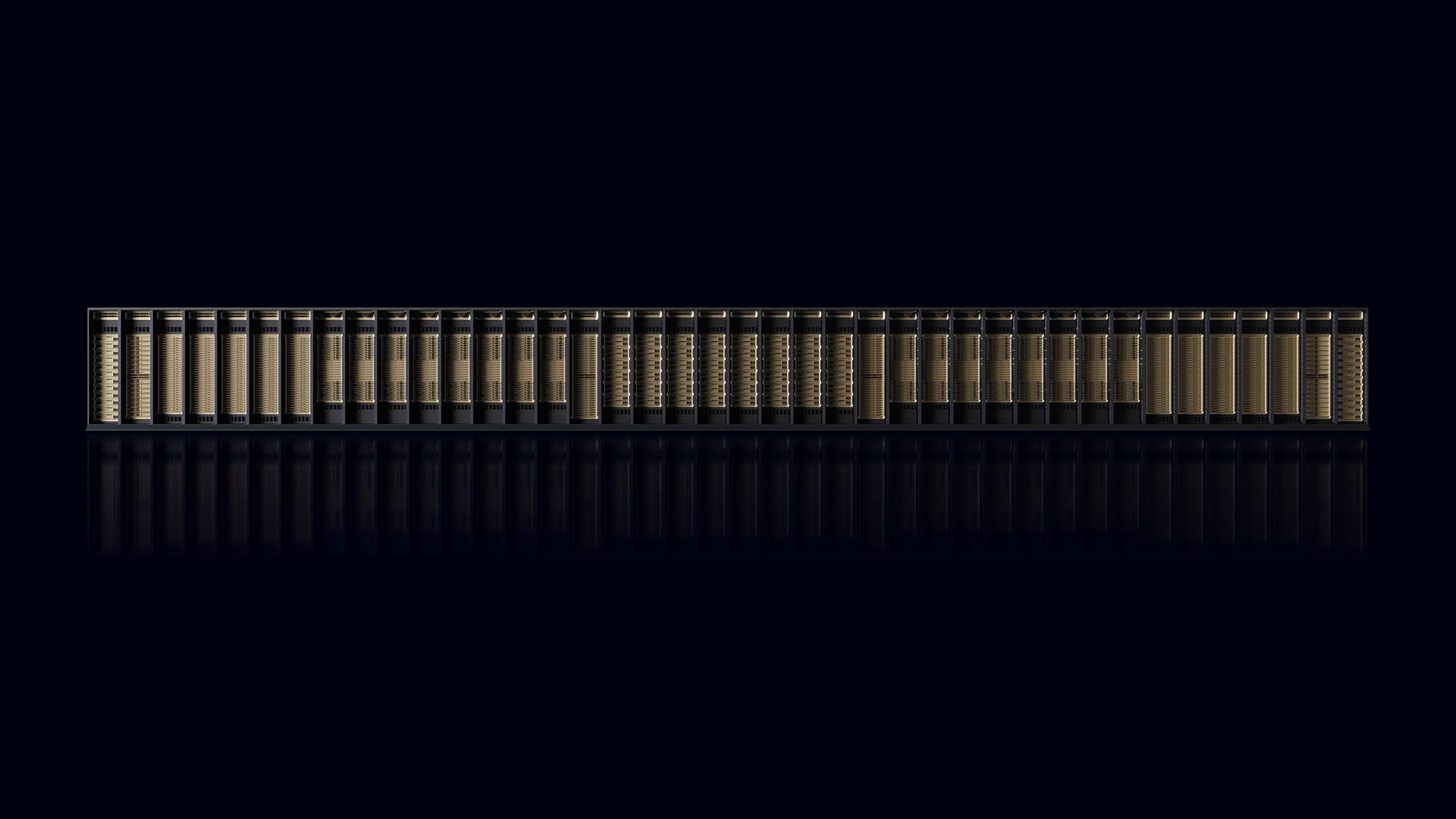
NVIDIA used its opening keynote at AI Infra Summit in Santa Clara on September 15, 2026 to move its DSX AI factory story from architecture pitch to production data. Hyperscale VP Ian Buck put up the first live customer numbers for the platform: Lambda's cluster hit 24% more cluster-wide tokens per second and 23% better performance per watt on HGX B200 after switching over to the DSX MaxLPS reference design.
Lambda: 19 Nodes On A 16-Node Power Budget
The Lambda deployment is a 5-rack, 19-node cluster. Before DSX, that same footprint ran 16 nodes flat out. With MaxLPS, Lambda is fitting three extra nodes inside the same envelope — cluster throughput jumps from about 4 million to 5 million tokens per second, and every watt of power buys 23% more useful inference. That is the metric NVIDIA is now leaning on hardest: for AI factories, GPU count is capped by the substation, not the datacentre floor.
Eos: 200 Demand-Response Events, No Operator
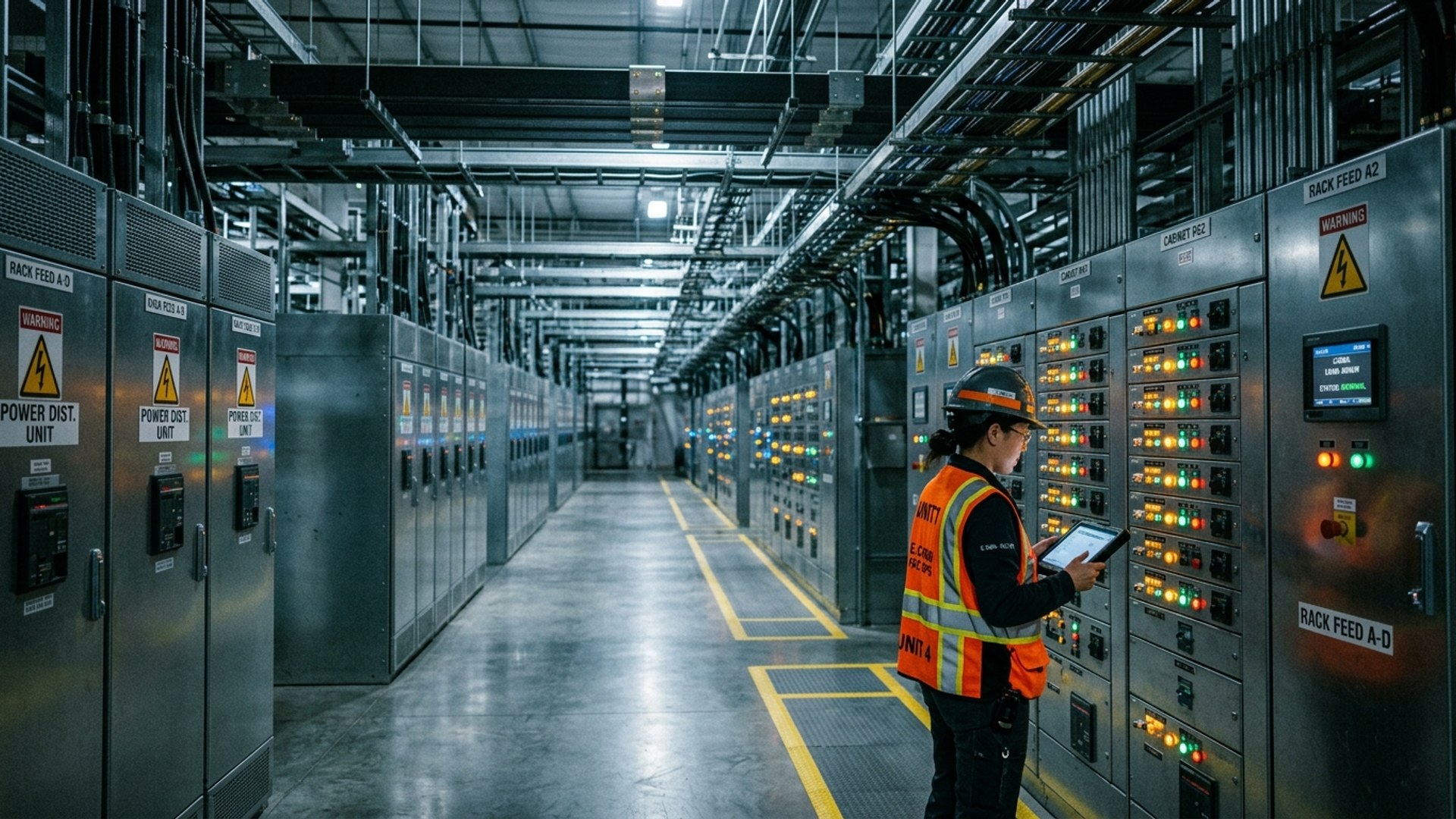
The second production result came from NVIDIA's own Eos AI factory in Santa Clara. Working with Emerald AI's Conductor platform, Silicon Valley Power and PJM Interconnection, Eos executed more than 200 grid demand signals with sub-minute automated response. When the grid asked for it, Eos dropped from 4 MW to 3 MW without an operator touching a keyboard, then ramped back once the peak had passed. That is the piece utilities have been waiting for: AI clusters that behave like flexible load rather than the immovable base-load monster critics fear.
The Ecosystem Buck Wanted On Stage
Buck ran a partner list wide enough to answer the perennial "who is buying" question: CoreWeave, Crusoe, Firmus, IREN, Nebius, Nscale and Yotta on the neocloud side; Dell, HPE, Lenovo and Supermicro building the racks; Digital Realty and EPRI providing datacentre and grid engineering. The DSX platform is being explicitly framed as the answer to the question raised by rivals like Cornelis Networks' $205M Active Compute Fabric raise the day before — namely, whether NVIDIA can keep scaling AI clusters without hitting a wall on power.
What's Next
Buck teased that Vera Rubin systems shipping under DSX will land another step change in tokens per megawatt when they reach general availability in 2027. If the Lambda and Eos numbers hold up outside of NVIDIA's own reference racks, DSX will look less like a marketing bundle and more like the standard operating manual for the next wave of hyperscale AI factories, alongside deployments like India's 9,000-Vera-Rubin Hyderabad build.
Reporting based on coverage from NVIDIA, Unite.AI, Converge Digest and AI Infra Summit 2026.