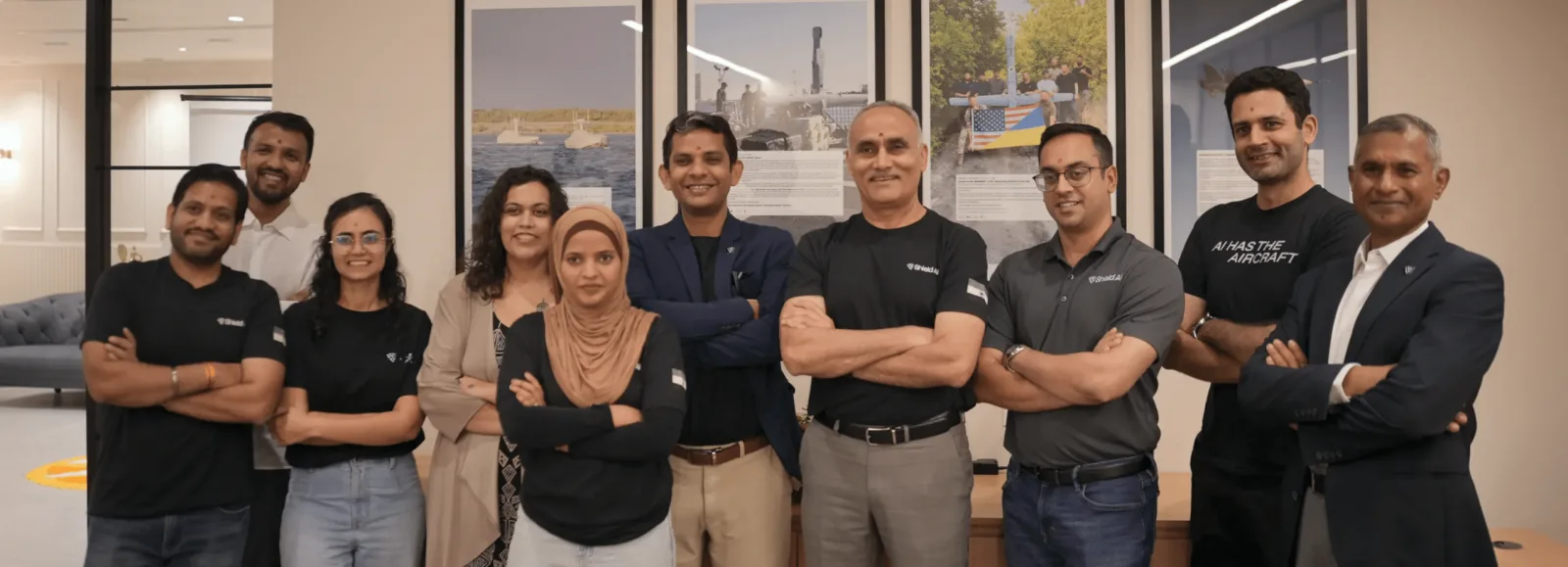
Shield AI opened an engineering office in Bengaluru, India, on November 13, 2026, to develop and test autonomy software for Indian aircraft and defense platforms, according to a Shield AI press release. The office will hire for autonomy, flight software, simulation, systems integration, and test and evaluation roles, working on Shield's Hivemind mission autonomy platform and its integration with Indian aircraft and ground platforms. Sarjan Shah, Shield AI's managing director for India, said \"self-reliance in defence depends on the software layer,\" adding the company is \"hiring here to build, test, and improve mission autonomy.\"
The Bengaluru office builds on a relationship that began with a strategic partnership announced in November 2024 with JSW Defence Pvt. Ltd. to manufacture Shield AI's V-BAT drones in Hyderabad. JSW Defence's V-BAT production facility opened in December 2025, backed by roughly $90 million in investment. The Indian Army selected Shield AI in January 2026 for V-BAT systems and Hivemind software licenses, and the company opened a New Delhi office in April 2026 to manage customer engagement with India's Ministry of Defence and armed forces. Bengaluru now adds a dedicated engineering hub to that existing commercial and manufacturing footprint.
Why India Has Become a Priority Market for Autonomy Vendors
India's government has pushed hard on defense self-reliance under its Atmanirbhar Bharat initiative, favoring foreign suppliers willing to localize both manufacturing and software development rather than simply selling finished hardware. Shield AI's progression, from a 2024 manufacturing partnership to a 2026 Army contract to a dedicated engineering office, mirrors the path foreign defense suppliers increasingly need to follow to keep access to Indian military budgets. Building Hivemind locally rather than importing it finished also addresses a recurring Indian procurement concern: dependence on foreign software that cannot be modified, audited, or adapted to Indian platforms without vendor involvement.
How This Compares to Shield AI's Other International Moves
The Bengaluru announcement came within days of two other Shield AI international moves: a November 11 agreement with Japan's NIPPI Corporation to establish local V-BAT maintenance and training support, and a November 10 order through NATO's procurement agency for additional V-BATs for Greece's Hellenic Army and Navy. Taken together, the three announcements show Shield AI pursuing a consistent playbook across allied markets, pairing hardware sales with local maintenance, training or engineering presence rather than operating purely as a US-based exporter. For a company competing with General Atomics, Anduril and a growing field of autonomy specialists for the Pentagon's Collaborative Combat Aircraft program, building credibility with allied governments through local footprints is becoming as important as the underlying software itself.