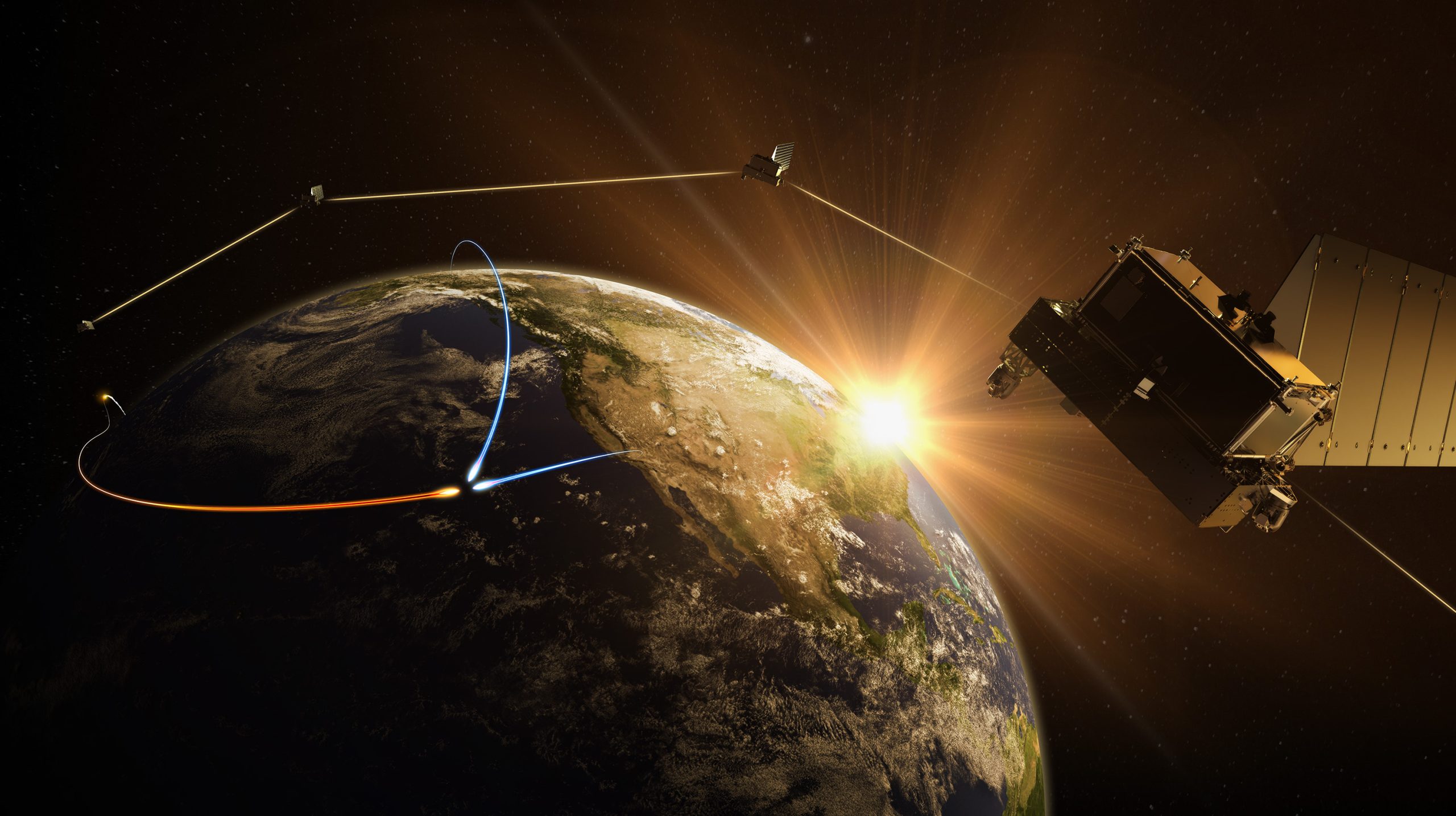
Rocket Lab USA (Nasdaq: RKLB) has passed the System Requirements Review (SRR) for the Space Development Agency's Tracking Layer Tranche 3 (TRKT3) constellation, a milestone that advances the company's role in a next-generation missile-warning and tracking network for the United States and its allies.
A key program milestone
The SRR confirms that Rocket Lab's proposed solution meets the SDA's operational requirements and establishes the technical baseline for the program. The TRKT3 satellites are built on Rocket Lab's Lightning satellite platform, with all major components — advanced infrared sensors, solar arrays, avionics, optical terminals and propulsion systems — designed and manufactured in-house.
Sensors against hypersonic threats
The satellites will carry Rocket Lab's Phoenix infrared sensor payload, a wide field-of-view solution engineered for modern missile defense, along with the company's StarLite space-protection sensors designed to safeguard the constellation against directed-energy threats. Rocket Lab's InterMission Ground Software will provide the command-and-control architecture for space-to-ground operations.
"Passing System Requirements Review demonstrates our technical readiness and validates our approach to delivering space infrastructure," said Brad Clevenger, president of Rocket Lab USA. "The Tracking Layer provides capability for protecting the nation against advanced missile threats."
More than $1.3 billion in SDA awards
Rocket Lab's roughly $816 million TRKT3 award builds on its earlier roughly $515 million Transport Layer-Beta Tranche 2 program, bringing the company's total Space Development Agency awards to more than $1.3 billion. The SDA awarded approximately $3.5 billion across four contractors — teams led by Lockheed Martin, Rocket Lab, Northrop Grumman and L3Harris — to build 72 Tracking Layer satellites for Tranche 3, with each team delivering 18 space vehicles organised across eight orbital planes to detect and track conventional and hypersonic missile threats.
Rocket Lab's defense push
The milestone underscores Rocket Lab's emergence as a prime contractor for national security space programs, complementing its commercial cadence such as the recent Electron launch for Synspective. It also adds to a busy stretch of defense-robotics activity, from DARPA's swarming battlefield robot medics to Teledyne's longer-range Rogue 1 loitering drone.
The Tracking Layer forms part of the SDA's proliferated low-Earth-orbit architecture, which spreads missile-warning and tracking capability across many smaller satellites to improve resilience. The Tranche 3 satellites are slated to begin launching in fiscal year 2029, expanding coverage against a new generation of conventional and hypersonic threats.
Reporting based on coverage from Rocket Lab Corporation (GlobeNewswire), with additional context from Air & Space Forces Magazine and SpaceNews.